Catena is now Pearl Talent! Same mission, new name.

Nearshore outsourcing is one of those terms that sounds more complex than it really is. At its core, it’s simply hiring remote teammates in nearby countries — people who work in overlapping timezones, speak your language, and understand how your team operates. The advantage isn’t just geography; it’s the operational alignment that makes distributed teams feel less… distant.
As 2026 flies by, and 2026 gets closer, startups are turning to nearshoring because the demands of scaling have shifted. Remote work is now the default, but founders have learned that timezone gaps and cultural mismatches can slow down execution. Nearshoring offers a middle ground: access to broader talent pools and cost efficiencies, without sacrificing collaboration. Teams can run daily stand‑ups, share feedback in real time, and onboard new hires faster because the context is already familiar.
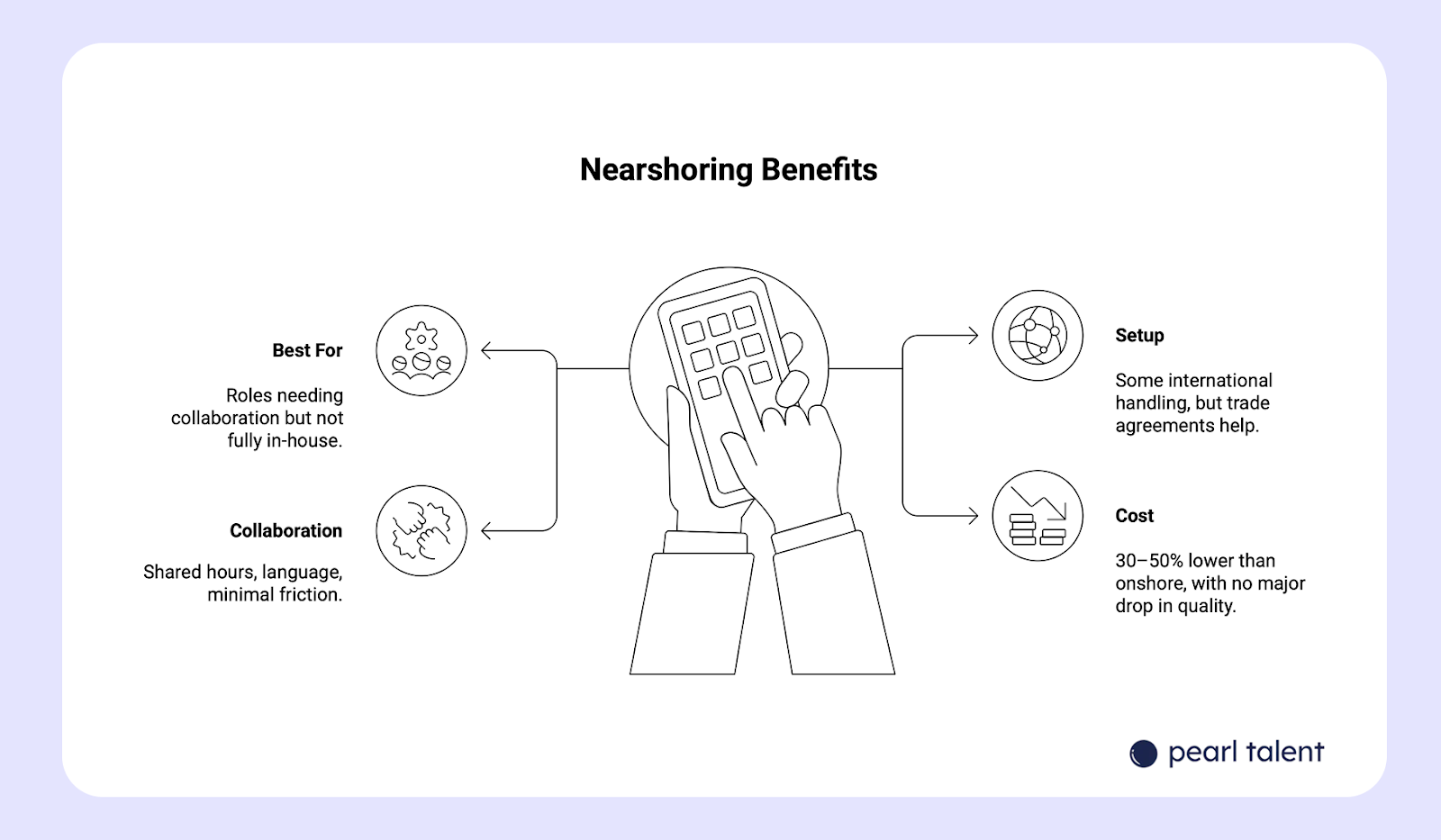
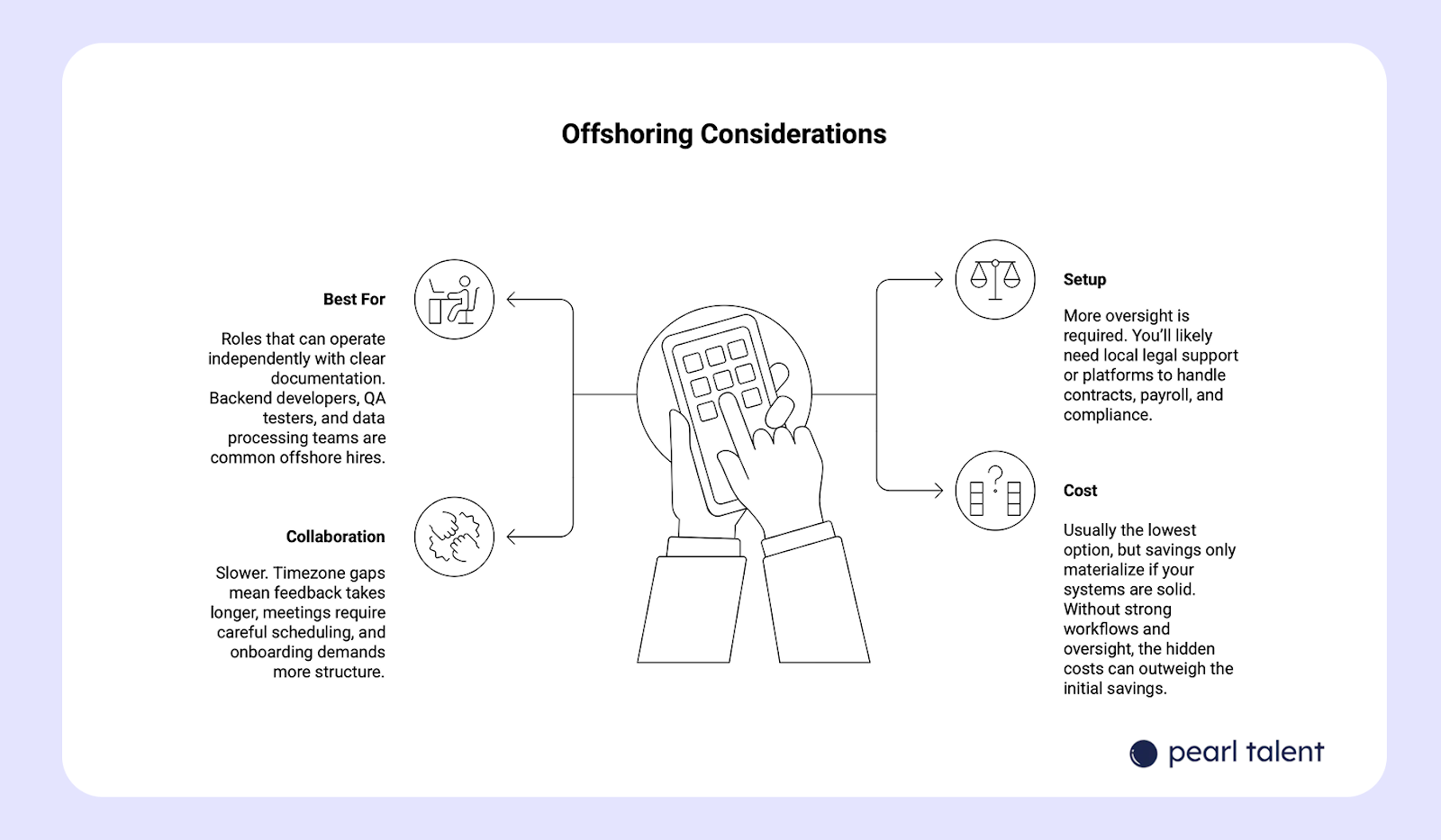
Compared to offshoring, nearshoring reduces the friction of long delays and complex compliance. Compared to onshoring, it often expands the talent pool and lowers costs while still keeping communication smooth. That balance makes it especially useful for roles where collaboration drives outcomes — operations, sales development, design, and customer support. These are functions where speed and clarity matter more than pure cost savings, and where nearshore talent can plug in almost seamlessly.
This guide walks through how nearshoring works, how it compares to other hiring models, and why startups are using it to build distributed teams that feel aligned, not fragmented.
Long story short, nearshoring means hiring in countries that are geographically and operationally close to yours. Instead of sending work halfway around the world, you’re partnering with teammates who share overlapping working hours, speak your language, and operate within familiar business norms. It’s remote hiring with fewer translation layers — both literal and cultural.
The value of nearshoring isn’t just convenience. It’s about reducing friction in the areas that matter most to scaling teams: communication, speed, and trust. When your team and your hires are online at the same time, feedback loops are shorter. When they understand your language and work culture, onboarding is smoother. And when compliance frameworks are easier to navigate, you spend less time on legal setup and more time on execution.
Examples in practice:
The goal is simple: make remote work feel less remote. Nearshoring is especially effective for roles that depend on quick back‑and‑forth or shared context — operations, sales development, design, and customer support. These are the functions where delays or misunderstandings can slow growth, and where alignment matters more than pure cost savings.
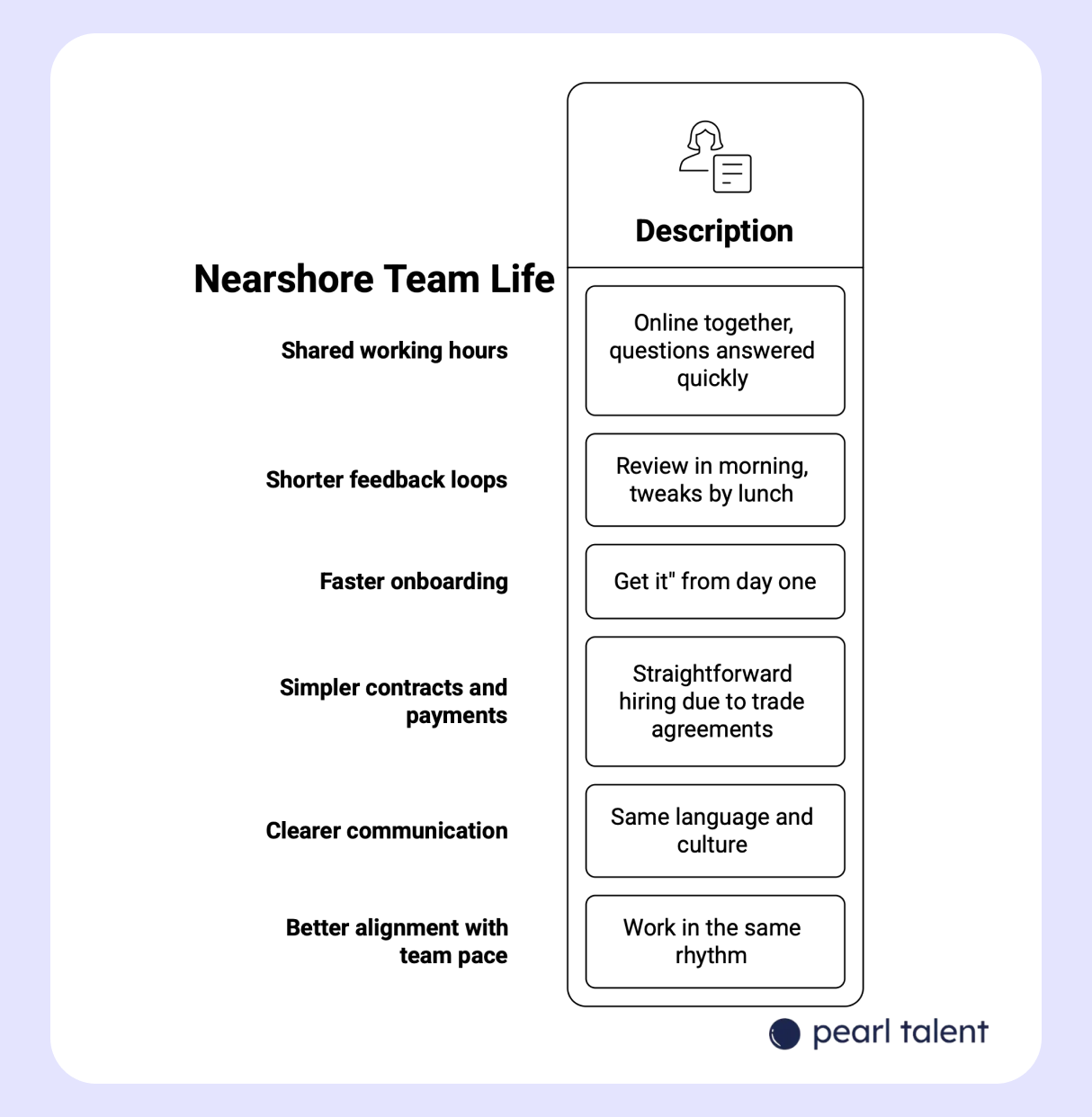
Nearshore hiring focuses on working with remote talent in nearby timezones to make coordination easier. Here’s what that looks like in practice:
Let’s look at how each hiring model functions in practice — not just location, but how work gets done across timezones, tools, and team structures.
Now we know what Nearshore means: Hiring in nearby countries with overlapping timezones and similar work cultures.
Hybrid Models: Mixing Nearshore with Global Talent
Most startups don’t pick one hiring model and stick with it. They mix and match based on what each role needs. Let me explain how that usually plays out:
Pearl helps teams map this out before hiring. That way, the model fits how the team actually works — not just what looks good on paper.
Nearshoring helps startups stay lean without slowing down. It’s about reducing delays, improving communication, and keeping operations simple.
When your hire is online during your workday, coordination gets easier. Meetings happen during normal hours. Questions get answered fast. That’s a win for roles like EAs, SDRs, and support — where responsiveness matters.
Nearshore hires often share your communication style and work habits. You don’t have to over-explain or adjust your workflows. That makes onboarding smoother and collaboration cleaner — especially in customer-facing roles.
You’re not compromising on quality. You’re hiring in markets where your budget stretches further. You’ll find experienced talent in design, ops, sales, and support — without the sticker shock.
Hiring in nearby countries often means simpler legal systems. Trade agreements and shared frameworks make contracts and payroll easier. You won’t need a legal team just to hire one person.
Nearshoring shines when the role needs shared hours, fast feedback, or someone who understands your tools and tone. Here’s when it tends to outperform offshore setups:
Pearl helps startups define, source, and onboard nearshore talent — without the usual hiring headaches. The goal is not just filling a role, the whole point of Pearl is ensuring the hire fits seamlessly into your team’s rhythm and culture.
This structure allows lean teams to hire nearshore talent without spinning up a full HR department. Founders get the benefits of expanded talent pools and cost efficiency, while Pearl handles the operational details that usually slow scaling down. It’s support without the overhead — and alignment without the friction, which is what hiring companies actually need!
Pearl sources talent in regions that offer timezone alignment, strong English fluency, and solid infrastructure. Each region supports different roles based on skills, culture, and logistics.
Great fit for U.S.-based teams.
Timezone: 1–3 hours from U.S. timezones.
Language: Strong English proficiency, especially in tech, design, and support.
Work culture: Familiar with U.S. startup tools and workflows.
Roles: Pearl places EAs, SDRs, designers, and support agents in Colombia, Argentina, Mexico, and Brazil.
If you need shared hours, clear communication, and flexibility, nearshore hiring is worth exploring. It’s especially useful for early-stage teams that want to stay lean but keep execution tight.
Startups rarely hire full departments at once. Growth happens role by role, as founders identify the next gap to fill. Nearshoring supports that pace by making it possible to bring on one teammate at a time without committing to a large team or heavy infrastructure. You can start with a single hire — an executive assistant, a sales development rep, or a designer — and expand only when the business demands it.
That’s the reason why contracts are designed to be flexible. Monthly or project‑based agreements give founders room to adjust as priorities shift. If a campaign ends or a product launch slows down, you can scale back without the burden of long‑term commitments. That agility is critical in early‑stage environments where needs change quickly.
Onboarding is faster because nearshore hires often already know the tools and communication styles startups rely on. They’re familiar with platforms like Slack, Notion, or HubSpot, and they understand the tone and pace of startup work. Instead of spending weeks explaining how your team operates, which is a for-sure headache,, you can get them contributing almost immediately.
Cost control is another advantage. Nearshoring allows you to fill key roles without stretching your budget or overloading your core team. You gain the leverage of additional capacity while keeping expenses predictable and manageable. For founders, this means scaling talent in step with growth, not ahead of it.
In practice, nearshoring aligns with the way startups actually build: one role at a time, with contracts that flex, onboarding that’s quick, and costs that stay under control. It’s a model designed for the realities of lean teams moving fast.
Nearshore hiring is a practical option when the role depends on shared working hours, quick feedback cycles, and clear communication. It’s most effective when the person needs to understand your tools, tone, and workflows from day one.
Every role is different. Some need real-time collaboration. Others can run on clear specs and async handoffs. The key is matching the hiring model to how the work actually gets done.
Nearshoring gives you that middle ground: timezone alignment, cultural fit, and cost efficiency — without needing to bring every role in-house. It’s a practical way to scale without slowing down.
We built Pearl to help startups hire remote talent that fits how they actually operate — not just what looks good on a spreadsheet.
Here’s what we focus on:
Hire smarter… so your team can move fast without breaking things.
If you’re hiring for a role that needs responsiveness, shared context, or fast ramp-up, we can help. You don’t need to commit to a full team or a long-term contract. Start with one role. Get clear on what it needs. We’ll handle the rest.
👉 Learn more at Pearl Talent or reach out to start a role scoping conversation.

.svg)