A Full Stack Developer role is highly technical and relies heavily on coding, problem-solving, and system design skills. Interviews for this role often begin with a non-face-to-face step, such as a technical skills assessment or coding challenge. Once candidates pass this initial stage, in-person or virtual interviews typically focus on deeper technical discussions, behavioral questions, and problem-solving scenarios to evaluate fit and collaboration skills.
At Pearl Talent, we connect companies with pre-vetted, top full stack developers from around the globe who seamlessly integrate into your team at a fraction of the cost of a full-time U.S. based hire. The typical interview process for a Full Stack Developer can take months depending on the role’s complexity, company bandwidth, and the length of technical assessments. Hiring a full stack developer through Pearl Talent can save up to 60% in costs, while also providing significant time savings.
Use this guide of 35+ Full Stack Developer Interview Questions to help identify candidates who not only possess the technical skills you need but also demonstrate the initiative, judgment, and adaptability to take your projects to the next level.
What Does a Full Stack Developer Do?
A Full Stack Developer manages both front-end and back-end development, ensuring applications function seamlessly from user interface to server-side logic. They work across multiple languages, frameworks, and databases bridging the gap between design and functionality for complete digital solutions.
Common Full Stack Developer Interview Questions and Tips for Answering
When interviewing full stack developers, focus on questions that reveal how candidates balance technical expertise with communication and collaboration. Strong developers should demonstrate the ability to problem-solve, write clean code, and adapt to evolving technologies while understanding business goals.
Experiential
These questions uncover a candidate’s practical experience working across the stack and their approach to real-world projects.
Tell me about a full stack project you’ve built from start to finish.
Describe a time you optimized performance for both front-end and back-end components.
How do you approach debugging complex application issues?
What’s the largest-scale application you’ve worked on, and what role did you play?
How do you collaborate with designers and back-end engineers on new features?
How to answer: Highlight real examples that show ownership, adaptability, and clear outcomes from your previous work.
Hypothetical
These assess how candidates think through potential challenges or system designs before implementation.
How would you design an app to handle millions of concurrent users?
What would you do if a feature breaks during a live deployment?
How would you manage differing API responses between environments?
What approach would you take to ensure scalability in a web app?
How would you handle a request to integrate a new framework mid-project?
How to answer: Walk through your reasoning clearly and emphasize trade-offs, scalability, and reliability.
Technical
These questions evaluate a candidate’s core technical knowledge across front-end, back-end, databases, DevOps, and coding principles. They may include coding challenges, system design discussions, and language/framework-specific questions.
Front-end
How would you improve page load speed for a complex web application?
How do you ensure your web pages are accessible to users with disabilities?
How would you handle a situation where a front-end component behaves differently in multiple browsers?
How do you optimize rendering performance for a dynamic dashboard?
How do you manage complex states across multiple components in modern frameworks?
Back-end
How would you design a secure API for user authentication?
How do you handle database migrations in a production environment?
How would you prevent SQL injection or other common security vulnerabilities?
How would you implement rate limiting to prevent abuse of your APIs?
How do you ensure your server handles high traffic without downtime?
Coding and Data Structures
How would you reverse a linked list without using extra memory?
How do you find the most frequent element in a large dataset efficiently?
How would you detect a cycle in a directed graph?
How do you design an algorithm to merge multiple sorted arrays into one?
How do you implement a search feature that scales with millions of records?
Behavioral
These explore a candidate’s teamwork, problem-solving, and adaptability when working under pressure.
Tell me about a time you disagreed with a technical decision.
How do you handle tight deadlines or shifting project priorities?
Describe how you manage feedback on your code.
How do you stay current with new programming languages or frameworks?
Share an example of how you improved a development process within your team.
How to answer: Use the STAR method (Situation, Task, Action, Result) and show how you stay constructive and solutions-oriented.
Final Questions
These final questions serve as a powerful way to close the interview, giving candidates the chance to concisely highlight their experience, skills, and value. These questions are versatile and relevant across any role, from a full stack developer to a barista. Don’t skip these.
Why should we hire you?
Why are you interested in working for us?
Do you have any questions for me?
How to answer: Have a concise elevator pitch ready for any interview. Summarize your skills, experience, and value clearly, ideally in under 10 seconds, while aligning them with the company’s mission and culture. Finish with a confident statement that reinforces your fit and enthusiasm for the role, and always come prepared with thoughtful questions for the interviewer.
Questions Full Stack Developer Candidates Should Ask the Interviewer
Encourage candidates to ask insightful questions that reveal curiosity and initiative. For some interviewers, if the candidate doesn’t come prepared with a single question, it’s a red flag. The candidate should show curiosity and understanding that asking questions is the key to understanding and success in any role. Asking questions is essential.
Why are you hiring for this role At Pearl Talent, we connect companies with pre-vetted, top full stack developers from around the globe who seamlessly integrate into your team at a fraction of the cost of a full-time U.S. based hire. The typical interview process for a Full Stack Developer can take months depending on the role’s complexity, company bandwidth, and the length of technical assessments. Hiring a full stack developer through Pearl Talent can save up to 60% in costs, while also providing significant time savings.
What opportunities are there for mentorship or learning new technologies?
How do development and product teams collaborate?
What’s your approach to balancing speed and code quality?
How do you measure the success of a new hire?
Overwhelmed with the Hiring Process?
With Pearl Talent, you can skip the stress of recruiting and training. We provide:
No long-term contracts and free replacements if needed
Want to Join the Pearl Talent Network?
Are you a skilled full stack developer ready to work with global companies? We’re always looking for experienced professionals to join our vetted talent pool.
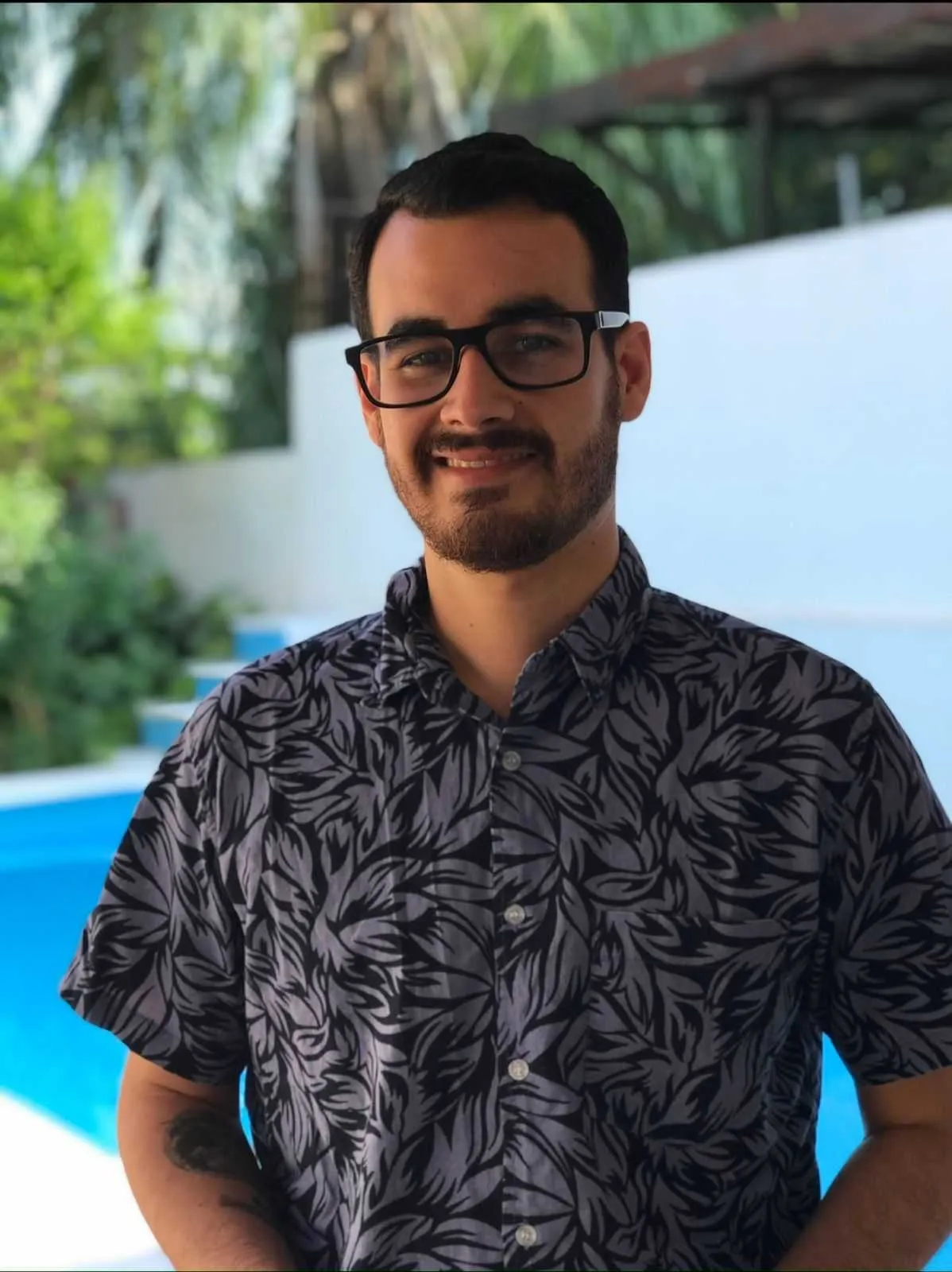
Fabrizio is a recruitment director and psychologist with over 8 years of experience in HR and Talent Acquisition for multinational companies. He has led initiatives in recruitment, onboarding, training, coaching, and human development, as well as life and career planning, labor relations, organizational climate, and culture. His work also spans evaluation and organizational development, helping businesses build strong, people-centered workplaces.
Sales Development Representative Salary: How Much Do SDRs Cost?
Looking to hire a sales development representative? Here’s how much they cost, and how their salary varies based on location, industry, and experience.
Since my hire started, my workflow rhythm has become five times more efficient. I'm genuinely excited about the growth of our partnership
Director, Science Startup Company
Working with Pearl Talent has been a fantastic experience! They helped us hire a candidate who's not just very intelligent but also kind and professional.
Co-Founder and CEO, Kiwi Biosciences
Pearl Talent truly took charge of the entire process and with their personalized approach, they found individuals specifically tailored to my requirements.
Founder, ASRA
Pearl Talent helped us quickly fill an executive assistant role. She onboarded quickly and since then, has taken over running the logistics of my and other C-suite executives' lives at our company.
VP of Sales & Marketing, Arcus Power Corp.
We've really enjoyed working with you and were very satisfied with the quality of applicants you proposed.
Investor, Lorentz Bio
I appreciate the patience and flexibility that Pearl Talent displays throughout their selection process.
Head of Talent Strategy and Culture, Next Step Talent
Our Pearl Talent-sourced EA+ has been a force-multiplier to our team, enabling us to shore up our back-end and day-to-day operations to focus on growth.
Investor, Climate Capital
Our hire was able to pick things up quickly and has become accustomed to our company’s needs in such a short period of time.
HR and Recruiting, IF Labs
Pearl Talent takes care of all the work you would normally invest in screening and hiring an assistant. They make the process easy, and provide support step by step along the way.
Partner, Darnel Fabrics
My assistant is doing great - she's independent, a quick learner, and positively impacting some of our big projects.
Co-Founder, CEAD Group
Pearl Talent has been brilliant. I was unsure about what would happen but they spent a lot of time discussing my issues. They sent me two candidates for interview, both had been well screened and they have videos of themselves talking about what they have done.
Founder, CEO
I wish I found you guys years ago, because they [Pearl Talent] are way better than the sourcing I've been able to do on my own accord.
Founder, Pearl Technologies
With Pearl Talent, they started out by really understanding our needs with a thorough but also fast intake process.
CEO, Medra AI
I cannot recommend Pearl Talent’s services enough. The quality of candidates they were able to provide us with was unmatched.
Co-Founder, Ambience Healthcare
Our Ops Associate has added immense value from day one, leaving us wishing we had hired her sooner!
Head of Lab Operations, Vital
Just interviewed a candidate and WOW you guys source fantastic people!
Co-Founder and CEO, Fella Health
Pearl Talent gave us an impressive pool of candidates, which made our decision-making process pleasantly challenging.
Co-Founder, ATC Research
The hiring process with Pearl Talent has been straightforward and seamless. Their attentive approach to understanding our specific needs and preferences truly stood out.
Head of Care Operations, AB Healthcare
The hiring process with Pearl Talent has been straightforward and seamless. Their attentive approach to understanding our specific needs and preferences truly stood out.
Head of Care Operations, AB Healthcare
Pearl Talent gave us an impressive pool of candidates, which made our decision-making process pleasantly challenging.
Co-Founder, ATC Research
Just interviewed a candidate and WOW you guys source fantastic people!
Co-Founder and CEO, Fella Health
Our Ops Associate has added immense value from day one, leaving us wishing we had hired her sooner!
Head of Lab Operations, Vital
I cannot recommend Pearl Talent’s services enough. The quality of candidates they were able to provide us with was unmatched.
Co-Founder, Ambience Healthcare
With Pearl Talent, they started out by really understanding our needs with a thorough but also fast intake process.
CEO, Medra AI
I wish I found you guys years ago, because they [Pearl Talent] are way better than the sourcing I've been able to do on my own accord.
Founder, Pearl Technologies
Pearl Talent has been brilliant. I was unsure about what would happen but they spent a lot of time discussing my issues. They sent me two candidates for interview, both had been well screened and they have videos of themselves talking about what they have done.
Founder, CEO
My assistant is doing great - she's independent, a quick learner, and positively impacting some of our big projects.
Co-Founder, CEAD Group
Pearl Talent takes care of all the work you would normally invest in screening and hiring an assistant. They make the process easy, and provide support step by step along the way.
Partner, Darnel Fabrics
Our hire was able to pick things up quickly and has become accustomed to our company’s needs in such a short period of time.
HR and Recruiting, IF Labs
Our Pearl Talent-sourced EA+ has been a force-multiplier to our team, enabling us to shore up our back-end and day-to-day operations to focus on growth.
Investor, Climate Capital
I appreciate the patience and flexibility that Pearl Talent displays throughout their selection process.
Head of Talent Strategy and Culture, Next Step Talent
We've really enjoyed working with you and were very satisfied with the quality of applicants you proposed.
Investor, Lorentz Bio
Pearl Talent helped us quickly fill an executive assistant role. She onboarded quickly and since then, has taken over running the logistics of my and other C-suite executives' lives at our company.
VP of Sales & Marketing, Arcus Power Corp.
Pearl Talent truly took charge of the entire process and with their personalized approach, they found individuals specifically tailored to my requirements.
Founder, ASRA
Working with Pearl Talent has been a fantastic experience! They helped us hire a candidate who's not just very intelligent but also kind and professional.
Co-Founder and CEO, Kiwi Biosciences
Since my hire started, my workflow rhythm has become five times more efficient. I'm genuinely excited about the growth of our partnership
Director, Science Startup Company
Pearl Talent has been brilliant. I was unsure about what would happen but they spent a lot of time discussing my issues. They sent me two candidates for interview, both had been well screened and they have videos of themselves talking about what they have done.
Founder, CEO
We've really enjoyed working with you and were very satisfied with the quality of applicants you proposed.
Investor, Lorentz Bio
Pearl Talent truly took charge of the entire process and with their personalized approach, they found individuals specifically tailored to my requirements.
Founder, ASRA
My assistant is doing great - she's independent, a quick learner, and positively impacting some of our big projects.
Co-Founder, CEAD Group
I cannot recommend Pearl Talent’s services enough. The quality of candidates they were able to provide us with was unmatched.
Co-Founder, Ambience Healthcare
Our Pearl Talent-sourced EA+ has been a force-multiplier to our team, enabling us to shore up our back-end and day-to-day operations to focus on growth.
Investor, Climate Capital
Working with Pearl Talent has been a fantastic experience! They helped us hire a candidate who's not just very intelligent but also kind and professional.
Co-Founder and CEO, Kiwi Biosciences
Since my hire started, my workflow rhythm has become five times more efficient. I'm genuinely excited about the growth of our partnership
Director, Science Startup Company
Our Ops Associate has added immense value from day one, leaving us wishing we had hired her sooner!
Head of Lab Operations, Vital
The hiring process with Pearl Talent has been straightforward and seamless. Their attentive approach to understanding our specific needs and preferences truly stood out.
Head of Care Operations, AB Healthcare
I appreciate the patience and flexibility that Pearl Talent displays throughout their selection process.
Head of Talent Strategy and Culture, Next Step Talent
Pearl Talent gave us an impressive pool of candidates, which made our decision-making process pleasantly challenging.
Co-Founder, ATC Research
I wish I found you guys years ago, because they [Pearl Talent] are way better than the sourcing I've been able to do on my own accord.
Founder, Pearl Technologies
With Pearl Talent, they started out by really understanding our needs with a thorough but also fast intake process.
CEO, Medra AI
Just interviewed a candidate and WOW you guys source fantastic people!
Co-Founder and CEO, Fella Health
Our hire was able to pick things up quickly and has become accustomed to our company’s needs in such a short period of time.
HR and Recruiting, IF Labs
Pearl Talent helped us quickly fill an executive assistant role. She onboarded quickly and since then, has taken over running the logistics of my and other C-suite executives' lives at our company.
VP of Sales & Marketing, Arcus Power Corp.
Pearl Talent takes care of all the work you would normally invest in screening and hiring an assistant. They make the process easy, and provide support step by step along the way.


.svg)




.png)