Catena is now Pearl Talent! Same mission, new name.
Outsourcing web design often comes up when internal teams are stretched or when a project needs to move faster than hiring allows. It can be a good way to get high-quality design work done without building a full in-house team. It can also create friction if expectations, ownership, and quality standards aren’t clear from the start.
This guide breaks down how outsourcing web design works in practice, what to prepare before handing work off, and how to avoid the common issues that slow projects down.
Outsourcing website design means hiring external designers or teams to plan, design, and sometimes build your website instead of relying entirely on an in-house team. This can include everything from visual design and page layouts to UX decisions, design systems, and handoff to developers.
In practice, outsourcing doesn’t always mean handing over the entire website. Many teams outsource specific parts of the work—such as landing pages, redesigns, or ongoing page production—while keeping strategy, brand direction, and final approvals internal. The level of involvement depends on the team’s capacity, budget, and goals. This kind of selective delegation helps teams increase design output without sacrificing control or productivity.
The main reason companies outsource website design is flexibility. It allows teams to move faster, access specialized skills, and scale design output without committing to full-time hires. However, outsourcing also requires clear communication, documentation, and ownership to maintain consistency and quality.
Outsourcing web design works best when it solves a clear capacity or focus problem. When it’s used to paper over unclear requirements or rushed decisions, quality is usually the first thing to suffer.
Before considering designers or agencies, it's helpful to check a few basics.
Are you outsourcing a one-off project, ongoing landing pages, or a broader site refresh? The more open-ended the task, the more important it is to have direction internally. Without that, external designers end up guessing, which leads to rework.
Someone on your team should be responsible for final decisions on layout, brand alignment, and usability. Outsourcing execution doesn’t remove the need for judgment. If no one owns quality internally, feedback cycles get longer and results drift.
Strong web design depends on content, brand guidelines, and examples of what “good” looks like. If these don’t exist yet, outsourcing won’t fix the problem—it will just surface it.
Here are a few practical signals that you’re ready:
When these pieces are in place, outsourcing web design tends to raise output without lowering quality.
Quality usually drops when teams outsource web design without being clear about what they’re actually handing off. Design isn’t one task. It’s a mix of judgment, direction, and execution, and not all of it travels equally well.
Some parts of web design are easier to outsource than others.
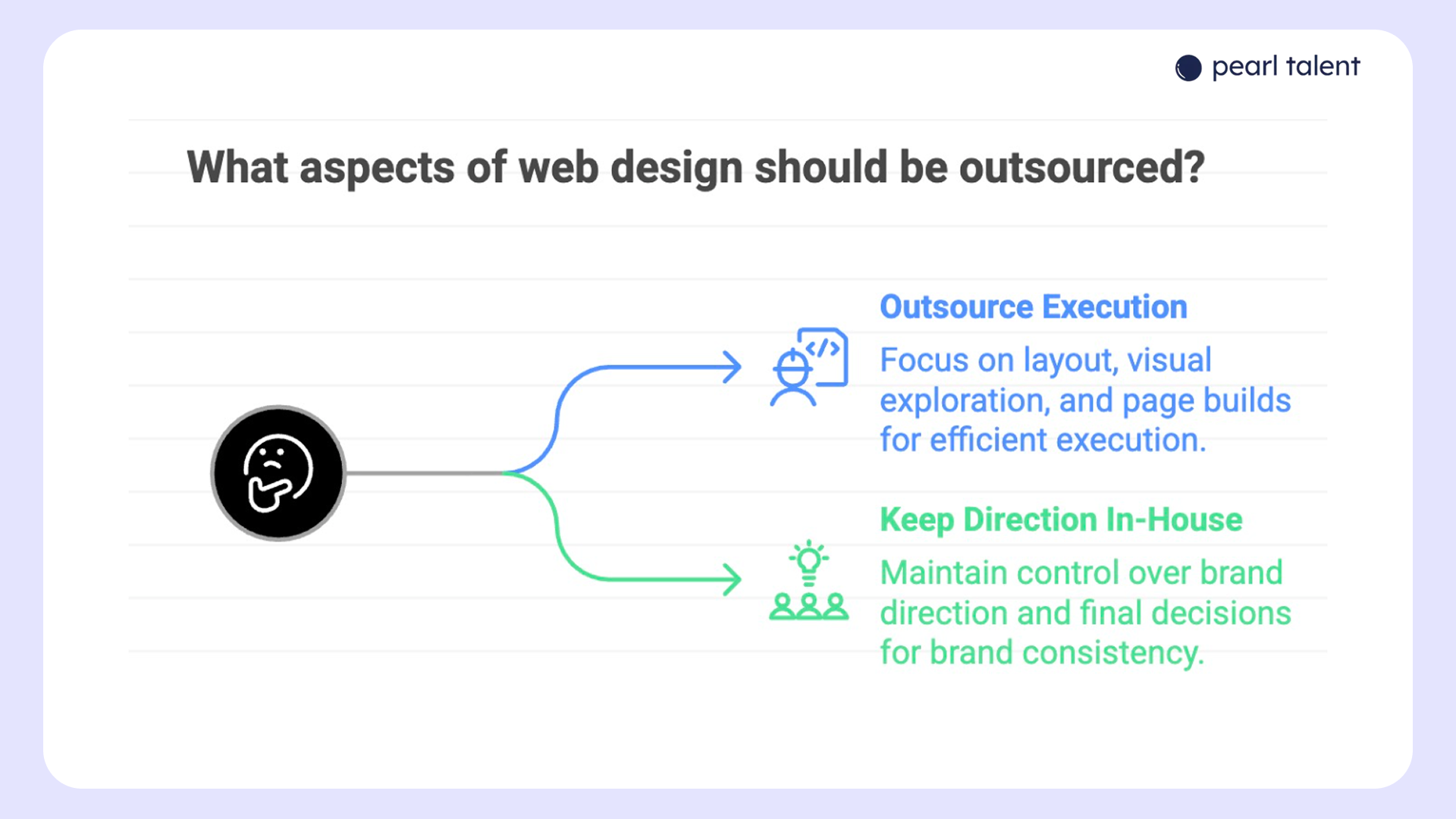
Layout execution, visual exploration, landing page production, design system extensions, and page-level builds tend to transfer cleanly. These areas benefit from focused execution and repetition, and external designers can move quickly when direction is clear.
Brand direction, positioning, tone, and final design decisions usually need to stay close to the business. These choices rely on context that’s hard to fully capture in a brief, no matter how detailed it is.
That doesn’t mean outsourced designers shouldn’t contribute ideas. It just means they shouldn’t be the only source of truth for what “on brand” means.
A simple way to frame ownership:
Clear ownership doesn’t limit creativity. It gives it structure. And that structure is often what protects quality as design work scales.
The evaluation usually starts simple and gets more specific as you go. You don’t need to overthink it, but the order matters.
First, look at the work. Not to judge creativity in isolation, but to see whether their output resembles what you want yours to become. Pay attention to structure, clarity, and consistency, not just visual polish.
Ask yourself a basic question: could your site realistically look like this after a few iterations? If the answer is no, it’s usually better to move on early.
Before going deeper, make sure expectations line up on cost, timelines, and capacity. This avoids spending time evaluating someone who isn’t a practical fit, no matter how strong the work looks.
Once those basics are aligned, it’s worth looking beyond visuals.
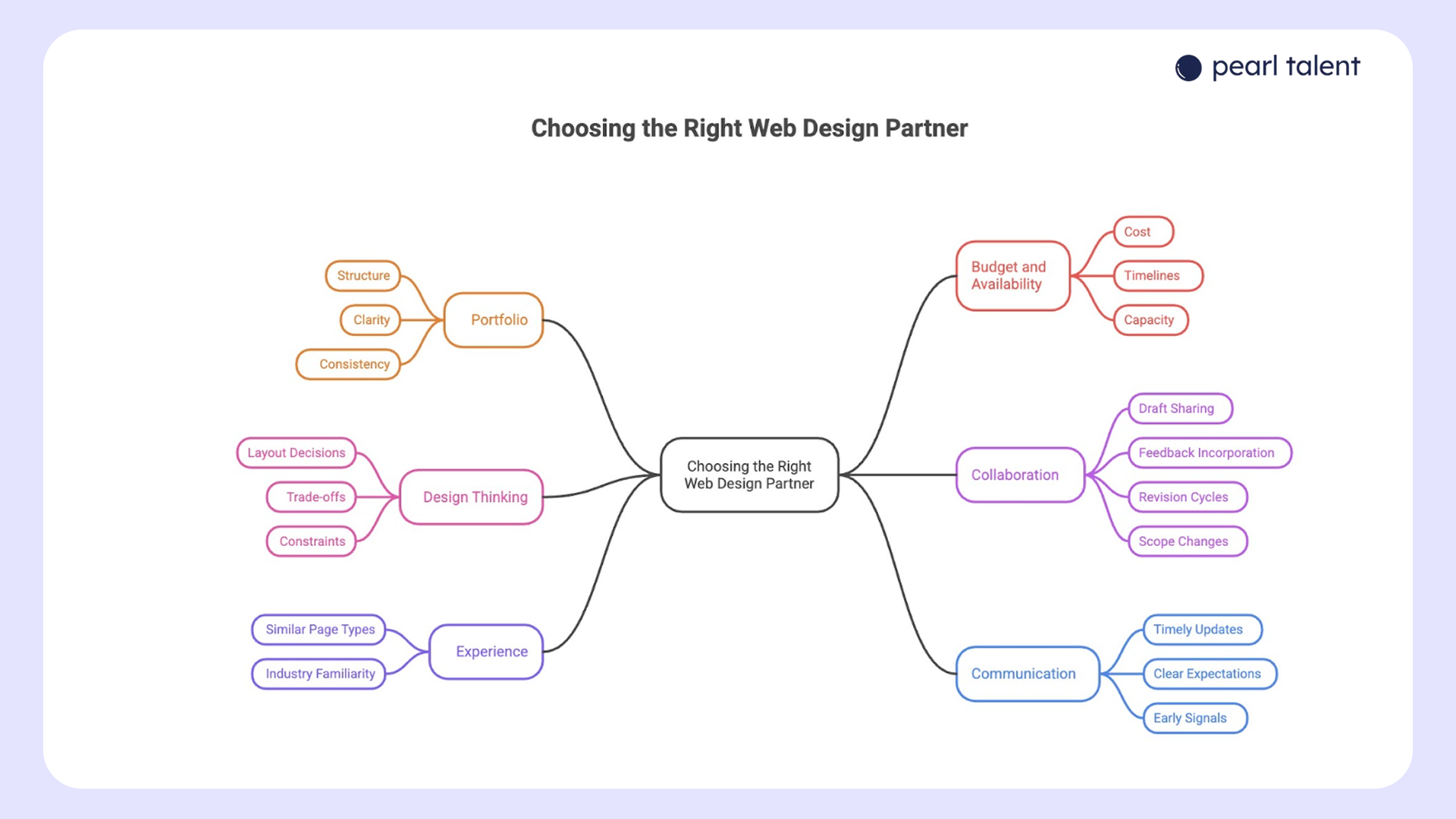
Good designers can explain why something works, not just what they’d build. Ask how they approach layout decisions, trade-offs, or constraints. You’re looking for reasoning, not buzzwords.
Clarity here prevents quality from slipping later. Find out:
Designers who’ve worked on similar page types or industries tend to ramp faster. Familiarity reduces back-and-forth and makes outcomes more predictable.
Timely updates, clear expectations, and early signals when something is unclear matter more than speed. Most quality issues show up first in communication.
Choosing the right partner isn’t about finding perfection upfront. It’s about reducing friction and setting up a working relationship where quality can be maintained as projects scale.
Once the project kicks off, the work doesn’t shift to autopilot. What you do after outsourcing to a web designer has a direct impact on design quality and delivery speed.

Outsourcing web design works best when collaboration stays active. Clear direction and steady feedback protect quality without adding unnecessary overhead.
Outsourcing web design works well at the beginning. It helps teams move faster without hiring and fills short-term gaps. Over time, the drawbacks tend to show up.
Designers change. Context gets lost between projects. Each new page or update requires re-explaining brand rules, past decisions, and priorities. In many cases, the issue isn’t design quality. It’s ownership.
Web design sits close to brand and marketing, and when that work is split across agencies or freelancers, consistency becomes harder to maintain.
That’s where Pearl Talent comes in.
We help companies hire full-time, long-term web designers who operate as part of your team. Sourcing, vetting, payroll, and compliance, are all taken care of so you stay focused on strategic decisions and not hiring logistics. Teams typically save up to 60% on payroll compared to local hires, without compromising on quality or commitment.
What makes Pearl Talent different:
Browse the profiles of web designers who're available for hire.

.svg)