Catena is now Pearl Talent! Same mission, new name.
AI is already part of everyday work. It writes emails, summarizes meetings, helps with customer support, analyzes data, and speeds up research. Teams are using it whether or not there is a formal plan.
What is missing is readiness.
Many companies have access to AI tools. Fewer have teams that know how to use them well. Even fewer know how to redesign work, so AI actually helps instead of adding confusion. That gap between access and capability is what people mean when they talk about the AI skills gap.
This gap shows up everywhere: in startups that move fast but break workflows, in large companies that invest heavily but see limited adoption, in frontline roles where tools are introduced with little training, and in leadership teams and hiring managers who sense opportunity but struggle to turn it into execution.
Understanding the AI skills gap means understanding how work itself is changing.
The AI skills gap refers to the mismatch between the skills companies need to use AI effectively and the skills most workers currently have.
This gap includes technical skills like data literacy, machine learning basics, and system integration. It also includes non-technical skills such as evaluating AI outputs, understanding limitations, making decisions with incomplete information, and applying AI responsibly.
The missing skills are often misunderstood.
It is easy to assume the gap is about coding or data science. In reality, many of the most important gaps sit closer to judgment and execution.
At leadership levels, the gap often looks different.
Leaders understand potential but struggle with prioritization, measurement, and alignment. AI initiatives stay experimental instead of becoming operational.
When these skills are missing, AI becomes a shiny tool that sits unused or, worse, a tool that creates errors at scale.
This is why the AI skills gap affects innovation, productivity, risk, and morale all at the same time.
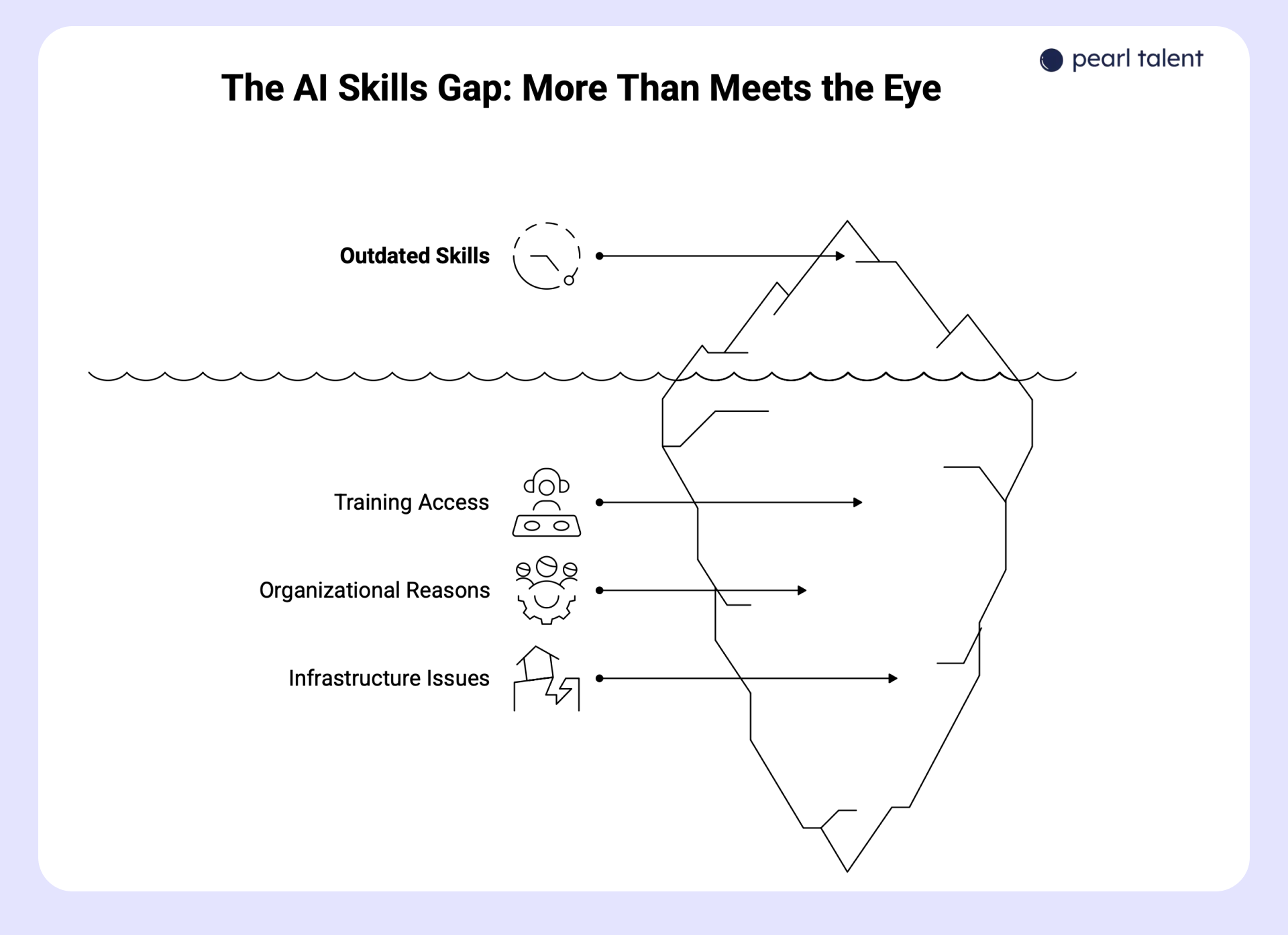
The biggest reason is speed.
AI capabilities are improving faster than education systems, internal training, and job definitions can keep up. Skills that were enough two years ago already feel outdated in many roles.
Some signals that show how fast things are moving:
Training access is another major issue.
Only a fraction of employees receive structured AI training. Frontline teams receive the least support, even though AI tools increasingly shape their day-to-day work.
There are also organizational reasons:
In many regions, basic infrastructure still matters. Internet access, hardware, and updated curricula are unevenly distributed. This creates large differences in readiness across countries and even within the same organization.
The AI skills gap creates some practical problems.
One common pattern is uneven adoption. A few teams move quickly while others barely engage. This creates internal divides and slows collaboration.
Another pattern is underused tools. Companies pay for AI tools that even software engineering teams do not fully adopt because nobody has shown them how it fits into their work.
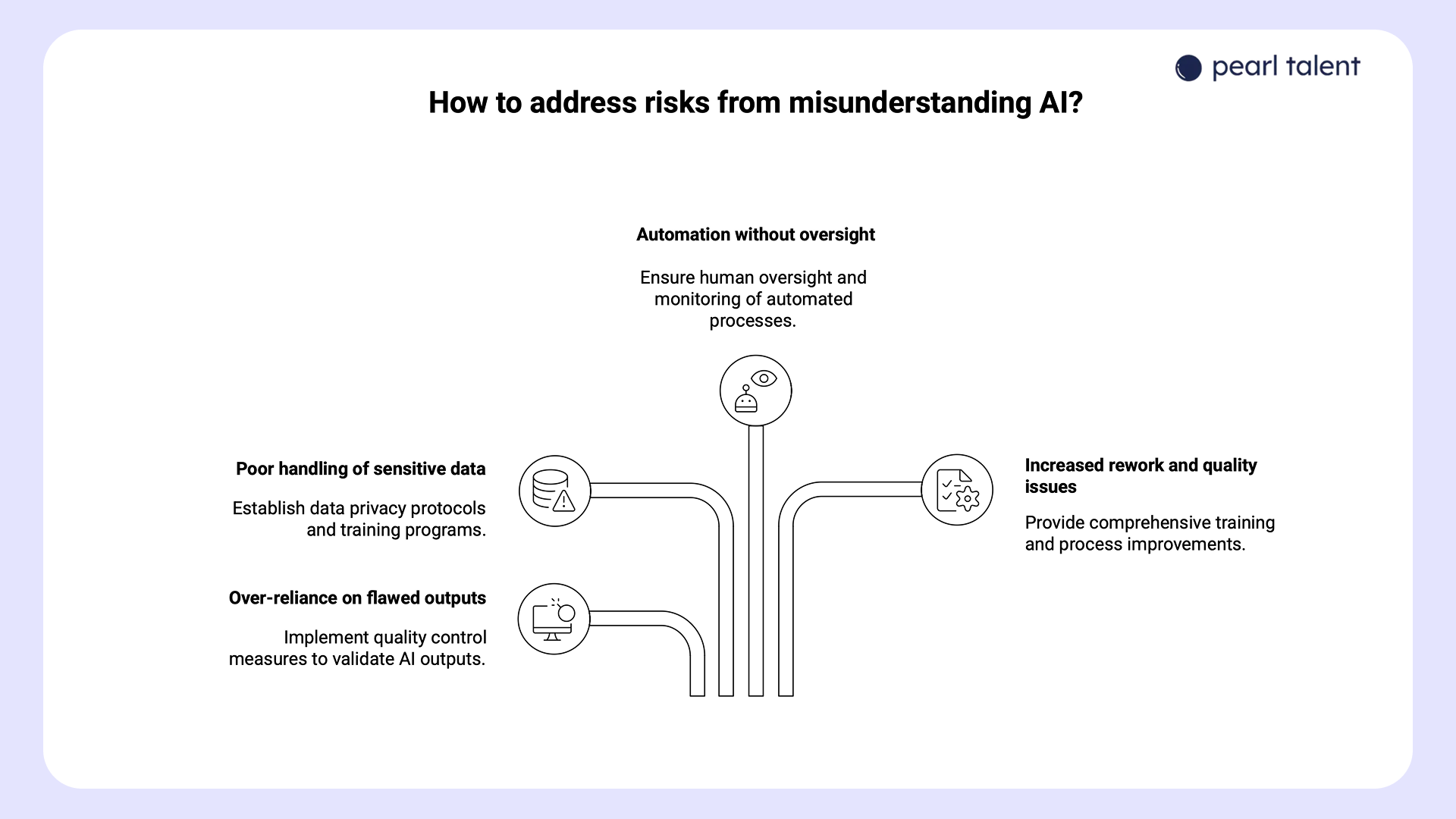
Some risks come from misunderstanding AI:
Innovation suffers too. When only a small group understands AI, experimentation bottlenecks around them. Ideas wait in line instead of being tested quickly.
Over time, this gap turns into a competitive disadvantage. Companies with stronger AI skills adapt faster and operate more efficiently, even when using similar tools.
From an employee’s point of view, the AI skills gap rarely feels dramatic. It tends to arrive quietly. Roles begin to shift without much explanation. Certain tasks disappear. New expectations show up before anyone has clearly explained how work is supposed to change.
Frontline employees feel this most. AI tools are often explored first by leaders and managers, while non-managerial teams receive limited guidance or access. Over time, this creates distance from decision-making and raises questions about growth and relevance.
For employees who do get exposure and support, the experience is often more positive. AI can change the shape of the workday in small but meaningful ways:
The difference usually has little to do with talent or motivation. It comes down to access, support, and clarity around expectations. When learning opportunities are uneven, the gap does not stay contained. It gradually widens between teams and roles.
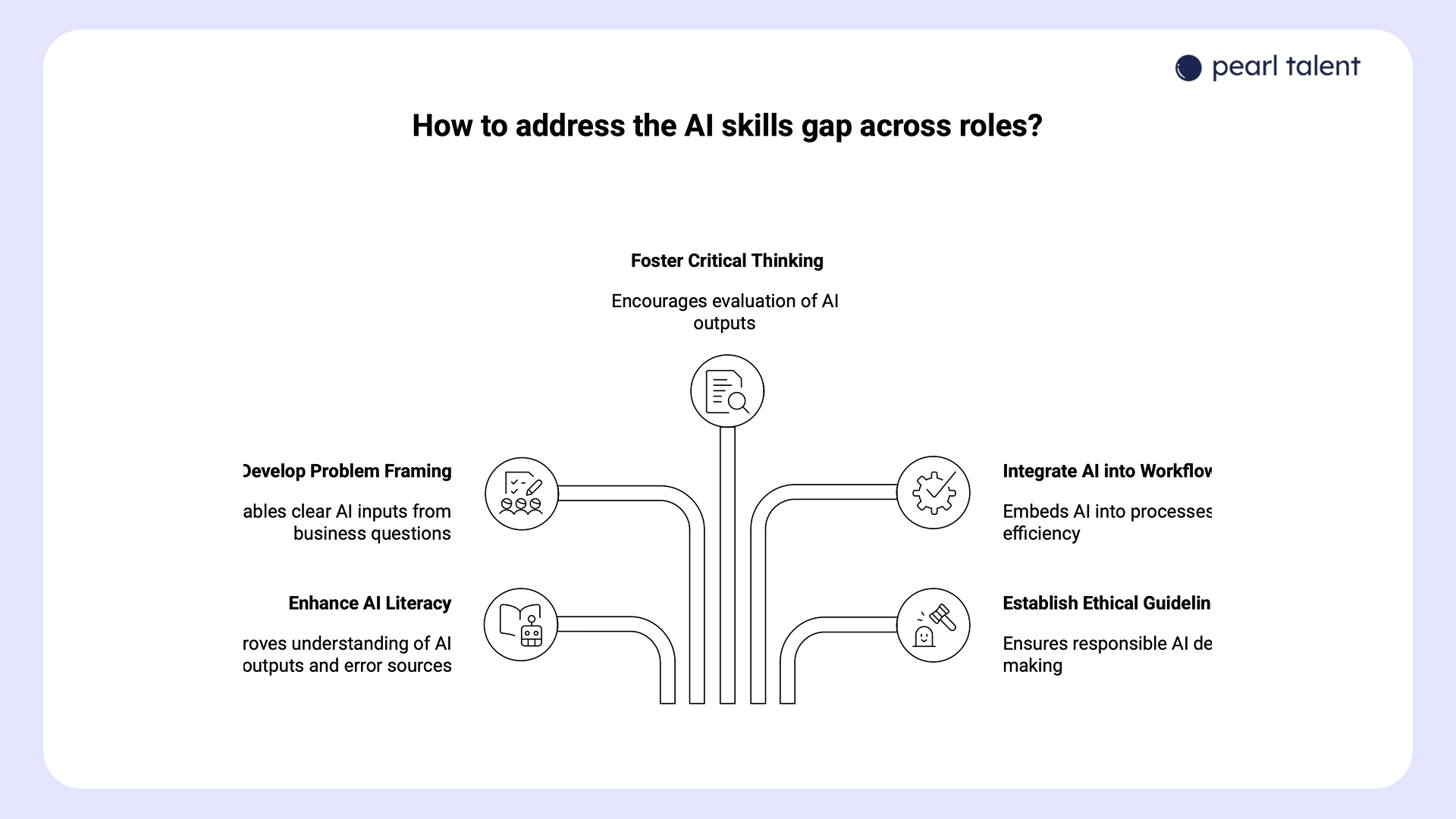
There is no single fix for the AI skills gap. Progress comes from a small number of deliberate shifts in how work is defined, taught, and supported. The organizations making real progress tend to focus on the fundamentals rather than chasing tools.
Closing the gap starts with clarity. Many employees are unsure how AI fits into their role, what they are expected to use it for, or where human judgment still matters. Without clear definitions, AI remains optional, inconsistent, or misused. Organizations need to spell out what AI-ready work means at the role level.
This includes which tools are approved, what decisions employees are responsible for, and where AI outputs require review. When expectations are explicit, employees stop guessing and start building confidence. Clear role design also helps managers evaluate performance fairly and reduces anxiety around changing responsibilities.
AI training often fails because it stays theoretical. Employees sit through sessions on concepts but struggle to apply them once they return to their desks.
Training is effective when it is tied directly to real workflows. Show your team how AI fits into tasks they already perform, such as preparing reports, responding to customers, or analyzing information.
Instead of making employees sit through long training sessions, start with short, practical learning workshops. When training focuses on immediate application, employees are more likely to experiment, learn through use, and build lasting skills. This approach also helps teams see AI as a daily tool rather than a separate initiative.
AI adoption breaks down when it is limited to leadership or specialized roles. Frontline teams often feel AI is something happening around them rather than for them. This slows adoption and deepens the skills gap.
Organizations need to involve frontline employees early by giving them access, guidance, and space to learn. These teams often handle the highest volume of repetitive work, which means they stand to gain the most from effective AI use. Including them early improves productivity, builds trust, and creates a more even distribution of AI capability across the organization.
AI changes how work gets done, but it does not remove the need for strong operators. In many cases, it increases it. Teams need people who can run systems, maintain workflows, review outputs, and keep things moving at scale. When those roles are missing or overloaded, AI initiatives stall even when the technology is sound.
This is where talent strategy becomes inseparable from AI strategy.
At Pearl Talent, we see this firsthand.
Companies often come to us after realizing that their AI plans are solid on paper, but day-to-day execution is bottlenecked. The issue is rarely ambition – it’s capacity. They need reliable, high-caliber operators who can step into defined roles, work alongside existing teams, and support AI-driven processes without constant supervision.
Pearl helps companies build those teams by sourcing exceptional global talent and integrating them thoughtfully into real workflows. The focus is not on outsourcing tasks in isolation, but on strengthening operations so internal teams can focus on higher-value work while AI systems are supported properly.
If your organization is investing in AI and feeling the strain of limited bandwidth, your next hire can make the difference. With Pearl, teams hire in under two weeks at a fraction of the cost, without compromising on quality.

.svg)