Catena is now Pearl Talent! Same mission, new name.
Staffing agencies play a bigger role in the labor market than most people realize. Beyond connecting employers and job seekers, they run complex operations built on service fees, contracts, and client partnerships. The U.S. staffing and recruiting industry is valued at $209.7 billion, showing just how much value these agencies create by matching talent with business needs. These agencies have become essential partners by managing the complexities of recruitment and placement, ensuring a good fit for both companies and job seekers. But beyond their role in hiring, understanding how staffing agencies make money provides valuable insights into the business strategies that keep the industry thriving.
At Pearl Talent, we know firsthand how staffing agencies generate revenue. And over time, staffing firms have shifted from transactional hiring to offering scalable, specialized solutions that help companies grow efficiently.
In this blog, you’ll discover how staffing agencies operate as both talent matchmakers and business enterprises, how they generate revenue, and the strategies that allow them to deliver scalable, specialized solutions for employers while supporting workers in finding the right opportunities.
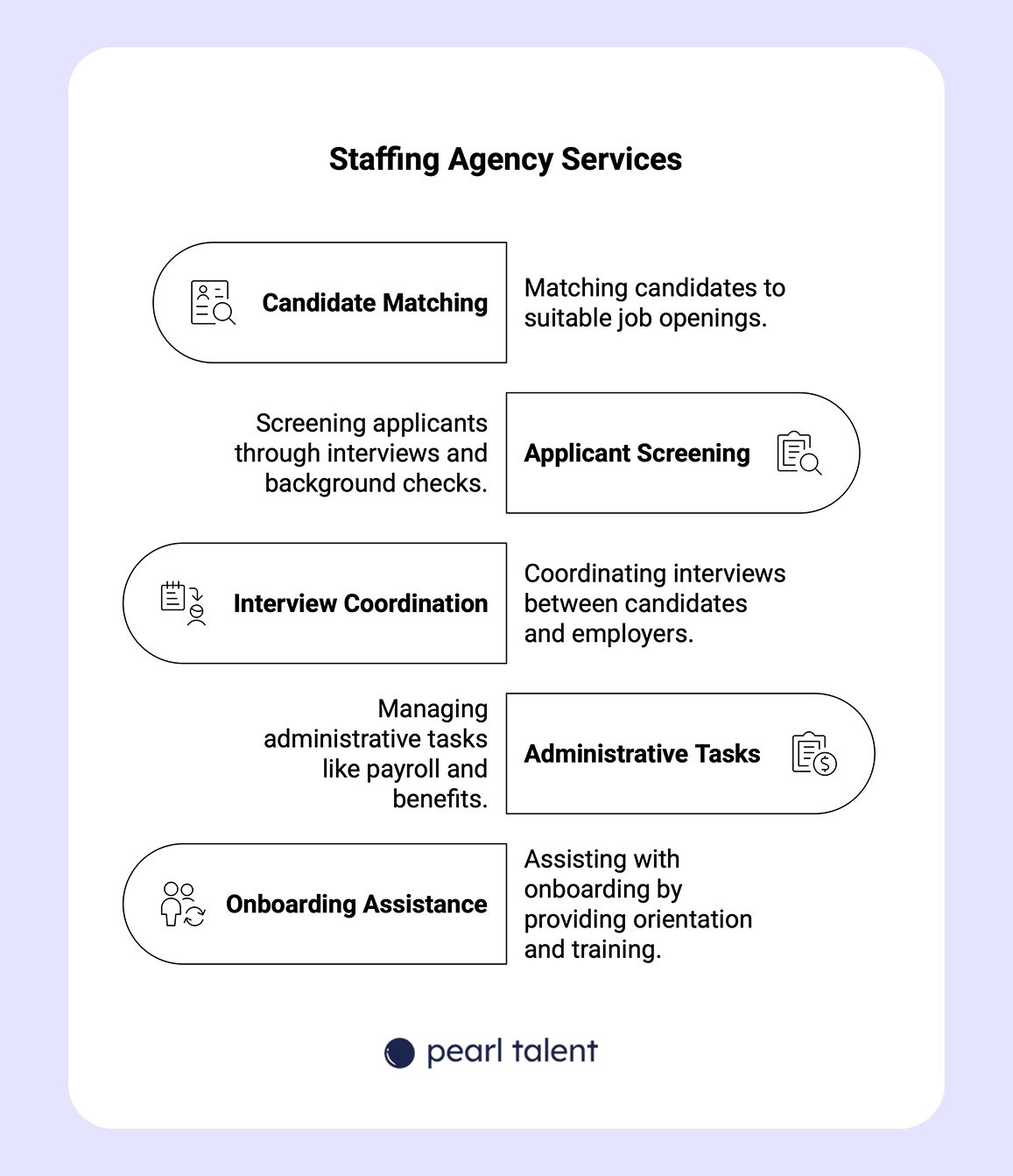
Staffing agencies help businesses find and manage qualified talent by handling key parts of the hiring process. Their main services include matching candidates to suitable job openings, screening applicants through interviews and background checks, coordinating interviews, and managing administrative tasks like payroll and benefits for temporary staff. They also assist with onboarding by providing orientation and training, ensuring new hires are smoothly integrated into the workforce.
Understanding how staffing agencies generate revenue starts with knowing how they serve both employers and job seekers. Agencies carefully vet candidates and present the most qualified individuals to clients, ensuring a strong match between skills and job requirements. When a client hires a candidate, the agency earns a fee according to its revenue model.
For temporary positions, the staffing agency often acts as the employer, taking on responsibilities such as payroll, benefits, and compliance. For direct hires, agencies typically charge a one-time placement fee, often calculated as a percentage of the candidate’s starting salary.
By handling recruiting, screening, and administrative tasks, reputable staffing agencies streamline the hiring process for businesses while connecting top talent with meaningful job opportunities, creating value on both sides of the hiring equation.
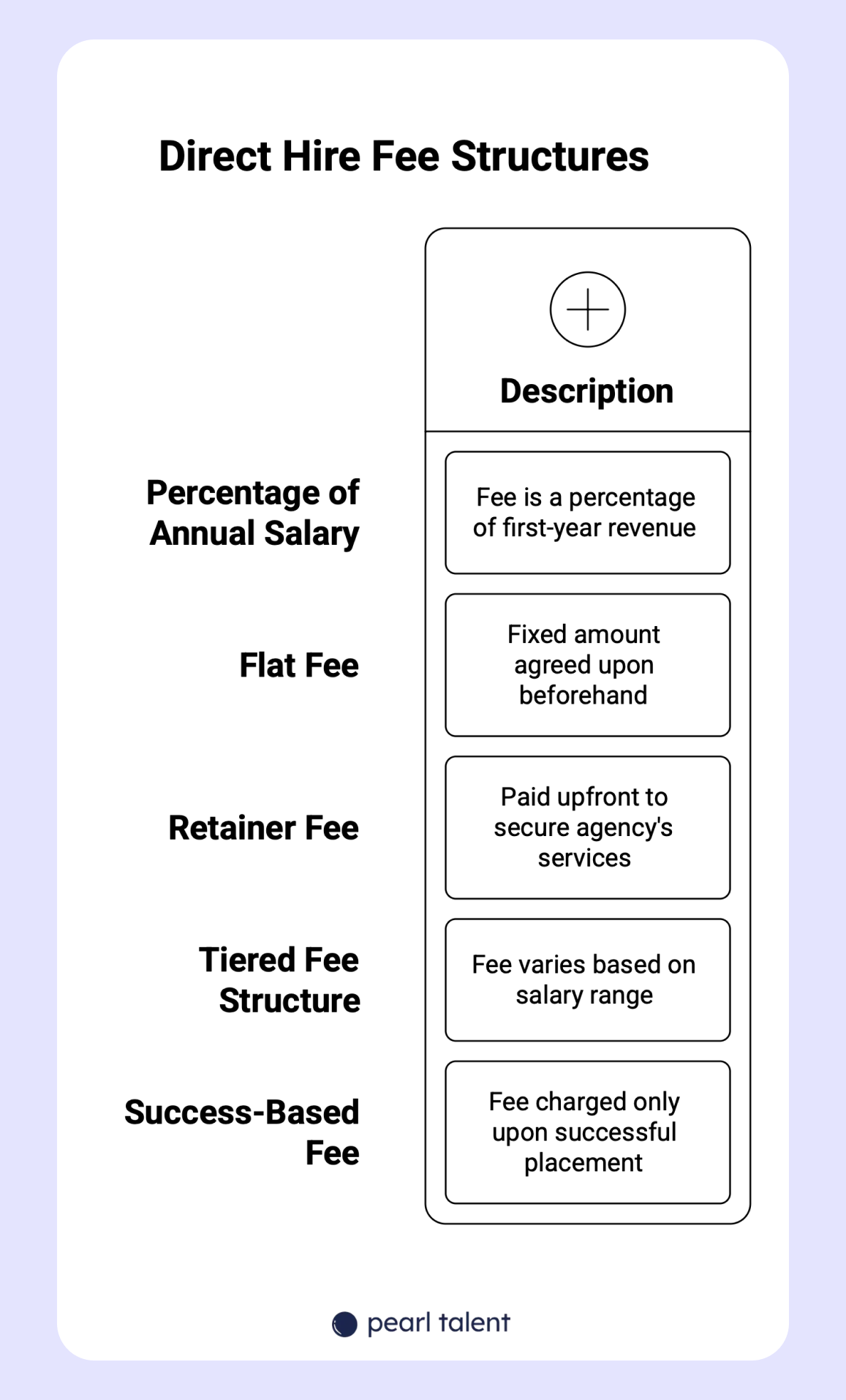
Direct hire involves placing candidates into permanent positions at a company. A streamlined staffing business solution ensures finding and screening candidates that match the client's needs. The agency manages the entire hiring process, from sourcing to final placement. The agency earns a fee based on its pricing structure once the candidate is hired by a company.
Here are the typical fee structures:
"Temp-to-Perm" stands for "temporary to permanent." In this model, an independent contractor or a contract worker is hired temporarily with the option to become a permanent employee later. The staffing agency provides the temporary worker and manages the initial placement.
If the company decides to offer the worker a permanent position, they pay a conversion fee to the agency. Such a fee structure is usually a percentage of the worker’s annual salary, explaining how staffing agencies make money. This model allows companies to evaluate workers before committing to a long-term hire.
Staffing agencies make money by placing temporary workers with client companies for short-term assignments. The agency hires the workers as its employees, handling payroll, benefits, and other employment duties. The agency then places these temporary basis employees with the company of the client, who pays for their services.
In temporary staffing, agencies employ workers directly and lease their services to clients. The client pays an hourly rate that includes both the worker’s pay and an agency markup - typically 30-50%. This markup covers payroll taxes, benefits, and agency profit. For example, if a temp earns $20/hour, the client might pay $30/hour to the agency. That $10 difference is how staffing firms sustain operations and generate profit.
The profitability of RPO companies varies widely. Still, they generally depend on how well an agency manages its operations and adapts to market conditions. Some key factors influencing the profitability of staffing agencies include:
When the economy is struggling, businesses often cut back on hiring, which means fewer job openings and less need for staffing services. On the other hand, when the economy is doing well and companies are growing, there is a higher demand for virtual assistants, which boosts the need for temporary staffing agencies.
To stay profitable, staffing agencies must adjust their strategies based on these economic changes. This adaptability is key to understanding how staffing agencies make money and helps agencies continue to thrive.
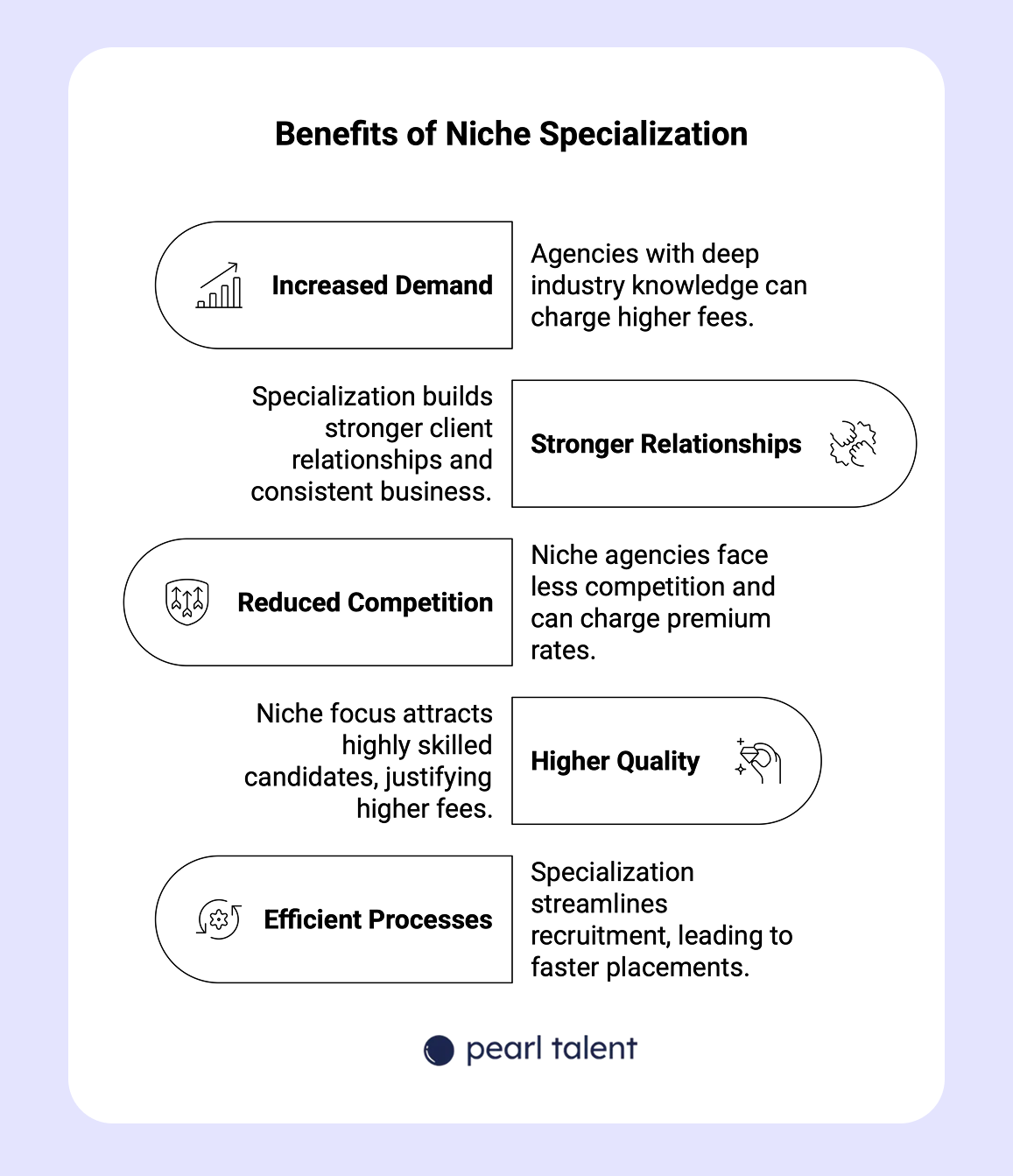
Agencies can attract clients and candidates seeking specialized knowledge and services by concentrating on a particular niche. This focus can lead to better job placements and more effective recruitment processes. Specializing in a specific niche greatly impacts how staffing agencies make money based on these factors:
Strong client relationships are essential for staffing agencies to succeed. Agencies that build and maintain long-term partnerships with their clients enjoy steady business and more referrals. When clients trust and rely on an agency, they are more likely to return for future hiring needs and provide consistent contracts.
Fostering trust often leads to a reliable source of income, which is a key aspect of how staffing agencies make money. Additionally, good relationships can open doors to more valuable placements and higher fees. Staffing agencies can boost their profitability and growth by building solid and positive connections with clients.
Effective operational efficiency helps staffing agencies boost their profitability. Streamlining workflows and minimizing costs can significantly enhance overall performance and client satisfaction. This efficiency impacts staffing agencies in many ways, such as:
Today’s most profitable staffing agencies leverage automation and AI to streamline candidate matching, onboarding, and payroll. Tools like applicant tracking systems (ATS) and AI sourcing software help reduce time-to-fill and increase revenue per recruiter. Data analytics also provide insights into hiring trends and candidate quality, making the recruitment process more efficient.
However, technology alone isn’t enough. Human expertise remains essential for evaluating soft skills, building relationships, and guiding both clients and candidates through the hiring process. When combined with AI, recruiters can focus on higher-value tasks like interviewing, coaching, and closing placements, while technology handles administrative work. This synergy allows agencies to operate faster, make smarter decisions, and increase profitability per hire.
Recent research highlights both the promise and the limitations of AI in staffing. 91% of executives say AI optimization is crucial for long-term success, yet only 4% feel very effective at hiring the talent they need. Similarly, 41% of HR professionals believe AI decisions are less biased than human ones, though 25% remain unsure. These findings reinforce that AI is most effective as a support tool, enhancing recruiter expertise rather than replacing it.
Staffing agencies generate revenue through placement fees, hourly markups, and conversion charges, all carefully structured to balance client needs with a positive candidate experience. Understanding these models helps businesses budget smarter, hire faster, and make more informed workforce decisions.
Pearl Talent helps companies hire full-time remote team members across roles like virtual assistants, operations, recruiting, customer support, and more. Instead of limiting hiring to one region, Pearl sources talent from the Philippines, Latin America, and South Africa through local networks and university partnerships. That's why you'll be able to hire the top 1% remote talent for a long-term basis at 60% less cost than US talent, all within 2 weeks.
You don’t post jobs or screen hundreds of resumes. Pearl handles sourcing, vetting, payroll, compliance, onboarding, and ongoing support, so your hires feel like true internal team members, not outsourced help.
Browse available hires on Pearl Talent and see who you could bring on next.

.svg)