Catena is now Pearl Talent! Same mission, new name.
Outsourcing SEO used to mean handing off a checklist of tasks, things like keyword research, link building, and meta tag optimization, to whoever could do them cheapest. That worked when search was simpler, and ranking was mostly a volume game. But in 2026, with AI-generated content flooding every niche and Google getting more aggressive about rewarding genuine expertise, the bar for what "good SEO" looks like has shifted significantly.
The companies seeing real returns from outsourced SEO aren't treating it as a commodity service. They're bringing in people who understand their market deeply enough to build content and technical infrastructure that compounds over quarters, not just months. That means the old model of hiring a generalist agency to "handle SEO" while your team focuses on other things often leaves serious value on the table.
This guide breaks down how to outsource SEO in a way that actually compounds over time, from figuring out what to hand off, to vetting the right people, to setting up reporting that tells you something useful.
Before you talk to an agency or freelancer, get specific about what you're trying to achieve. "We need more organic traffic" is not a goal. It's a direction. A SMART goal sounds more like "we need to rank on page one for five high-intent keywords in our category within six months" or "we need to double organic demo requests by Q3."
The reason this matters so much is that your goals directly shape who you should hire and what you should ask them to do. A company focused on building topical authority in a niche vertical needs a very different kind of SEO partner than one trying to fix a technical debt problem that's tanking crawlability.
Start by answering these:
Once you've mapped that out, stack rank what needs to happen first.
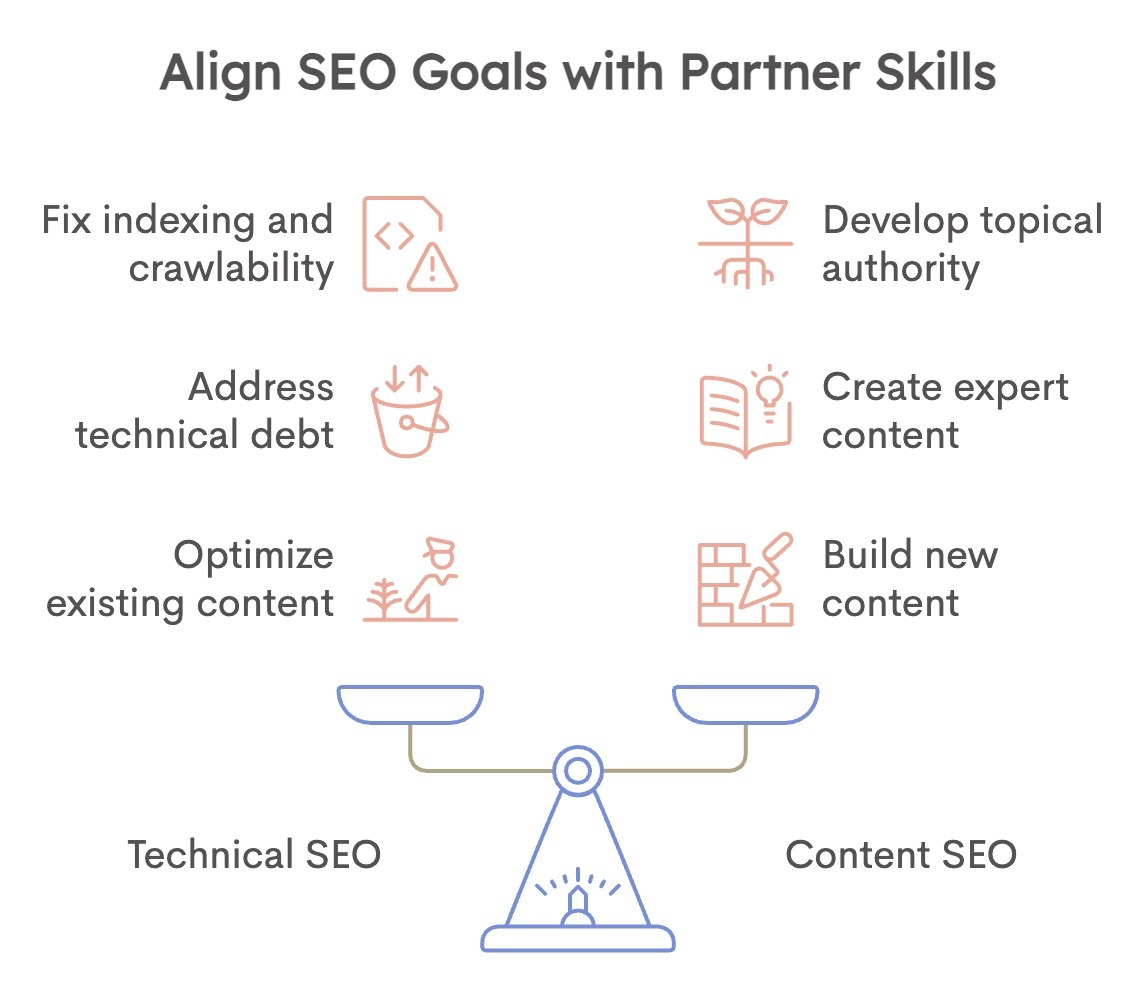
Each of these is a different hire with a different skill set, which is exactly why getting this clarity upfront saves you from bringing on a partner who's strong in areas you don't actually need help with.
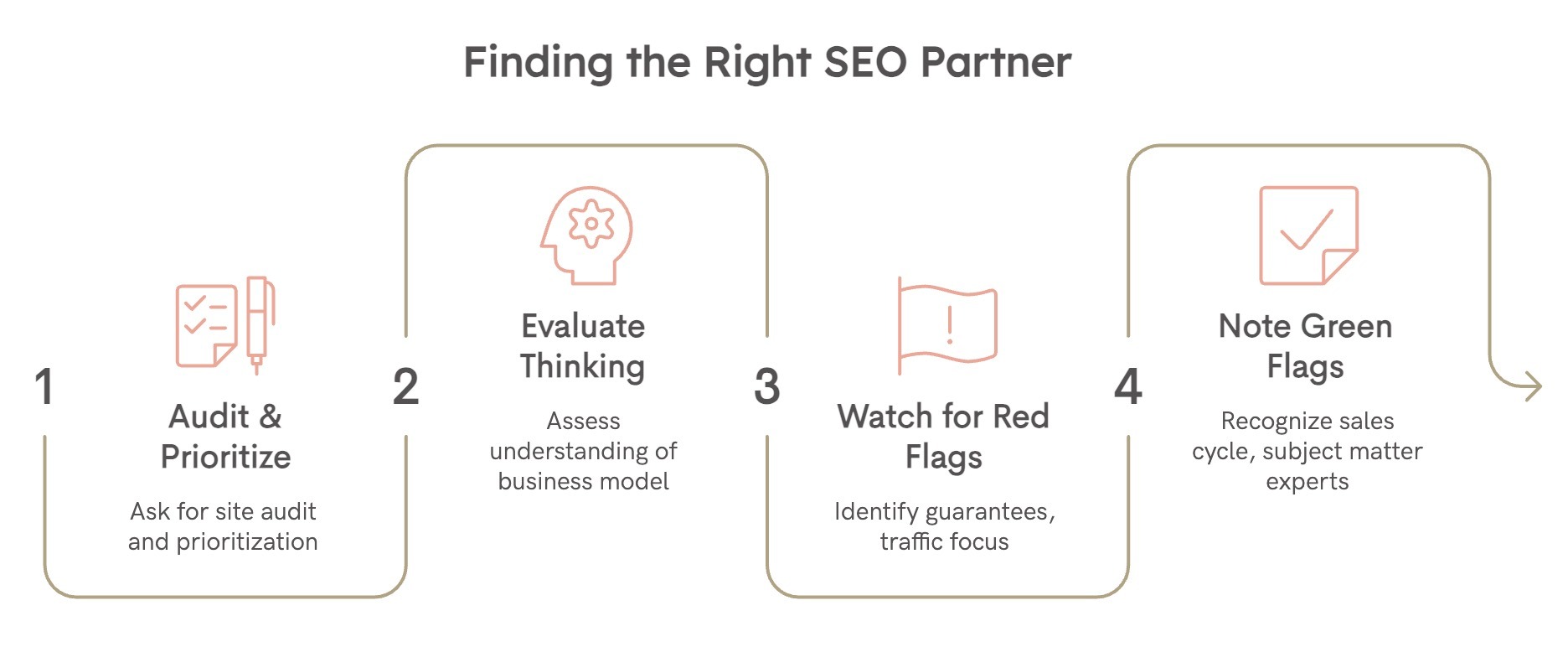
The vetting process is where most outsourcing engagements go wrong. A polished pitch deck and a few cherry-picked case studies don't tell you much. What you actually want to evaluate is how a potential partner thinks about your specific situation.
One of the most effective things you can do is ask candidates to audit a few pages on your site and walk you through what they'd prioritize. You're not looking for a free strategy. What you're looking for is how they think. Do they ask about your business model and conversion flow, or do they jump straight to keyword gaps? Do they understand the difference between ranking for a term and ranking for a term that actually drives revenue?
Red flags to watch for:
Green flags worth noting: they ask about your sales cycle, they want to talk to your subject matter experts, they've worked with companies at a similar stage, and they're upfront about what they don't do well.
Also, don't default to hiring a full-service agency if you only need help with one or two functions. A specialist contractor who's great at technical SEO or content strategy will often outperform a generalist agency trying to cover everything.
This is where you turn a loose "we'll handle your SEO" agreement into something you can actually hold people accountable to. A good scope of work document should read like a project plan, not a menu of services.
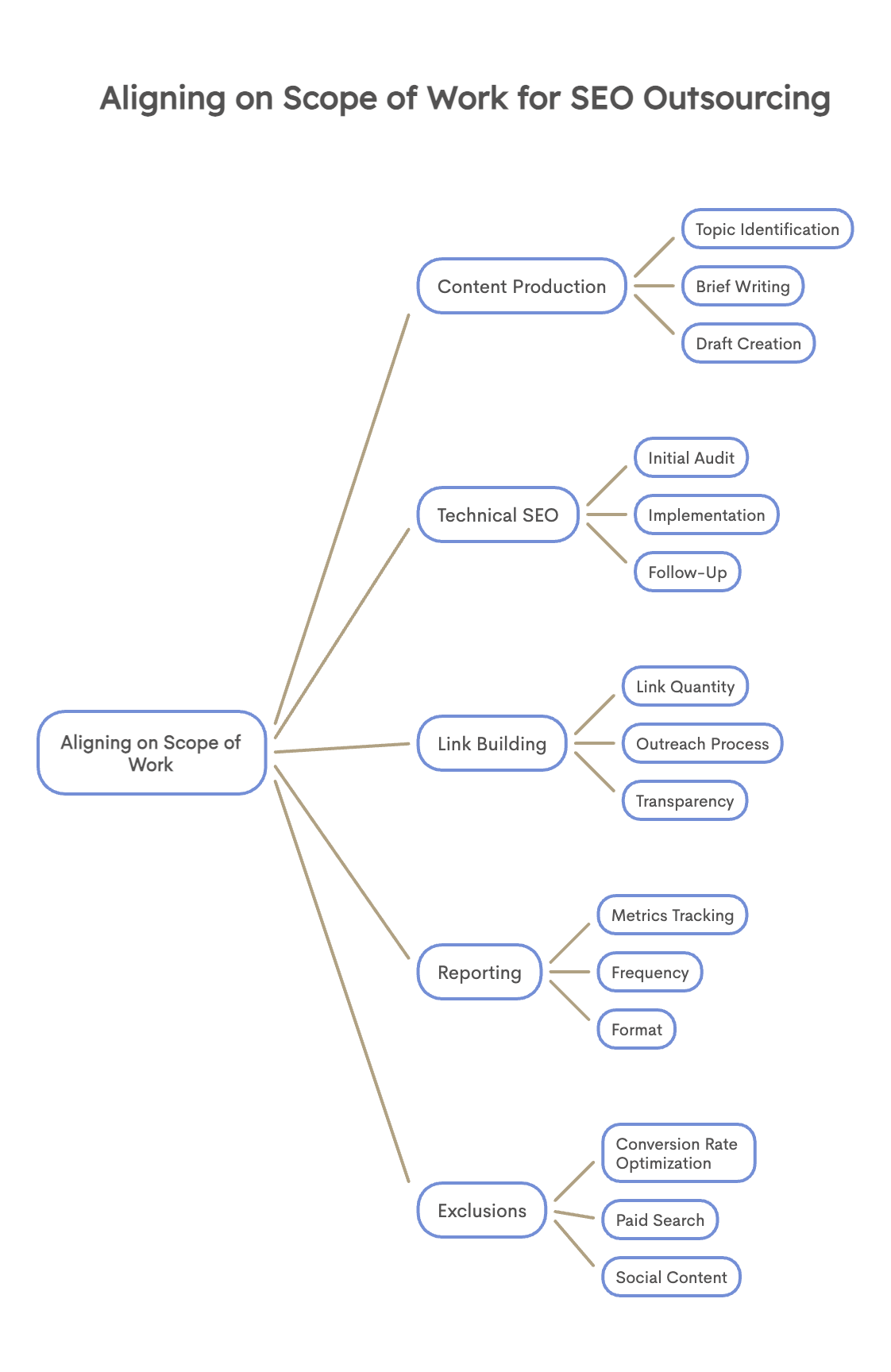
Get specific about deliverables, timelines, and ownership. For example:
Who identifies topics? Who writes the briefs? Will it be your content writers, or theirs? Who creates the drafts, and who reviews them before publishing? If your SEO partner is producing content, are they interviewing internal experts or just writing from research? That distinction matters enormously for quality.
What's included in the initial audit, and what happens after? Are they implementing fixes directly or handing recommendations to your dev team? If it's the latter, who follows up to make sure things actually get done?
How many links per month, and from what kind of sites? What's the outreach process? This is the area where agencies are most likely to cut corners, so you want full transparency.
What metrics are they tracking, how often, and in what format?
One thing that saves a lot of headaches later: define what's not included. If your partner's scope doesn't cover things like conversion rate optimization, paid search, or social content, make that explicit so no one assumes it's being handled when it isn't. The best outsourced relationships have zero ambiguity about who owns what.
Monthly reports are not enough. By the time you realize something's off in a monthly review, you've already lost three or four weeks of momentum. A weekly check-in rhythm keeps things moving without turning into micromanagement.
Here's a simple cadence that works well:
Weekly (15-20 min async or live): A short update covering what was completed last week, what's in progress this week, and any blockers. This doesn't need to be a formal meeting. A shared doc or a quick Loom video works fine.
Biweekly (30 min live): A slightly deeper conversation about what's working, what's not, and any strategic adjustments. This is where you discuss things like shifting keyword targets, reprioritizing content topics based on what's gaining traction, or flagging technical issues that need dev resources.
Monthly (45-60 min live): A proper performance review. Traffic trends, ranking movement, conversion data, and a clear connection between SEO activity and business outcomes. This is also where you revisit the scope of work and decide if anything needs to change for the next month.
The key metric most teams overlook is pipeline influence.
Traffic and rankings matter, but what you really want to track is how many leads, demos, or signups are coming through organic search and whether the quality of those leads is improving over time. If your SEO partner can't connect their work to downstream revenue metrics, that's a conversation worth having early.
Hiring an in-house SEO expert is probably the ideal scenario. They sit inside your team, they pick up context naturally, and they build a deep understanding of your product and customers over time. If you can make that hire, it's worth doing.
But if you're outsourcing SEO because finding that person has been genuinely difficult, or because the cost of a full-time US-based SEO hire doesn't make sense for where your company is right now, Pearl Talent can get you there faster.
Pearl Talent sources SEO specialists from the Philippines, Latin America, and South Africa, vetting them through hands-on assessments, portfolio reviews, and culture interviews before you ever see a profile. The acceptance rate sits at 0.8%, so you're not sifting through dozens of candidates hoping to find someone who's the right fit for you.
Here's what the engagement looks like in practice:
The cost structure starts at $3,000 per month per hire, which comes in at roughly 60% less than a comparable US-based SEO hire, and that includes payroll, compliance, and ongoing talent management.
Every hire comes trained on AI productivity tools and goes through continuous upskilling after placement. Share your details here (takes 2 minutes) and get profiles of available candidates for free.

.svg)