Catena is now Pearl Talent! Same mission, new name.
When the steam engine entered production, work started moving toward centralized factories. Cities grew around those factories, new roles appeared, and daily routines adjusted to machine-driven schedules.
The arrival of the internet followed a similar pattern. Communication became faster, collaboration crossed borders, and knowledge work spread beyond offices. Over time, entire industries adapted to this new baseline of constant connectivity.
Artificial intelligence is reshaping how teams work in similar ways. Certain skills are becoming less central as automation takes over routine tasks, while others are growing in importance as people learn how to collaborate effectively with new systems.
What’s changing fastest isn’t demand for deep technical AI roles alone. It’s the spread of AI fluency across non-technical jobs.
According to McKinsey, between 2023 and 2025, roles listing AI-related skills expanded sharply across operations, customer support, project management, and general knowledge work. The biggest jump comes from jobs that expect people to use AI as part of their workflow, not build it from scratch.
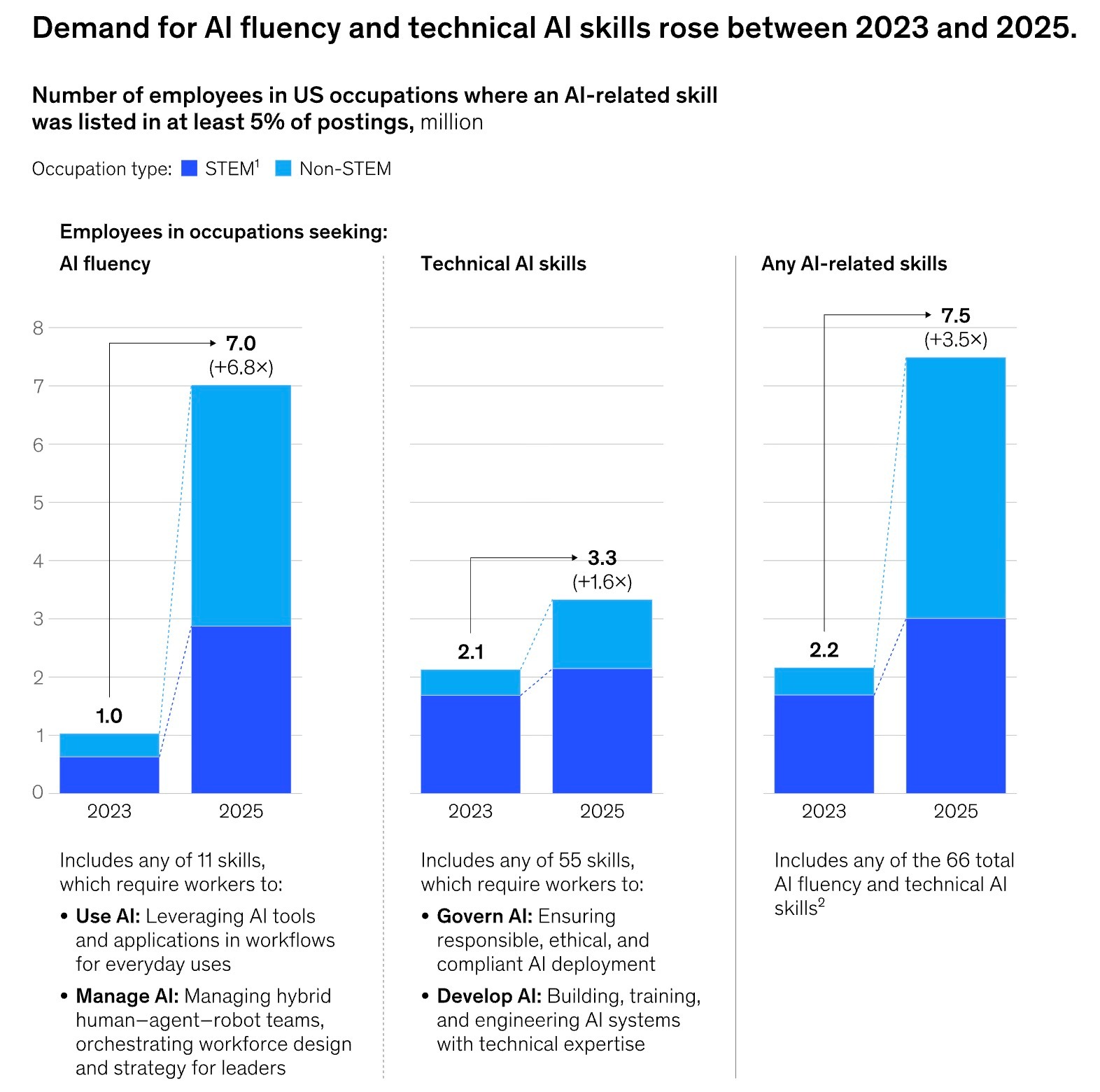
Demand for AI fluency in 2023 vs. 2025 (source)
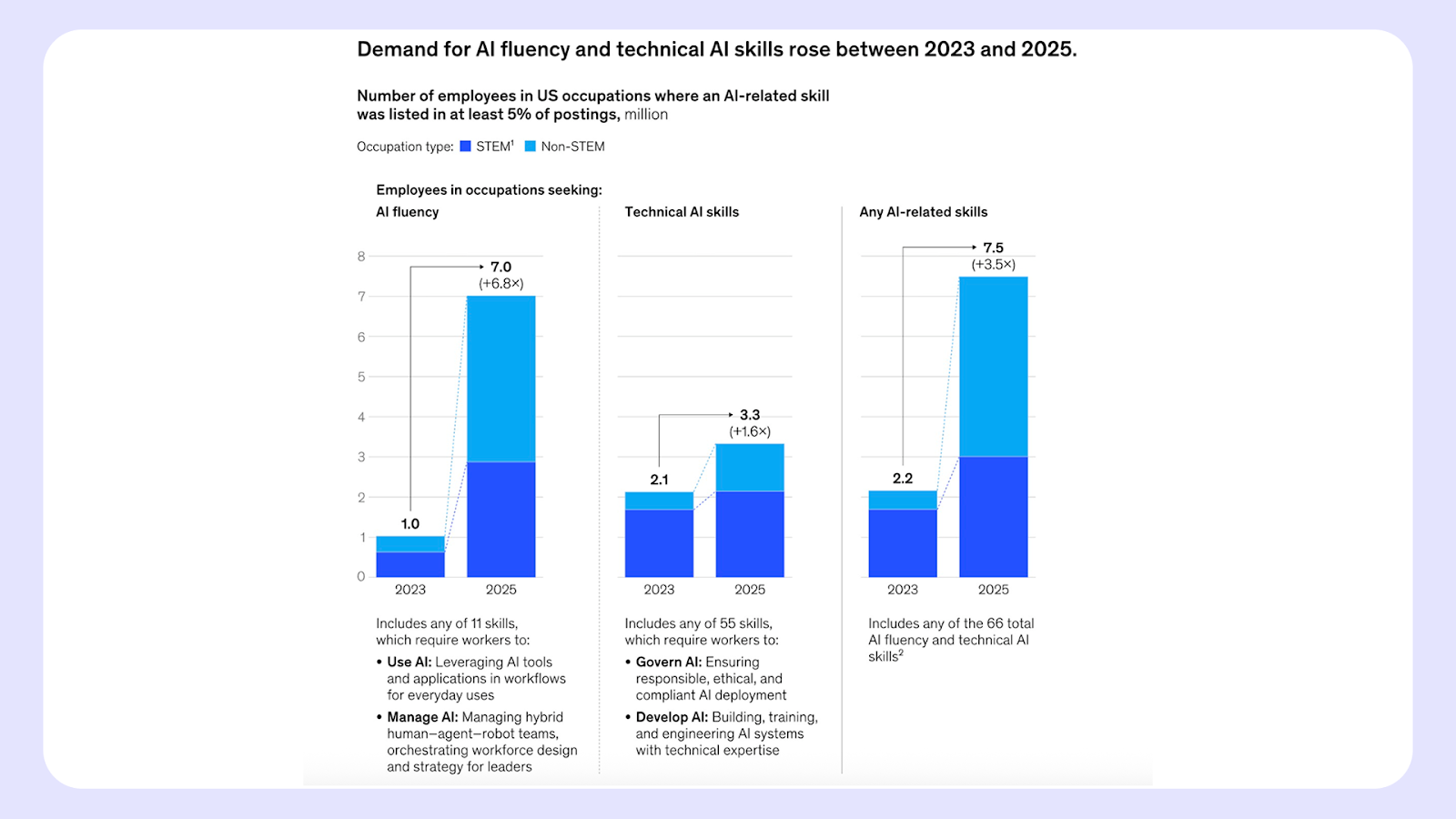
Demand for AI fluency in 2023 vs. 2025
This is why the future of work with AI looks less like a race to hire narrow specialists and more like a reset of what every strong operator is expected to do. Teams need people who can work confidently alongside AI systems, manage AI-supported processes, and adapt as tools continue to evolve.
A small set of AI technologies is reshaping how work gets planned, executed, and reviewed. These aren’t abstract research concepts anymore. They’re embedded into everyday tools and already influencing how roles evolve.
Large Language Models are AI systems trained on large volumes of text so they can understand and generate human language. They read documents, answer questions, write drafts, and synthesize information across sources.
In day-to-day work, LLMs support a wide range of knowledge tasks:
As this becomes normal, the value of work shifts. Producing text matters less than shaping it. Employees spend more time deciding what to ask, how to frame problems, and how to apply outputs in real situations. Judgment, context, and decision-making move closer to the center of most roles.
Generative AI refers to systems that create new content (such as images, videos, code, presentations, and structured assets) rather than only analyzing existing data.
Its impact shows up early in the workflow. Its impact shows up early in the workflow, particularly in how teams move from idea to first draft:
This changes how work gets staffed and approved. Fewer handoffs are needed in the early stages. Human effort shifts toward direction-setting, refinement, and tradeoff decisions, rather than repetitive production. Over time, smaller teams gain the ability to take on broader and more complex projects.
AI agents are systems that can operate continuously and take actions within defined boundaries. Instead of waiting for prompts, they monitor inputs, make decisions, and interact with tools on their own.
In practice, AI agents are used to:
As agents handle more execution, human roles move toward oversight and coordination. Teams focus less on managing individual tasks and more on designing processes that run reliably. This changes how scale is achieved and how responsibility is distributed across the organization.
Preparing for AI at work isn’t about predicting specific tools or roles. It’s about building organizations that can absorb change without constant disruption. The companies that do this well focus on how work is designed, learned, and supported.
Instead of starting with job descriptions, start with how work actually flows. Map the path from input to outcome and look for patterns such as repetitive steps, frequent handoffs, or decisions that rely on incomplete information. These are usually the first places where friction hides.
For example, imagine a simple customer onboarding process. A new customer signs up. Someone reviews their information. Another person sets up the account. A third follows up with documentation. Along the way, details get re-entered into different systems, questions sit unanswered in inboxes, and no one has full visibility into the status.
If you only think in terms of titles, you might assume the solution is hiring another support associate. But when you map the workflow, you might realize that half the delays come from manual data entry and scattered communication. That opens the door to redesigning the process, automating certain steps, and redefining what the role actually needs to focus on.
When roles are built around how work moves rather than what a title traditionally covers, teams become more efficient and more adaptable.
AI fluency doesn’t mean everyone needs to understand models or code. It means people know how to use AI tools responsibly and productively in their own work.
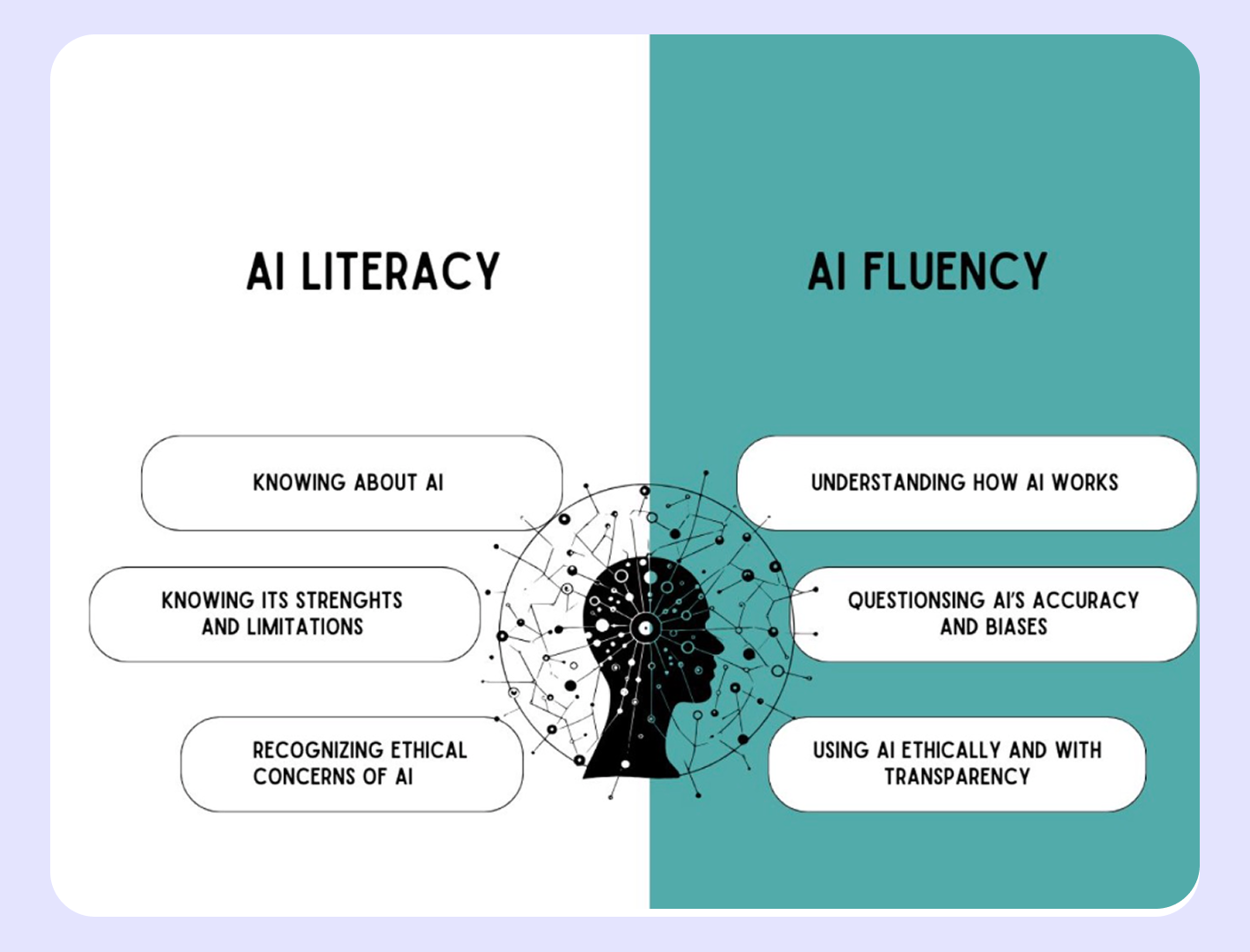
Practical ways to support this:
When fluency is widespread, AI stops feeling like a separate initiative. It becomes part of how work gets done, similar to spreadsheets or collaboration tools.
AI increases the volume of options, summaries, and recommendations available to teams. Without changes to decision-making, this creates noise instead of speed.
Leaders should clarify which decisions AI can support versus trigger. They should define who owns the final judgment and accountability. Clear decision frameworks prevent overload. They help teams move faster while keeping responsibility grounded in humans, not tools.
AI tools change faster than hiring cycles. By the time a role is filled based on a specific tool, workflow, or certification, parts of that requirement may already be outdated. What holds up over time is not familiarity with one system, but the ability to adjust when systems change.
Adaptable hires tend to show up the same way across different roles. They don’t freeze when a tool behaves differently than expected. They explore, test, and ask clarifying questions. When something breaks, they focus on understanding the underlying goal rather than defending the old process.
You can often spot this in simple examples.
A strong operations hire may not have used your exact AI stack before, but they’ve worked through tool changes in the past. They’re comfortable reviewing AI-generated outputs, catching edge cases, and deciding when human intervention is needed. Over a few weeks, they end up shaping better workflows than someone who only knows how to follow a fixed playbook.
When hiring, this usually matters more than deep familiarity with a specific model or platform:
These traits compound quietly. Teams built this way don’t need constant retraining every time tools evolve. They absorb change naturally and keep moving, even as workflows shift around them.
The future of work with AI doesn’t hinge on having the newest tools. Companies already have access to powerful models, copilots, and automation software.
What separates teams that make real progress from those that stall is the people using them. Not just people who can generate text or run prompts, but people who understand how AI fits into workflows, where human judgment still matters, and how to turn new capabilities into reliable execution.
Pearl Talent can help you hire such talent without months of search. We source candidates from top universities across regions like the Philippines, Latin America, and South Africa. They cost 60% less than their US counterparts.
Here’s what makes Pearl Talent a great fit for businesses that want to hire candidates who are AI-literate:
Explore available hires on Pearl Talent and evaluate the kind of operators who can help your team use AI effectively in day-to-day work.

.svg)