Catena is now Pearl Talent! Same mission, new name.
If C-suite executives are the engines of a company, then their executive assistants (EAs) are the oils that keep them running smoothly. From managing communication and booking flights to preparing reports and handling crises, EAs protect executives’ time and energy, giving them more brainpower for strategic planning.
And the first step to getting hired as an EA? Having a stellar resume that clearly positions you as the best possible candidate.
Whether you’re a junior EA looking to bag your first major role, or a senior one who wants a change of scenery, here are 4 executive assistant resume examples and 7 tips that’ll get you your dream job.
Here are some executive assistant resume samples with a brief breakdown of why they work so well.
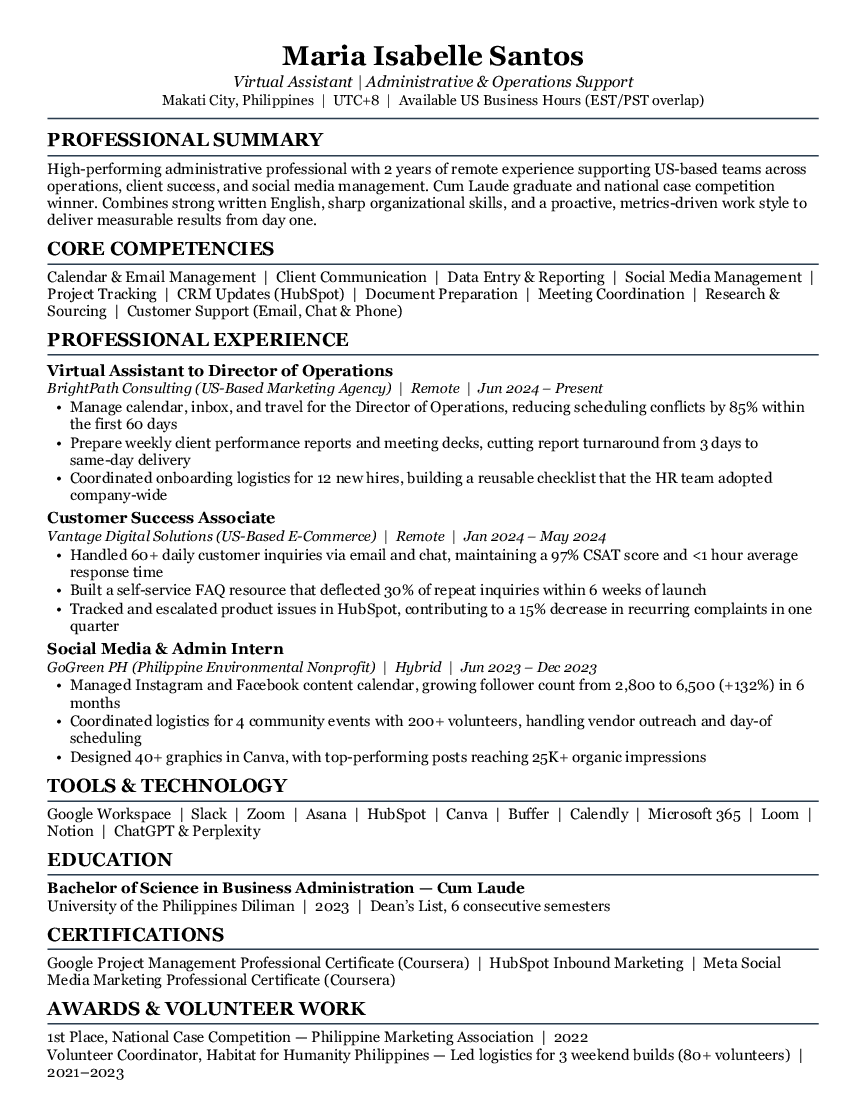
Why this resume works:
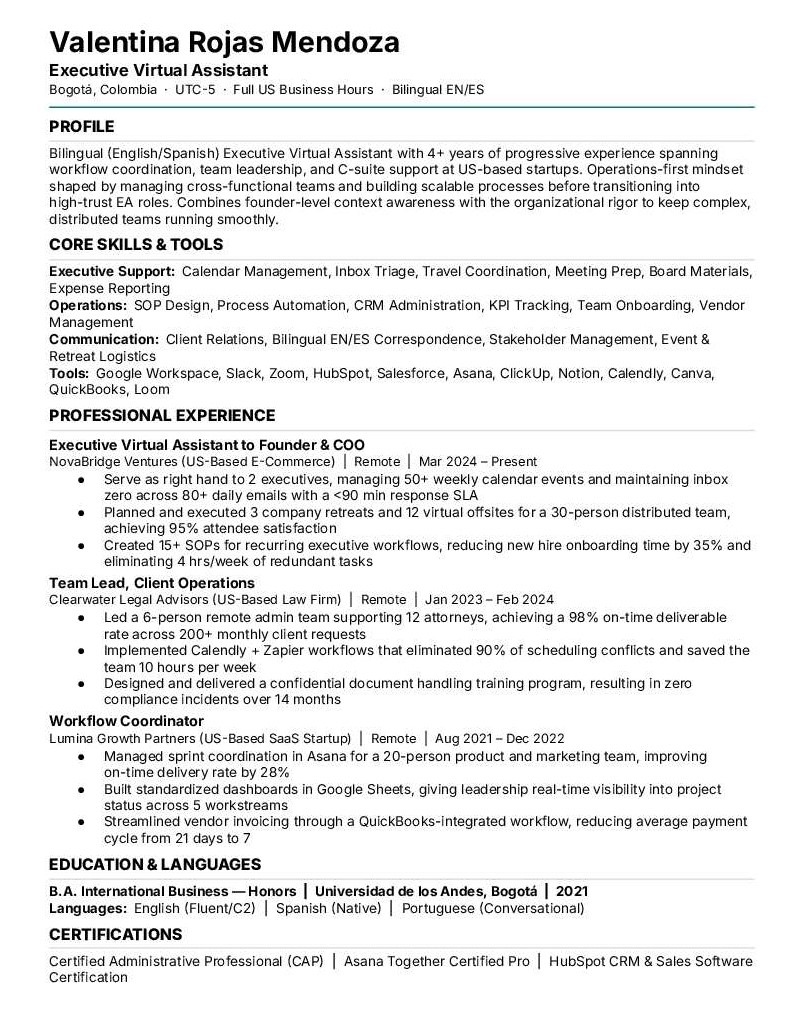
Why this resume works:
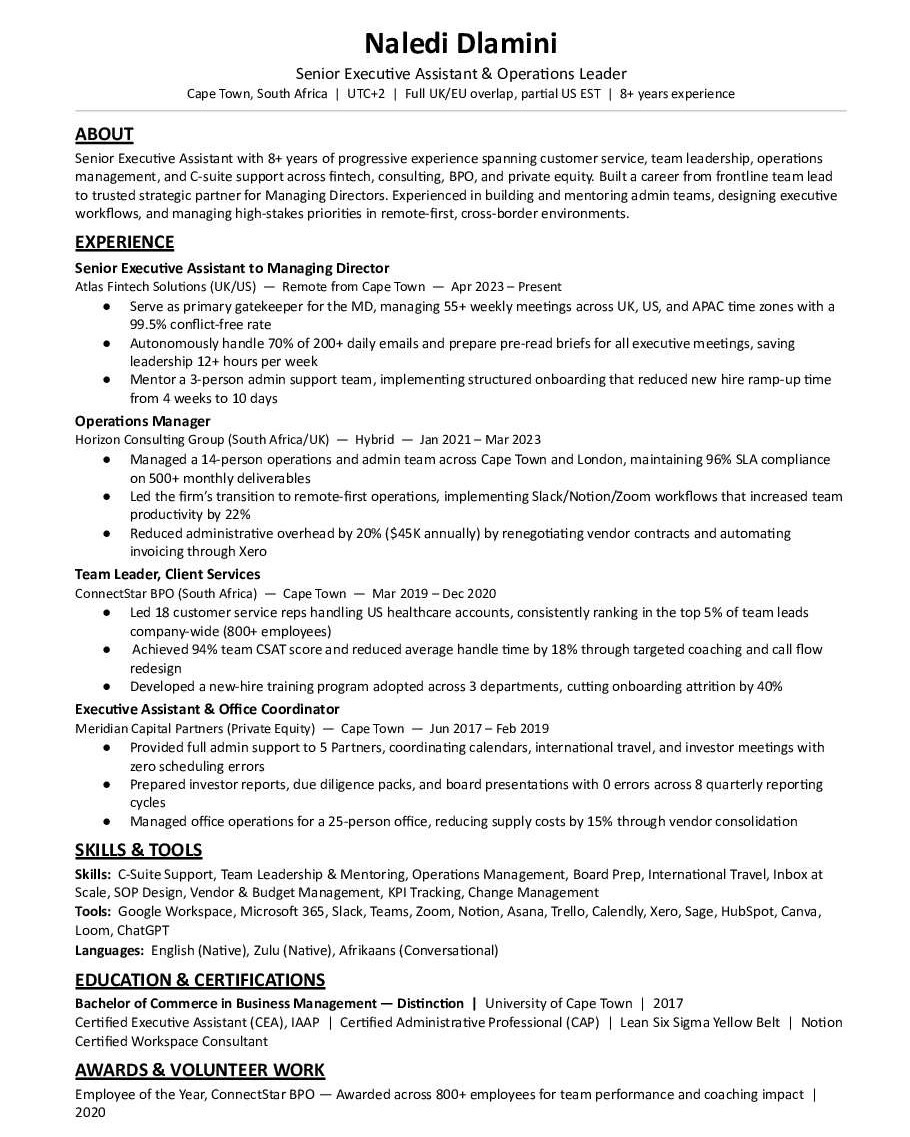
Why this resume works:
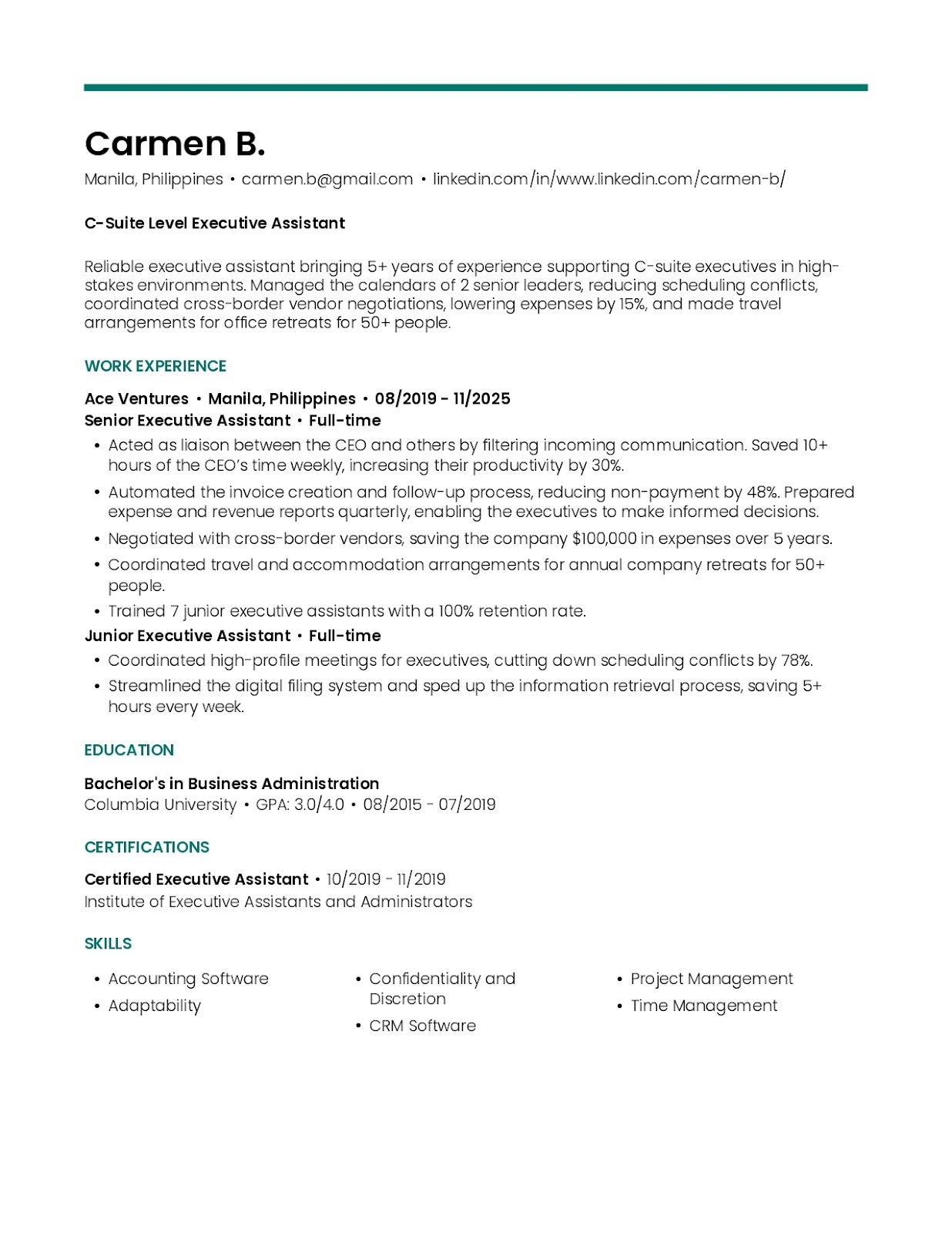
Why this resume works:
Now that you have an idea of what a strong executive assistant resume looks like, here are some tips on how to write yours from scratch.
As an executive assistant, you probably already know that there’s a right order for everything. That applies to resumes, too.
A good executive assistant resume is not messy or cluttered; it’s neatly organized, allowing the recruiters to easily pull the most important information from it at a glance. In fact, an eye-tracking study revealed that you only have 7.4 seconds to grab a recruiter’s attention. So, make it count.
Here’s a structure that’s proven to work:
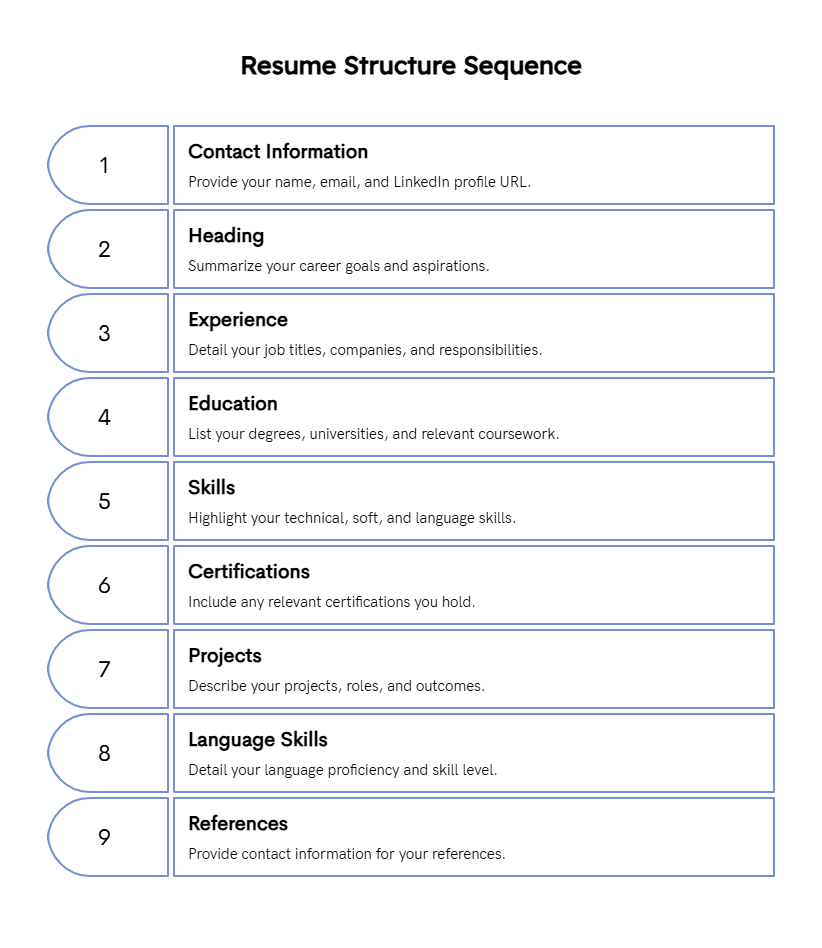
Pro Tip: Stick to a one- or two-page resume, as that’s what most hiring managers prefer.
Yes, you’re an executive assistant, but what kind? What’s your seniority level? How many years of experience do you have? Have you previously worked at a leading company?
A strong headline captures all of these details concisely, helping you stand out among a sea of similar candidates. If there’s a skill or experience that will make your profile more attractive to hiring managers, this is the time to highlight it.
Let’s look at a few executive assistant resume examples of strong titles:
Weak: Executive Assistant with Experience Helping CEOs
Strong: C-Suite Level Executive Assistant with 5+ Years of Experience
Weak: Executive Assistant with Proficiency in Multiple Languages
Strong: Multilingual Executive Assistant with Experience Managing Cross-Border Operations
Pro Tip: Keep it brief and highlight the most important skill/experience you bring to the table. You can tailor the heading according to the type of executive assistant job you’re applying for. For instance, a role seeking an EA to collaborate with teams across different countries will instantly find the second example more relevant, putting you at the top of their list.
This is NOT an objective statement, which is outdated; rather, this is a summary of your experiences and skills that lets the recruiter quickly decide if your profile is worth diving deep into.
Think of it as a prelude to the rest of your resume: one that can make or break your chances. Distill the experiences and skills you’ve gained across all of your roles into a few sentences. Get as specific as possible. The hiring managers should be able to instantly see the value of working with you.
Here’s an executive assistant resume example of a strong summary:
Weak: Executive assistant with a lot of experience supporting leaders. Highly skilled in calendar management, travel arrangements, and coordinating meetings. Proficient in a variety of tools, such as Microsoft and Asana.
Strong: Reliable executive assistant bringing 5+ years of experience supporting C-suite executives in high-stakes environments. Managed the calendars of 2 senior leaders, reducing scheduling conflicts, coordinated cross-border vendor negotiations, lowering expenses by 15%, and made travel arrangements for office retreats for 50+ people.
Next up is your career experience section, which is where you can really shine. Don’t just focus on what you did at your previous roles; instead, talk about how your responsibilities made an impact, making the lives of executives easier.
Did you identify and fix any gaps in the company’s processes? Did you take initiative to lower the company’s costs? Talk about the impact you had. Use specific examples and cold, hard numbers wherever possible. This section needs to show the employer why they should hire you over everyone else.
Take a look at these examples to see how you can reframe your career experience bullet points:
Weak: Managed accounting duties, such as preparing expense reports and creating and following up on invoices
Strong: Automated the invoice creation and follow-up process, reducing non-payment by clients by 48%. Prepared expense and revenue reports quarterly, enabling the executives to make informed decisions
Weak: Handled communication for the CEO
Strong: Acted as liaison between the CEO and others by filtering incoming communication. Saved 10+ hours of the CEO’s time weekly, increasing their productivity by 30%
[Responsibility] + [Impact] is a simple, but proven formula that you can use to write your work experience section.
A couple more things to keep in mind:
If you’re having trouble with this section, you can use a resume builder.
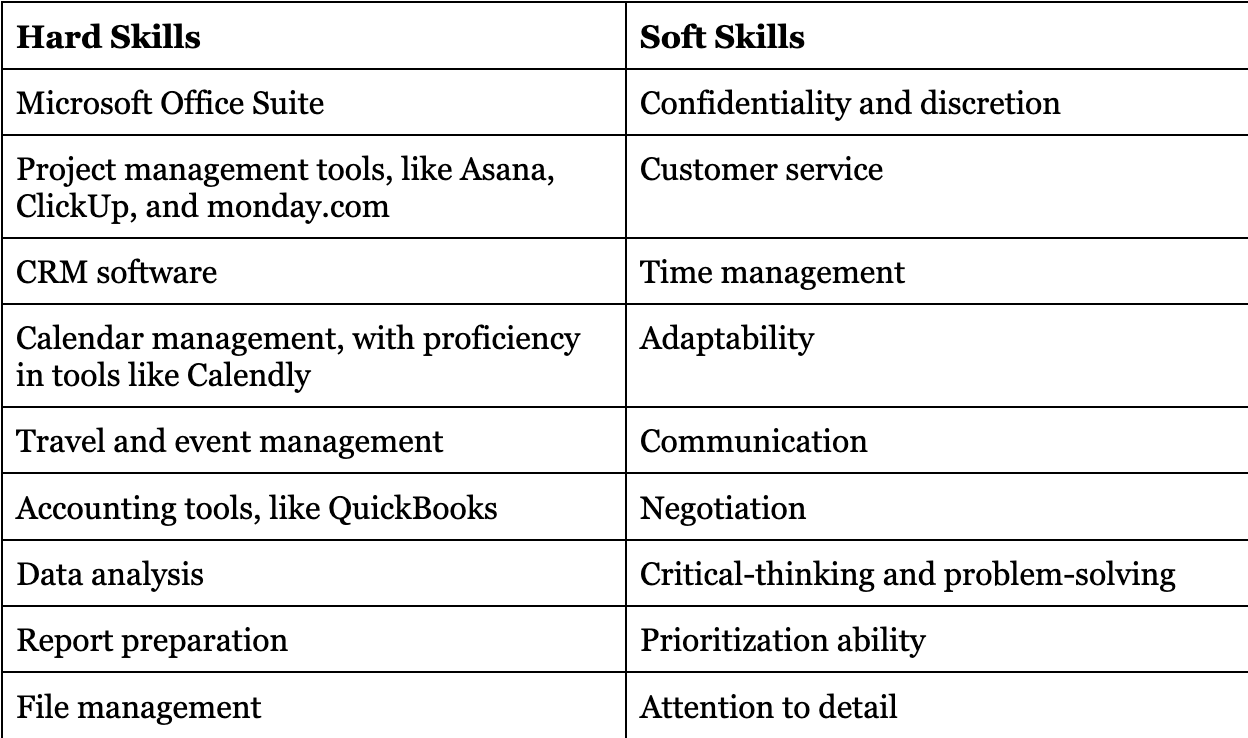
There are a few hard and soft skills that are must-haves for executive assistants. You need experience with accounting and project management tools, and have great interpersonal skills.
Make a list of all the hard and soft skills you have and group them by priority according to the type of EA job you’re applying for. Include just the top 5-7 skills in your resume. For example, if the job you’re applying for is more focused on administrative tasks, highlight administrative skills.
Here’s a list of the top skills that an executive assistant must have:
Some words have more impact and convey greater clarity than others. Take “scheduled,” for example. It gives people a clear image of what you did. It’s better than saying “worked on,” which is vague, generic, and invites more questions. Bottom line: use specific action verbs.
Here are some examples you can use:
In addition to this, you should also speak the same language as the job description. This means identifying a few important keywords from the job description and sprinkling them throughout your resume, wherever applicable.
Why is this important? Because 3/4ths of all hiring managers use Applicant Tracking Systems (ATS) to screen resumes initially before taking a look themselves. An ATS is a software that filters resumes based on specific keywords related to the job description. If it doesn’t find any keywords on your resume, you likely won’t make the cut, even if you have all the experience and skills needed.
Scan the job description for mentions of specific qualifications or skills. For example, if a company requires “accounting software proficiency,” make sure to include the names of the accounting tools you have experience using.
While including keywords is important, stuffing your resume full of them is a big no-go. Place them strategically throughout your resume, but make sure the end product is still reader-friendly.
If you’re applying for a role at a global company that needs cross-border collaboration, highlight your various language skills along with your proficiency level.
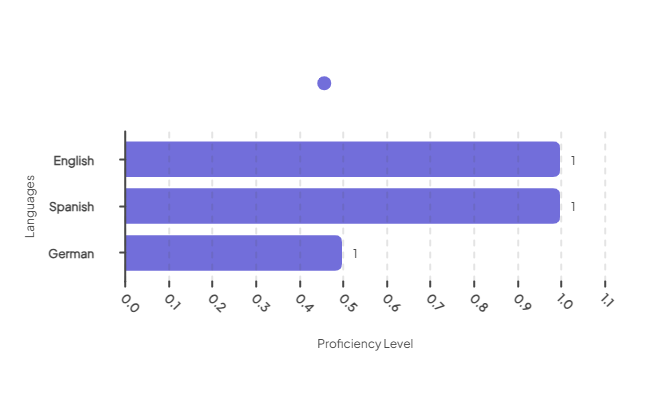
This is also a good place to include any executive assistant-related certifications you might have. Make sure to include your certification number in case the hiring managers want to verify.
At Pearl Talent, we help top candidates land long-term, remote positions at US/EU companies. Unlike other staffing agencies, where the most affordable candidates are the most attractive, Pearl Talent believes in paying you what you’re worth. With us, you’ll earn up to 2X local market rates, with competitive benefits.
Here’s what you get when you join Pearl’s talent community:
Join the Pearl Talent community, and land your next big career opportunity with a leading US/EU company without ever leaving your home.

.svg)