Catena is now Pearl Talent! Same mission, new name.
Your EHR system crashed during patient intake. Again.
Your staff is calling around trying to find someone who can fix the network issue. Appointments are backing up. Patients are frustrated. You've come to realize that "we'll call someone when something breaks" is more of a liability than a strategy.
That’s why hiring dedicated healthcare IT staff isn't optional anymore.
Patient data lives in digital systems, telemedicine appointments require stable platforms, and medical devices connect to networks. Billing also runs through software. When any of these systems fail, patient care suffers.
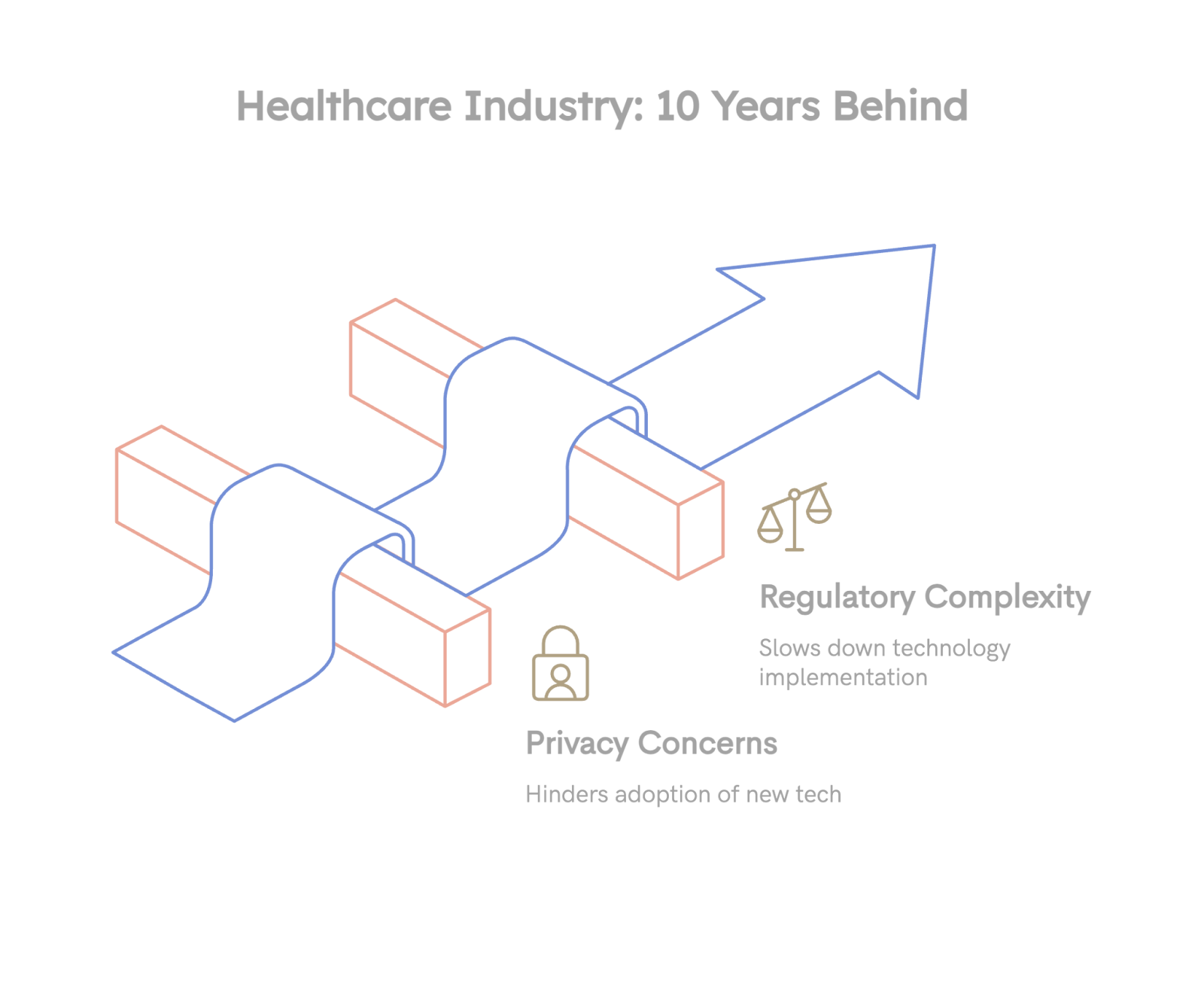
Here’s the problem: the healthcare industry lags behind others in digital transformation and customer engagement technology. Privacy concerns and regulatory complexity mean healthcare organizations typically operate about a decade behind in adopting new business technologies.
However, the need has never been greater. Patients expect seamless digital experiences. Regulatory requirements grow more complex. Cyberattacks targeting healthcare data increase annually. Practices without dedicated IT support find themselves constantly reacting to problems instead of preventing them.
In this article, we review five reasons why hiring IT support for healthcare is a strategic decision that directly impacts patient care, operational efficiency, and long-term growth.
Patient data is the most sensitive information your practice handles. HIPAA violations carry penalties up to $50,000 per violation. But beyond regulatory risk, data breaches destroy patient trust and damage your reputation permanently.
IT support for healthcare ensures patient data security through encryption, access controls, monitoring systems, and compliance protocols that prevent breaches before they happen.
What dedicated IT support handles:
Privacy remains a top priority in healthcare, often prioritized over customer engagement and digital advancement. This is why healthcare staffing requires professionals who understand both technical systems and regulatory complexity.
IT professionals help healthcare providers enhance technology while keeping data protected and compliant. Without this expertise embedded in your practice, you're gambling with patient trust and regulatory risk.
Healthcare providers depend on their systems to serve patients to the highest standard. If failures happen frequently, quality drops. Patients notice, and they don't come back.
Reactive IT support adds to this problem. It means disrupted workflows and compromised patient care.
Proactive IT support prevents failures before they impact operations.
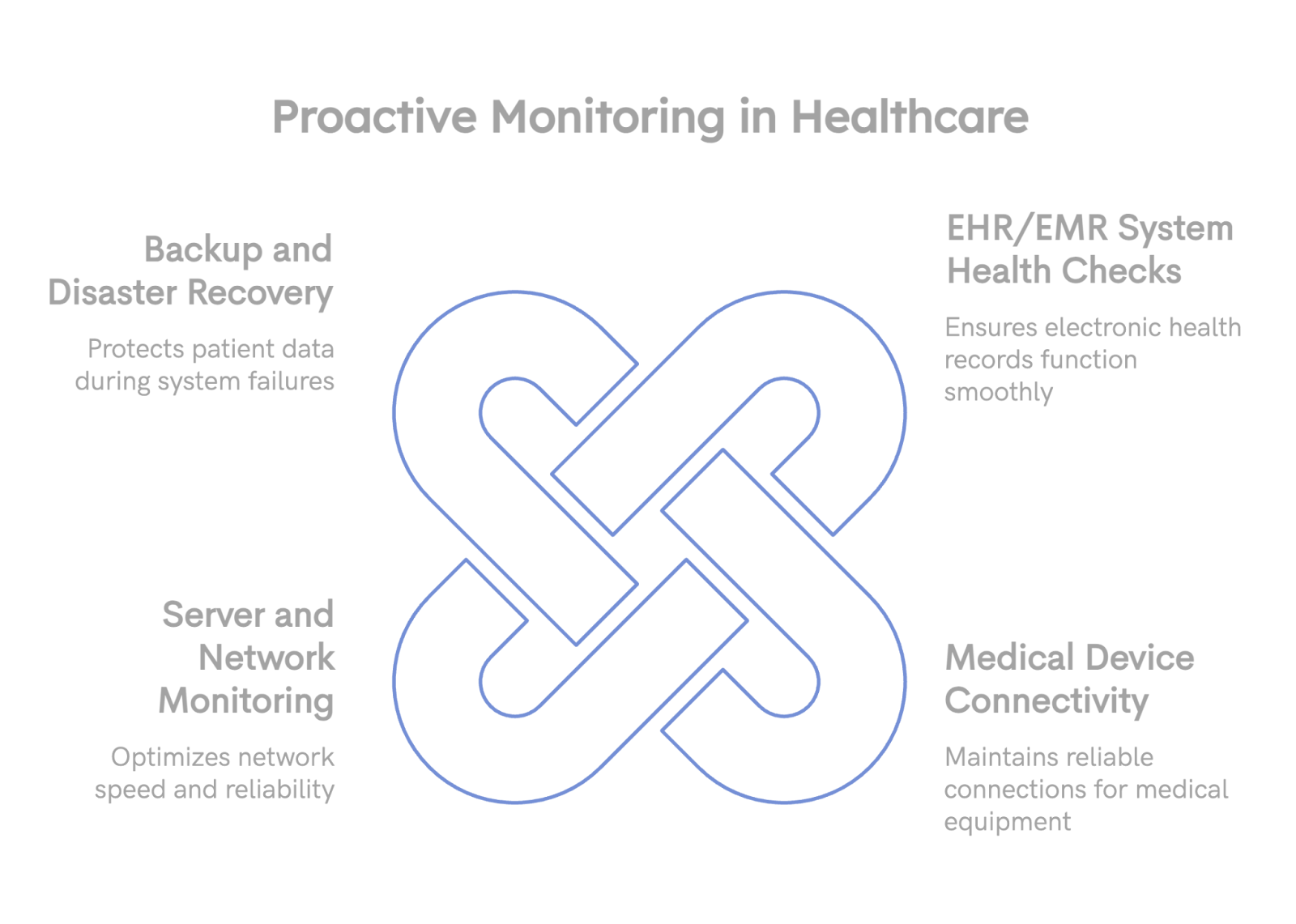
What proactive monitoring includes:
Instead of dreading when systems and medical devices fail, you'll have someone on your team helping to prevent these failures from happening. This shift from reactive firefighting to proactive maintenance changes how your practice operates.
When you hire healthcare IT support, you're investing in operational stability that protects both patient care quality and staff productivity.
Your staff encounters technical issues that they don't know how to solve. A printer won't connect. A workstation can't access the patient database. Video conferencing for a telemedicine appointment keeps dropping.
These aren't catastrophic as singular events, but compound them, and they disrupt workflows enough to make a large difference over time.
On-site or embedded IT support handles:
Instead of wondering how to fix technical issues or calling around for quick fixes, you'll have someone embedded in your team doing preventative maintenance and providing immediate support when issues arise.
This embedded approach means faster resolution times, less staff frustration, and fewer disruptions to patient care.
Healthcare technology evolves rapidly. However, adopting new technology without strategic planning creates new problems. Sometimes systems don't integrate how you want them to, and staff resist the change.
Having IT support professionals who understand healthcare provides strategic guidance on modernization that will improve operations.
What IT strategy includes:
Healthcare organizations typically operate about a decade behind other industries in technology adoption due to privacy concerns and regulatory complexity. But falling further behind means losing patients to practices offering better digital experiences.
Strategic IT support helps you modernize thoughtfully—adopting technologies that improve patient care and operational efficiency without compromising security or compliance.
Administrative work consumes enormous staff time. Tasks like scheduling appointments and bill processing are necessary, but don’t require human judgment at every step.
Workflow automation through IT systems reduces administrative burden, improves efficiency, and allows staff to focus on patient care instead of repetitive tasks.
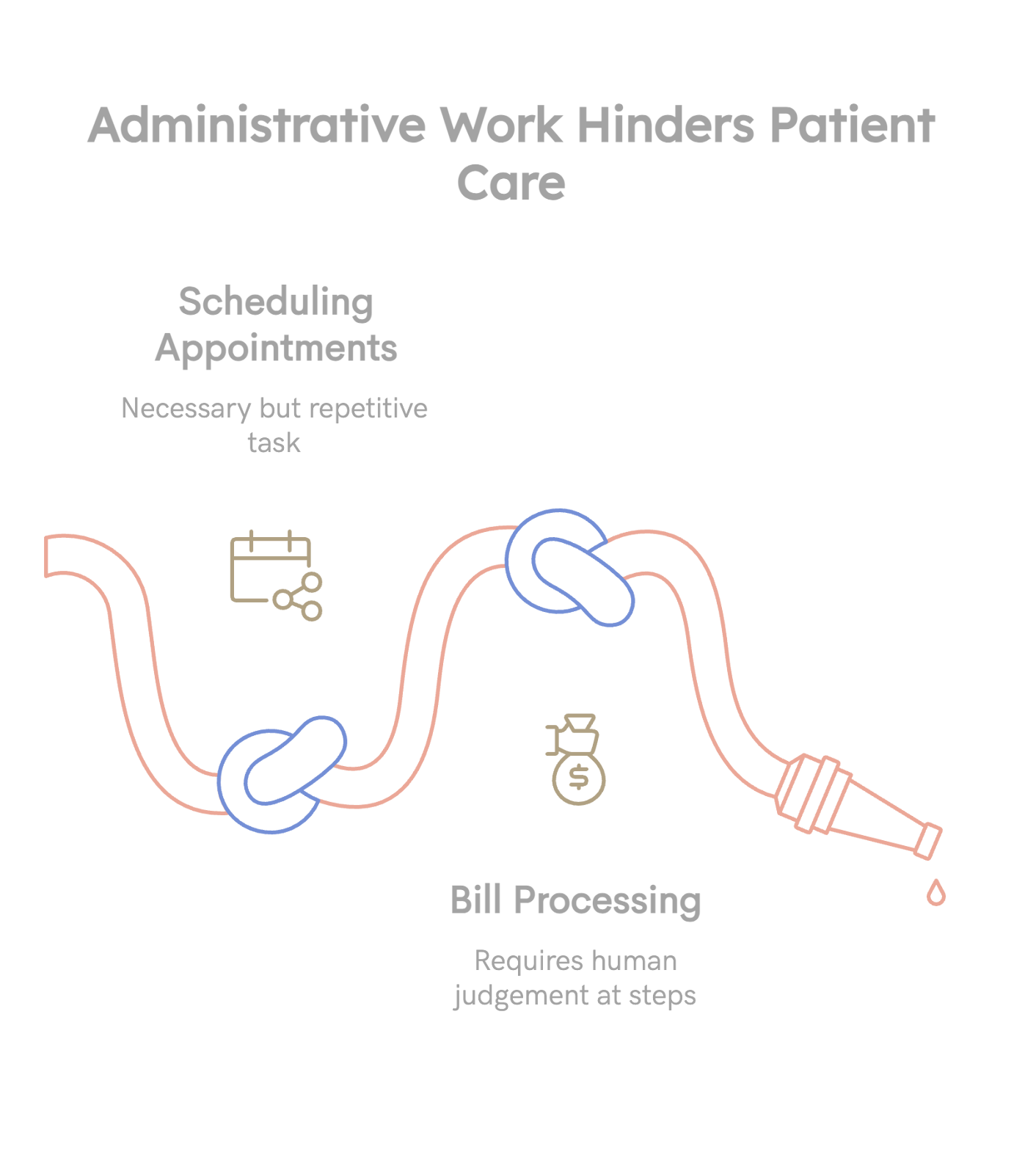
What automation can handle:
Incorporating systems that make administrative tasks, scheduling, and billing easier improves efficiency. When efficiency improves, patient satisfaction increases. This means patients come back, and your practice grows.
Finding reliable IT professionals with both technical expertise and a deep understanding of the healthcare industry isn’t easy.
That’s why Pearl Talent specializes in matching healthcare organizations with IT professionals who understand both technology and healthcare operations. We source the top 1% of candidates globally who have demonstrated technical proficiency, regulatory knowledge, and the ability to work effectively in clinical environments.
How Pearl delivers healthcare IT talent:
Your practice deserves IT support that keeps systems running smoothly, protects patient data, and enables modernization without constant technical disruptions.
Ready to hire IT support that understands healthcare? Explore how Pearl Talent delivers pre-vetted IT professionals who embed directly into your team.

.svg)