Catena is now Pearl Talent! Same mission, new name.
Healthcare clinics lose hours every week to scheduling conflicts, missed follow-ups, and insurance back-and-forth that pulls clinical staff away from patients. A patient care coordinator can take all of that off your plate, but only if you hire the right one. So, a well-written job description is crucial to attract quality talent.
A vague or generic posting attracts vague and generic applicants. A clear, well-structured one filters for the right people before you ever open a resume. This guide walks through how to build a job description that brings in qualified patient care coordinators who actually fit your practice.
Too many job descriptions get written by copying a template and swapping in a job title. Patient care coordination is a specific function with specific demands, and your posting should reflect that.
Start by talking to the people closest to the role. If you already have a care coordinator on staff, ask them what they actually do day to day versus what their original job description said. If this is a new position, sit down with the providers and office managers who will work alongside this person.
Patient care coordinators can cover a wide range of tasks depending on the practice. In a small clinic, the coordinator might handle insurance verification, appointment scheduling, patient follow-ups, and referral management all at once. In a larger hospital system, the role could be narrower and more specialized. Document what your version of this role looks like before you start drafting.
Candidates want to know who they report to, who they collaborate with, and where this role sits in the organization. A coordinator reporting directly to a physician has a different day than one reporting to an office manager. Spell this out. It helps candidates picture themselves in the role and helps you set accurate expectations.
→ https://youtu.be/EeUnPka9Xao
Once you know what the role involves, the writing itself needs to be organized to respect the reader's time and answer their questions in a logical order.
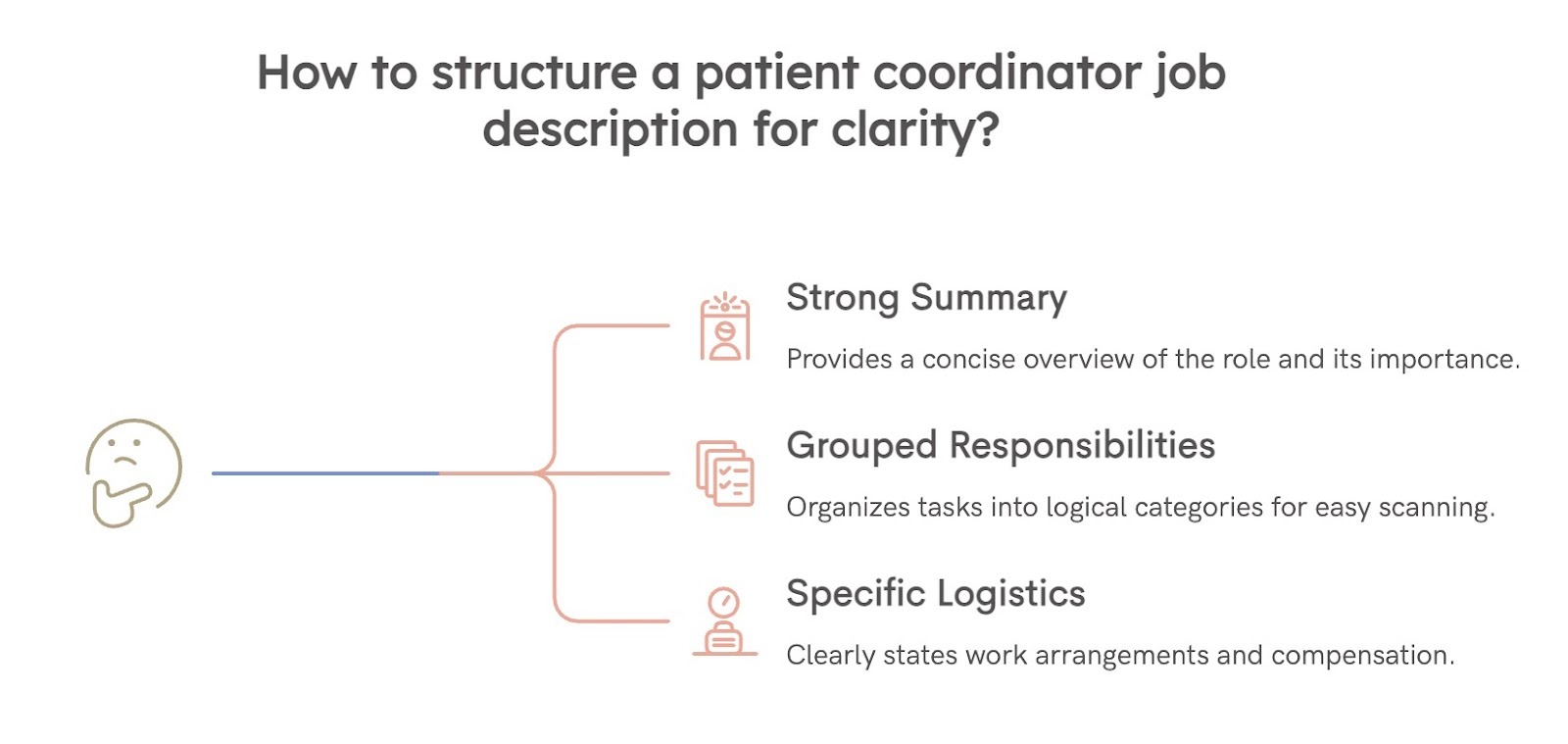
The first paragraph of your job description does the heaviest lifting. It should explain what the role is, where it fits in the organization, and why it matters. Keep it to three or four sentences. Avoid stuffing it with jargon or internal terminology that an outside candidate would not recognize.
A good summary might read: "We are looking for a patient care coordinator to join our outpatient cardiology practice. This person will manage patient scheduling, coordinate referrals, and serve as the primary point of contact for patients navigating their care plans. The role reports to the practice manager and works closely with a team of four cardiologists." That is direct, informative, and gives the reader a reason to keep going.
A long, undifferentiated bullet list of 20 responsibilities is hard to scan and harder to evaluate. Group related tasks under subheadings so candidates can quickly see the major areas of the job.
For a patient care coordinator, logical groupings might include:
Under each grouping, three to five bullet points are enough. If a section runs longer, you may need to combine two roles into one posting.
Candidates will scan for specific details before reading anything else. Make sure the posting clearly states whether the position is full-time, part-time, on-site, remote, or hybrid, and what the working hours are. If the role requires occasional weekend or evening coverage, say so upfront. If there is a salary range, include it. Listings with compensation information consistently attract more and better applicants than those that hide it.
Be deliberate about what you list as required versus preferred. Overloading the requirements section with credentials that aren't truly necessary will shrink your applicant pool without improving quality.
A high school diploma is the standard baseline. Candidates with degrees in healthcare administration, public health, or medical office management tend to onboard faster because they already understand clinical workflows and terminology. According to Zippia, roughly 40% of patient care coordinators hold a bachelor's degree.
Certifications are worth calling out as preferred qualifications, especially these:
A candidate with a relevant degree and one of these certifications will likely need less ramp-up time and be more confident navigating healthcare-specific systems from the start.
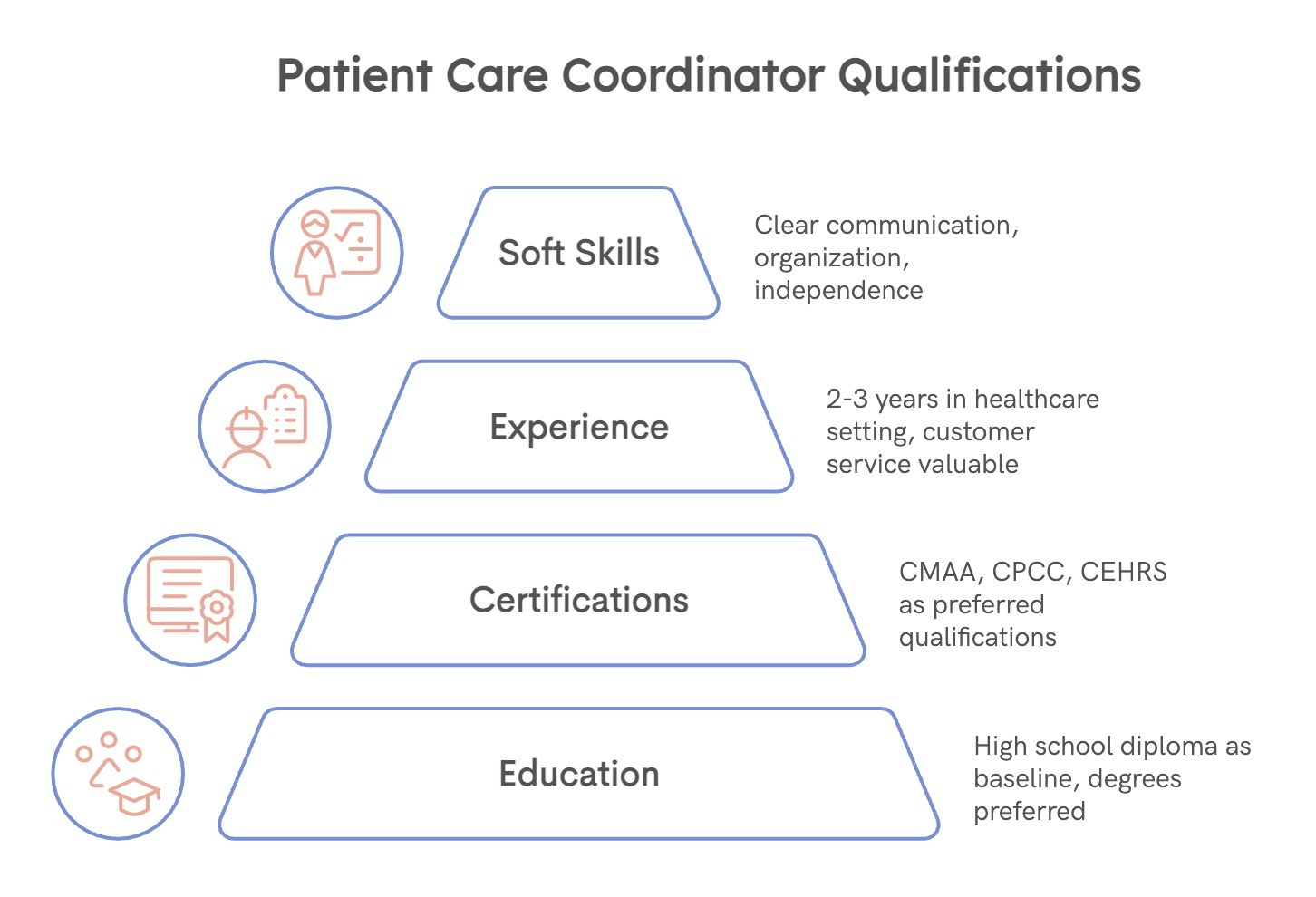
Two to three years in a healthcare setting is a reasonable baseline. Candidates who've used EHR software, handled insurance workflows, or communicated directly with patients bring immediate value.
Don't rule out candidates from customer service or call center backgrounds either. That experience often means they've already handled high-volume scheduling, insurance-related calls, and the pace of working with people who are anxious or confused. The key is whether they can communicate clearly, stay organized under pressure, and work independently. Make those expectations explicit in your listing so the right people apply.
The way a job description sounds tells candidates a lot about what it feels like to work at your organization. A formal, stiff posting signals a formal, stiff environment. A casual and clear one signals a team that communicates well.
Even though you are hiring for a healthcare role, your job posting is a communication document, not a medical record. Use plain language wherever you can. Instead of "facilitate interdisciplinary care transitions," write "help patients move smoothly between providers and departments." The people reading your post are professionals, but they will connect more with language that sounds like a real person wrote it.
Most job descriptions list what someone will do, but skip what good performance actually looks like. Adding a short section on what a successful first six months or year looks like gives candidates something concrete to aim for.
For example: "In your first 90 days, you will learn our scheduling workflows, build relationships with our referral partners, and begin managing a full patient panel independently."
For a larger hospital system, it could be: "Within six months, you will be coordinating care across three departments, managing a caseload of 80+ patients, and running weekly check-ins with the nursing team to flag follow-up gaps."
This kind of detail helps serious candidates self-identify and shows that you have thought about onboarding.
A sentence or two about what your practice values in its team members is useful. A full paragraph of aspirational corporate language is not. Keep it grounded. If your team values reliability and clear communication over credentials and titles, say that plainly.
Getting the content right is only half the battle. Many job descriptions fail not because the role is unclear but because avoidable mistakes push the right candidates away before they even finish reading.
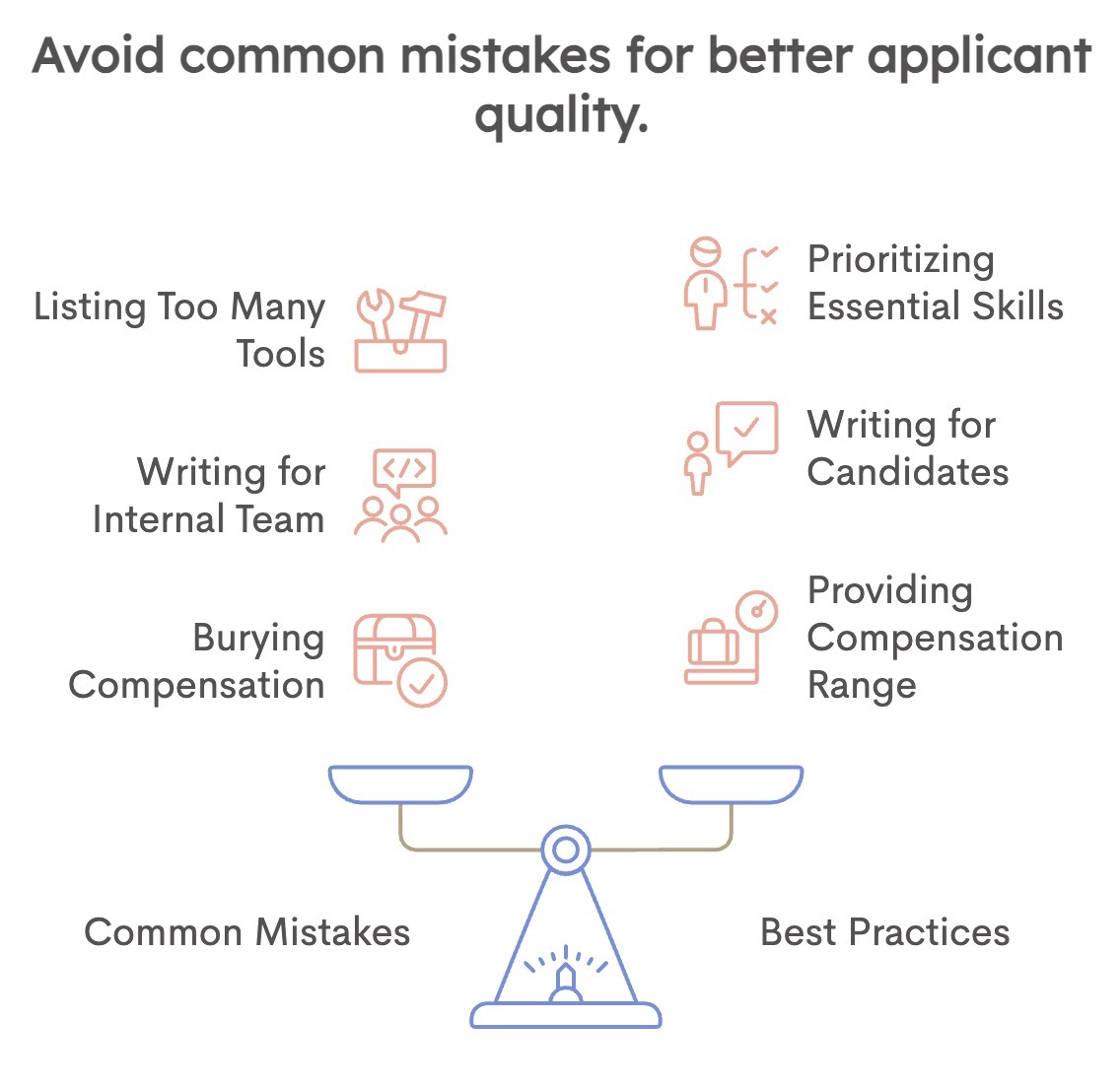
It is tempting to include every software system your office uses and require experience with all of them. But listing eight different platforms as requirements signals to candidates that the role is overwhelming or that you are unsure what matters most.
Pick the one or two systems that are genuinely essential for day-one performance. Mention the rest as tools the person will be trained on. A strong patient care coordinator can learn new software in a few weeks. What they cannot learn quickly is how to stay composed when three phone lines ring at once, with a patient standing at the front desk. Prioritize human skills over technical checklists, and your applicant quality will improve immediately.
Job descriptions often read like internal memos. They reference department codes, project names, or acronyms that only current employees would understand.
Every sentence in your posting should make sense to someone who has never set foot in your building. Run through each line and ask whether a qualified stranger would understand it. If not, rewrite it. Some specific things to watch for:
You are trying to pull people in, not make them feel like outsiders before they even apply.
Some organizations leave salary details out because they want flexibility in negotiations. The data consistently shows that this approach backfires. Postings without compensation ranges receive fewer applications overall and disproportionately lose experienced candidates who have enough options to skip vague listings entirely.
You do not need to commit to a single number. A range works well. Even a broad range like "$18 to $24 per hour, depending on experience" gives candidates enough information to decide whether the opportunity is worth their time. Transparency here builds trust from the first interaction.
Writing a strong job description is the first step, and usually the easiest one. But the hiring process that follows is where most clinics lose time. You post on job boards, sort through applications, run multiple interview rounds, and still aren't sure you've found the right person. If you're hiring remotely, international payroll adds another layer. It adds up fast when your team is already stretched.
A talent partner like Pearl Talent can significantly shorten that timeline. Pearl places patient care coordinators from the Philippines, Latin America, and South Africa. They come from top local universities and companies.
We screen them for clinical knowledge, communication skills, and hands-on experience with EHR systems, scheduling, and insurance coordination. That means the profiles you see have already been filtered for what actually matters in this role. And hence, you're not spending your first three interviews figuring out whether someone can handle a busy front desk.
Here's what the engagement includes:
All of this at up to 60% less than a comparable US hire. Browse available patient care coordinators to see who's ready to support your team.

.svg)