Catena is now Pearl Talent! Same mission, new name.
South Africa has quietly become one of the world's most compelling talent markets for companies building distributed teams.
While most U.S. and European businesses default to the Philippines, India, or Latin America when considering global hiring, South Africa offers a distinct combination:
In this article, we’ll discuss six reasons why companies hire employees from South Africa, and what you need to know to do it effectively.
South Africa's education system produces highly skilled professionals across tech, finance, marketing, and creative industries. Universities like the University of Cape Town, Stellenbosch, and Witwatersrand consistently rank among Africa's top institutions, graduating talent that competes globally.
However, education alone doesn't explain South Africa's talent strength. The country has developed deep expertise in business process outsourcing and global business services over the past two decades. This maturity creates a workforce experienced in working with international clients, understanding Western business expectations, and delivering outcomes remotely.
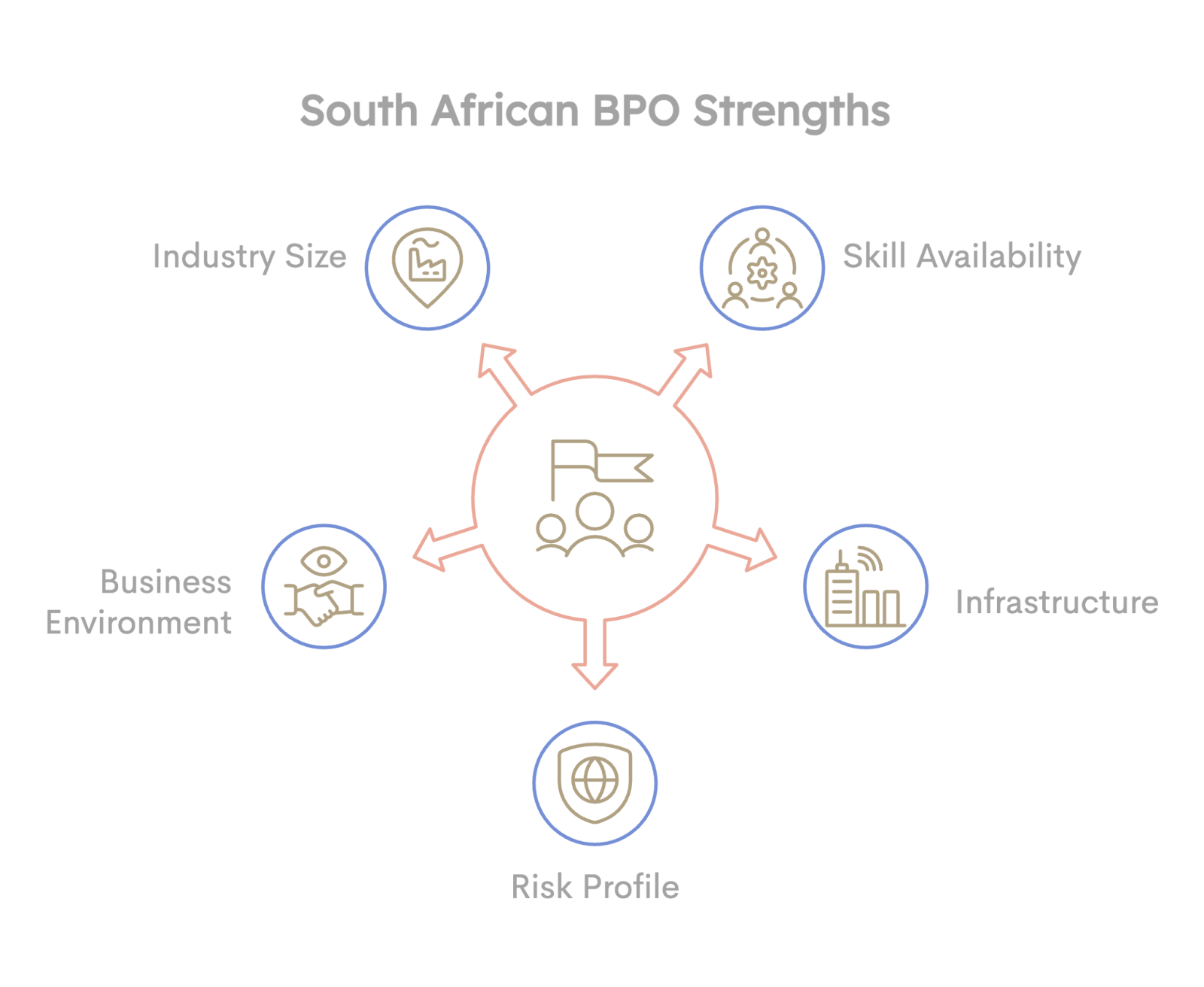
South African BPO providers offer higher-quality services owing to strength across five key areas: availability of skills, infrastructure, risk profile, business environment, and industry size.
What this means for your hiring:
Hiring employees from South Africa delivers significant cost savings compared to North America and Europe without the quality trade-offs often associated with budget-focused outsourcing.
South African professionals earn competitive salaries within their local economy. Living costs in Johannesburg or Cape Town are significantly lower than in San Francisco or London, which means competitive compensation attracts top talent at rates that fit startup and scale-up budgets.
Cost efficiency extends beyond salaries:
These cost savings allow companies to build larger, more capable teams within the same budget constraints.
Language barriers create friction in distributed teams. There are:
Hiring employees in South Africa eliminates most of these challenges.
Why this matters operationally:
This cultural compatibility isn't minor. It's the difference between team members who integrate seamlessly and those who always feel like "the offshore team."
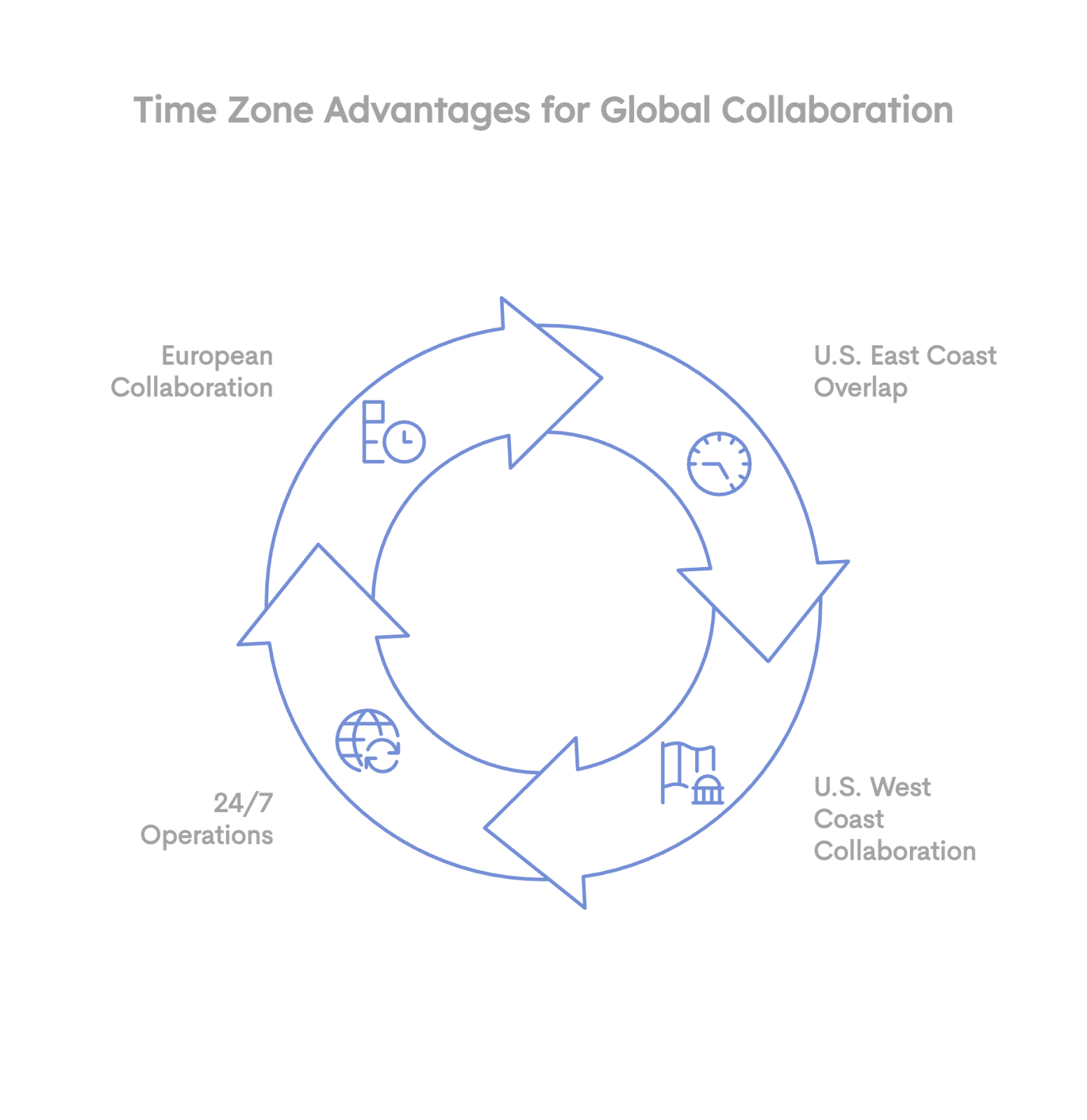
South Africa operates in GMT+2, which creates convenient overlap with European business hours and workable collaboration windows with U.S. East Coast teams.
South Africa isn't new to remote work or global business services. The country has been building BPO capabilities and serving international clients for over 20 years.
Many South African professionals have already worked for global companies. They understand distributed team dynamics, asynchronous communication, remote collaboration tools, and the self-management required to succeed without constant oversight.
CIO Magazine shares how industry leaders say South African BPO and call-centre agents are recognized globally for efficiency, quality, and how they engage with customers. This places South Africa in the same competitive space as India and the Philippines for outsourced customer contact.
What this experience delivers:
The maturity of South Africa's remote workforce means you're hiring professionals who already know how to operate effectively in remote environments.
Remote work requires reliable infrastructure. Unstable internet, frequent power outages, and inadequate technology access make distributed teams frustrating to manage.
South Africa has invested heavily in broadband infrastructure, with widespread fiber availability in major cities and improved connectivity. While the country faces occasional power challenges, most professionals working for international companies have backup power solutions and stable internet access.
Beyond infrastructure, government support also creates an excellent environment for outsourcing.
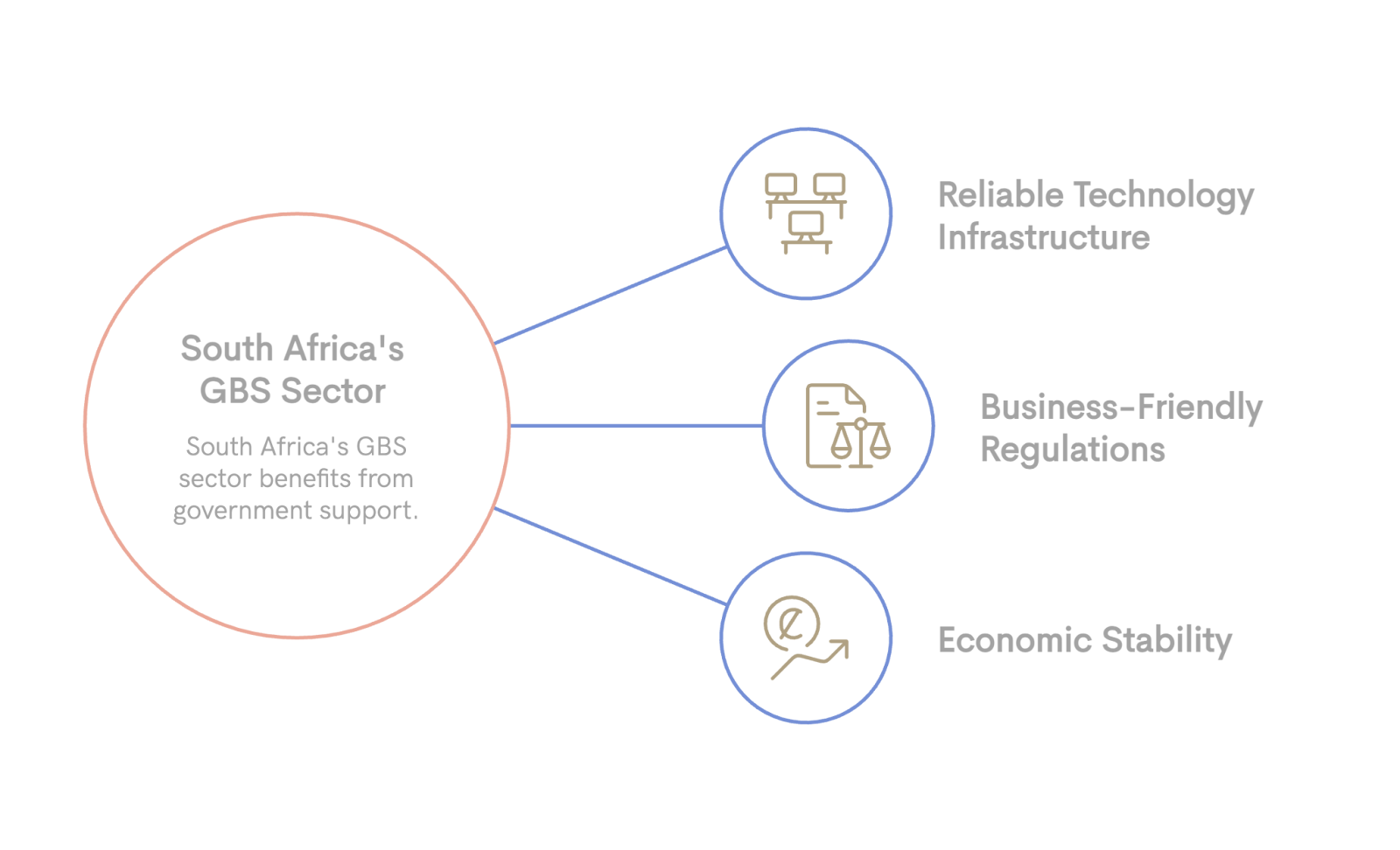
In fact, BPESA research highlights that South Africa's GBS sector benefits from strong government support at national, regional, and sectoral levels. Incentives under the Department of Trade, Industry and Competition (the dtic) and special economic zone incentives enhance infrastructure and the enabling environment for outsourced services.
What this support structure provides:
Infrastructure and policy support matter because they reduce operational friction. You're not constantly troubleshooting connectivity, navigating unclear regulations, or managing instability.
Hiring employees from South Africa offers clear advantages: high-quality talent, cost efficiency, English proficiency, favorable time zones, remote work experience, and strong infrastructure.
But execution determines whether these advantages translate into business value or operational headaches.
International hiring involves navigating employment law, payroll compliance, tax obligations, and cultural integration. Most companies underestimate this complexity until they're three weeks into trying to figure out how to legally employ someone in South Africa.
Pearl Talent removes this friction. We handle sourcing, vetting, compliance, payroll, and onboarding, so you're interviewing pre-qualified candidates who start contributing in under two weeks.
How Pearl delivers South African talent:
Ready to hire employees in South Africa? Explore how Pearl Talent connects you with pre-vetted professionals who integrate seamlessly into your team and start delivering results immediately.

.svg)