Catena is now Pearl Talent! Same mission, new name.
Latin America has become one of the most popular regions for US companies hiring virtual assistants, and the fundamentals back it up.
The talent pool is large and growing.
According to 2023 population data, the largest age cohort in the region was 19–30 years old, representing more than 120 million people. In total, over 300 million people in Latin America were under the age of 30 in 2023.
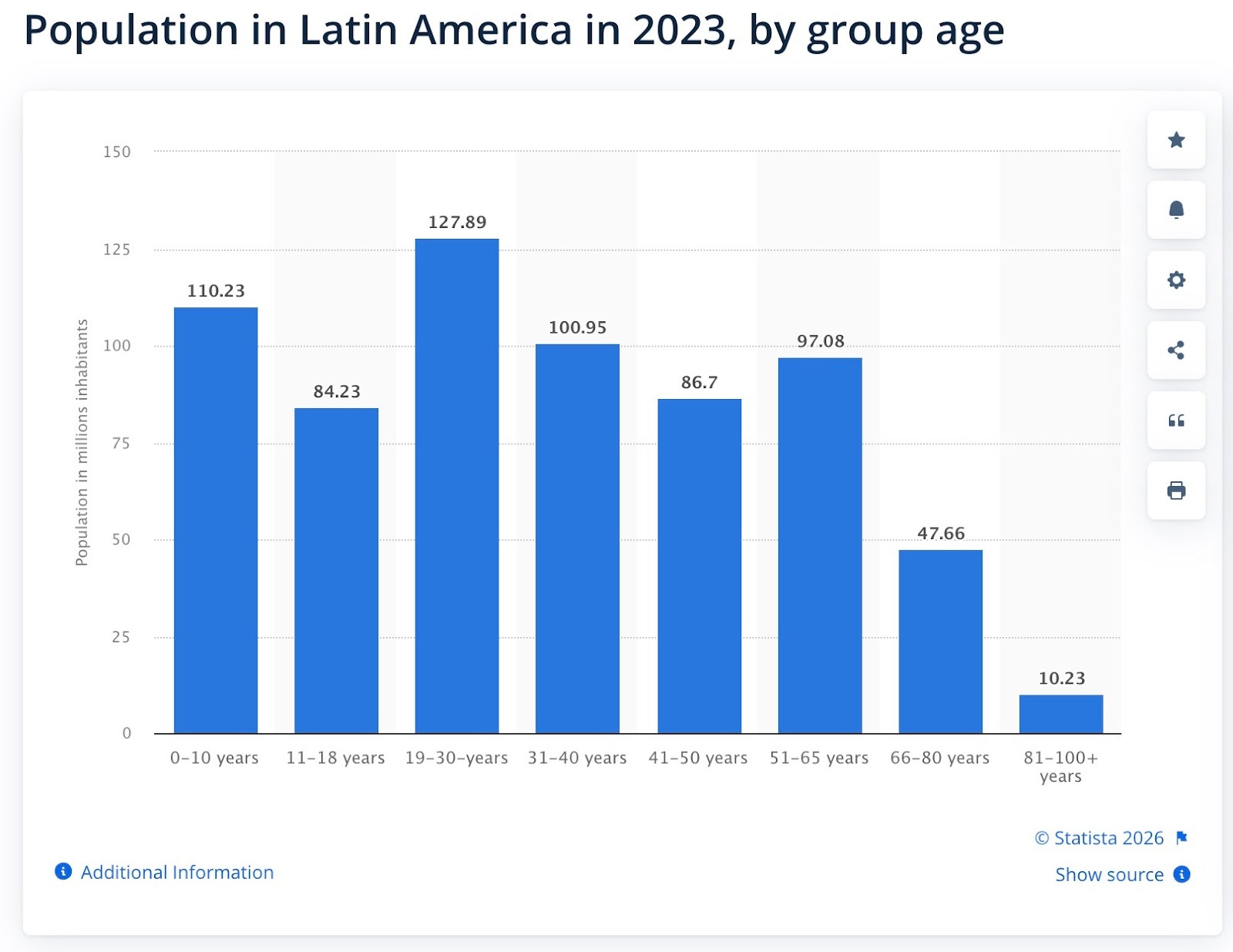
A large portion of the population is either entering the workforce or in the early stages of their careers. For companies hiring remote talent, this means a steady supply of educated, digitally fluent professionals with long-term availability in the market.
English proficiency is strong in several countries.
Argentina ranks in the high proficiency band on the EF English Proficiency Index, with Costa Rica and the Dominican Republic in the moderate proficiency band. For roles that require clear written and verbal communication with US teams and customers, these countries consistently produce candidates who can operate without a language barrier.
And then there's the time zone advantage. Most of Latin America overlaps with US business hours, which means your VA can work synchronously with your team rather than handing off tasks overnight.
This guide breaks down typical compensation, what actually matters when hiring a virtual assistant for your business, and the most common hiring channels used by US companies.
Compensation for virtual assistants in Latin America varies significantly depending on the country, the role, and whether you're hiring through a platform, an agency, or directly.
To give you a sense of the landscape: a 2025 ILO survey of web-based platform workers across Latin America found median hourly earnings of around $2.50-4.50 USD, depending on the type of work, with averages running higher due to top earners pulling the distribution up. Competitive programming and freelance work commanded the highest rates, while crowdwork and microtasks sat at the lower end.
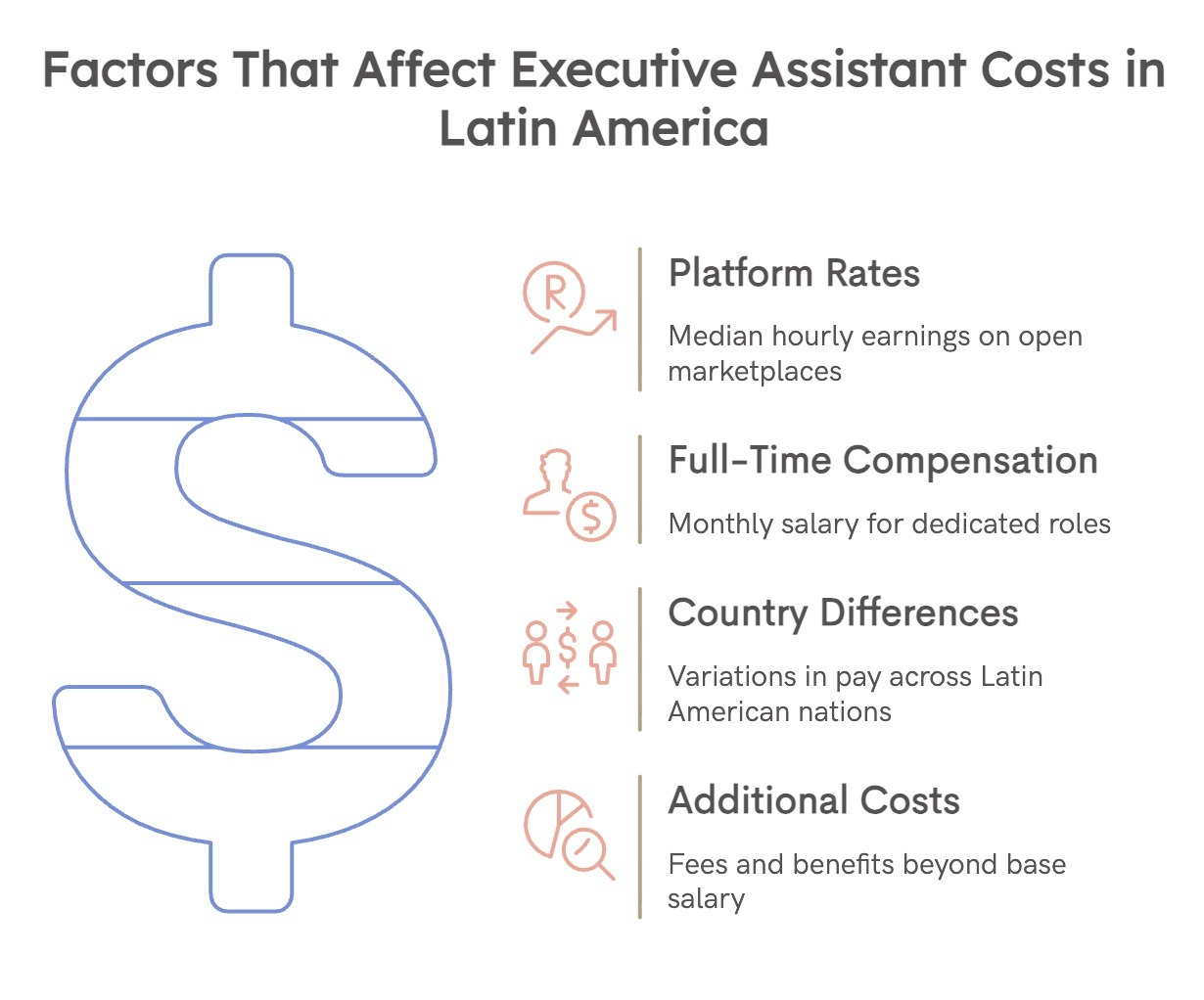
But platform rates don't tell the whole story. Those numbers reflect what workers earn on open marketplaces where they're competing globally and often working for multiple clients on short-term tasks. When US companies hire VAs directly for dedicated, full-time roles, compensation typically runs higher.
For a skilled virtual assistant working full-time with a US company, expect to pay somewhere in the range of $1,500-3,500 USD per month, depending on:
Entry-level VAs with solid English might start around $1,200-1,800 per month. Experienced virtual assistants or ops specialists with US startup experience often command $2,500-4,000 or more.
Compensation expectations vary by market. A few generalizations:
When budgeting, factor in more than just base salary:
Skills matter, but they're not the whole picture. Most VAs in Latin America who apply for US roles have the baseline qualifications. They know the tools and have done tasks related to virtual assistants. What separates a hire that works out from one that doesn't usually comes down to a few less obvious qualities.
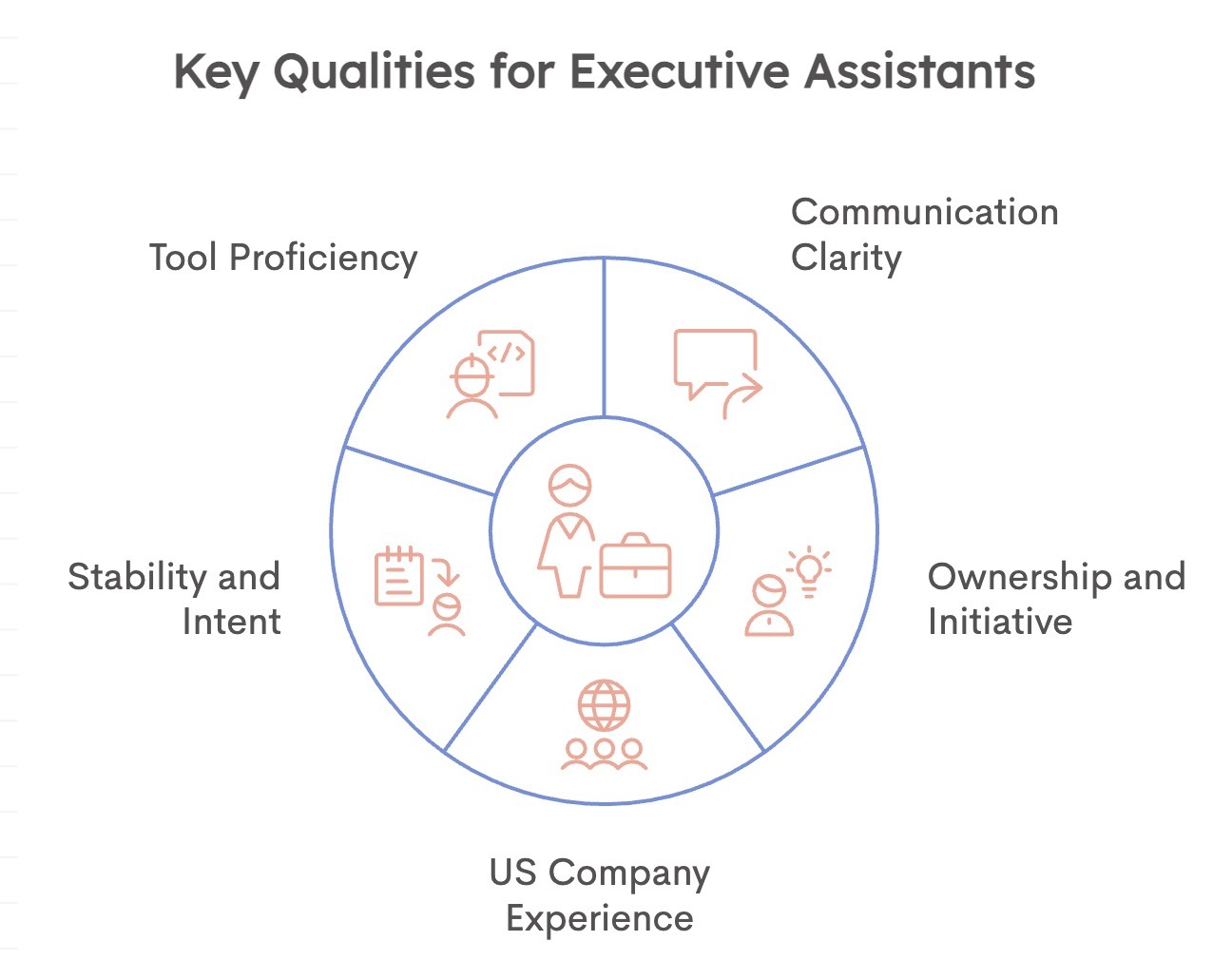
A candidate can have strong English on paper but still struggle to communicate clearly in a fast-moving work environment. What you want is someone who can write a concise Slack message, summarize a problem without over-explaining, and flag issues before they become fires.
During the interview process, pay attention to how they explain past work. If they can tell a clear story about what they did and why it mattered, that's a good sign. If everything sounds vague or overly general, it usually stays that way on the job.
The best VAs don't wait for instructions; they anticipate what's needed and move on it. Ask candidates about a time they identified a problem before anyone else did and what they did about it. Look for specifics, not just "I'm proactive" as a personality claim. You want someone who will take a half-formed task and run with it rather than coming back with a list of clarifying questions.
This isn't a hard requirement, but it shortens the ramp significantly. Candidates who've already worked with US startups understand the pace, the tools, and the communication norms. They know what "end of day" means in your time zone, and they're used to async documentation. If they haven't worked with US companies before, you'll need to assess whether they can adapt quickly.
Turnover is the real cost of a bad hire. Look for candidates who are looking for a long-term role rather than a stopgap while they figure out their next move. Ask about their career goals and what they're looking for in a company. If the answer is just "remote work" or "better pay," they'll leave as soon as something marginally better comes along.
This one's straightforward. If you run on Notion, Slack, and Linear, you want someone who's already comfortable in those tools or who learns new systems quickly. Ask what tools they've used and how they've used them. A candidate who has strong opinions about how to organize a Notion workspace is usually more useful than one who says, "I can learn anything."
There's no shortage of places to find Latin American VAs, but each channel comes with tradeoffs. The right approach depends on how much time you have, how much vetting you're willing to do yourself, and whether you need someone tomorrow or can wait for the right fit.
These platforms, like Fiverr or Upwork, have a large pool of Latin American VAs, and you can post a job and start receiving applications within hours. You can filter by location, hourly rate, and reviews from past clients, and many candidates have portfolios you can evaluate before reaching out.
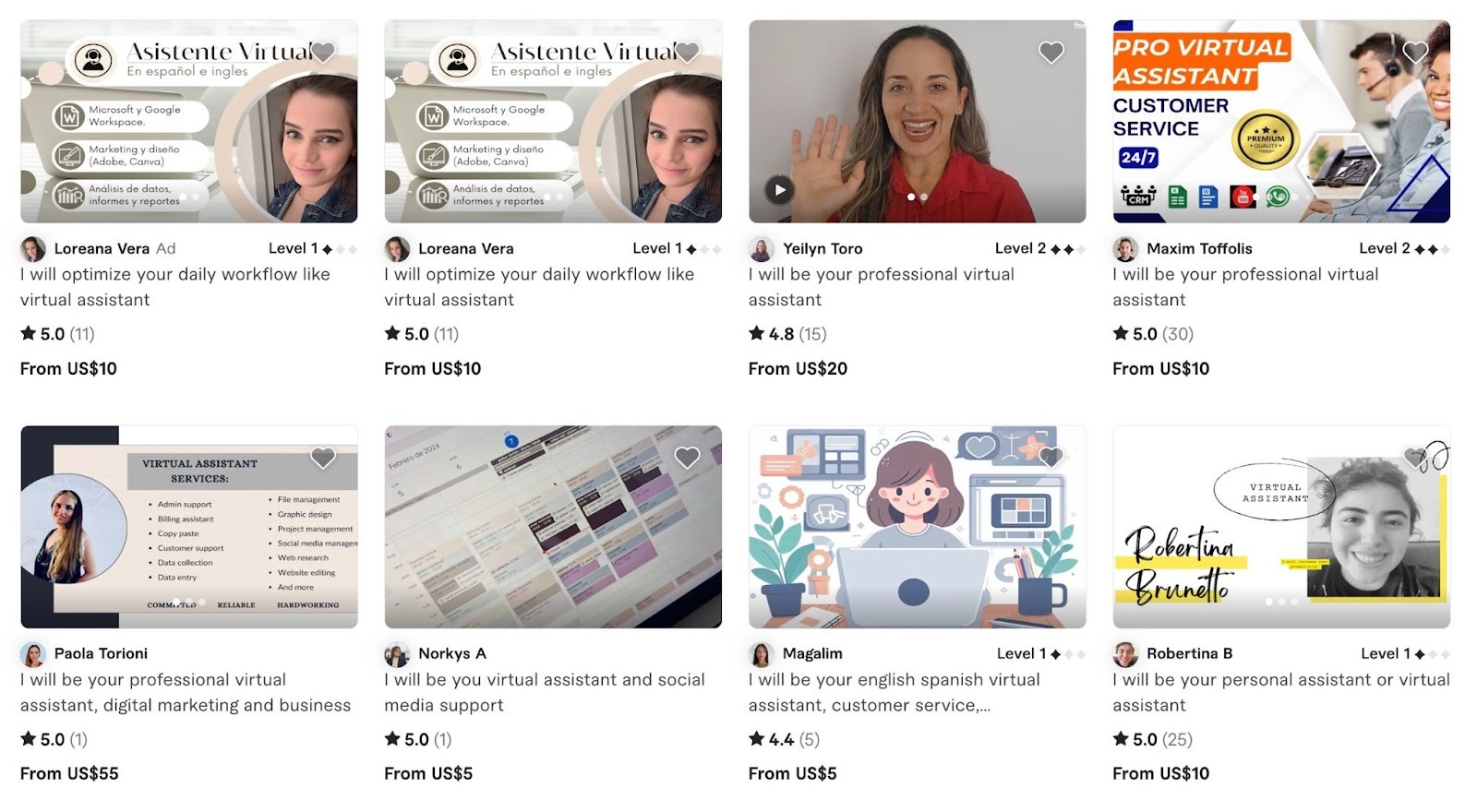
The problem is that the low barrier to entry cuts both ways. Anyone can create a profile, so you're sorting through a wide range of quality. Reviews can be gamed or reflect easy tasks that don't translate to your needs. And since these are freelancers, retention can be an issue since there's often less commitment to any single client.
LinkedIn gives you access to professionals who aren't actively browsing freelance marketplaces, which often means more experienced candidates with stable work histories. The signal-to-noise ratio is generally better than that of freelance platforms.
The downside:
Sites like WeWorkRemotely, Remotive, and Remote OK attract candidates specifically looking for remote roles with international companies. But you're still running the full hiring process yourself. And because these boards are popular, competitive roles can get flooded with applications.
There are agencies based in Latin America that specialize in placing candidates with US companies. They often have on-the-ground networks and can source candidates you wouldn't find on international platforms.
Quality varies significantly, though. Some agencies prioritize volume over fit. Others are essentially middlemen posting to the same job boards you could access yourself. You'll also need to evaluate whether they understand the kind of role you're hiring for; a generalist agency might not know what "virtual assistant for a Series A founder" actually requires.
People often underestimate what goes into hiring internationally. Sourcing, screening, skills assessments, reference checks, payroll setup, compliance, onboarding documentation, and ongoing performance management all land on your plate if you're doing it yourself. Most founders and leaders don't have the headspace to run that process well while also running the business.
Pearl Talent handles all of it. We place full-time virtual assistants from Latin America, the Philippines, and South Africa with US startups and SMBs, managing everything from sourcing through onboarding and ongoing performance support.
What makes Pearl different:
Browse available candidates who can be your virtual assistants for the long-term.

.svg)











.png)