Catena is now Pearl Talent! Same mission, new name.
A patient care coordinator (PCC) is the bridge between healthcare practitioners and their patients. They assess the needs of patients, help them communicate with their doctors, and ensure their continuity of care. In a nutshell, patient care coordinators manage the overall care for patients.
Doctors and nurses typically have their hands full with diagnosing and treating patients, which means the minutiae that come with patient care often fall through the cracks. Treatment plans go unexplained, transitions of care become fragmented, and patients’ needs go unmet.
Hiring patient care coordinators is one of the best ways to solve this problem. By coordinating and managing the basics of patient care, they help medical practices provide high-quality, personalized, and comprehensive care to patients. Think of it as a blend of nursing and hospital administration.
Let’s explore what patient care coordinators do, what skills they need, and how you can become one.
Care coordinators act as dedicated patient assistants, guiding them through each part of their medical care process. This enhances the quality and effectiveness of medical care for patients, improving overall patient outcomes.

The most common patient care coordinator responsibilities include:
Since patient care coordinators are a vital part of the care delivery process, they need to have a certain set of skills to excel at their jobs. These are the most common patient care coordinator skills.
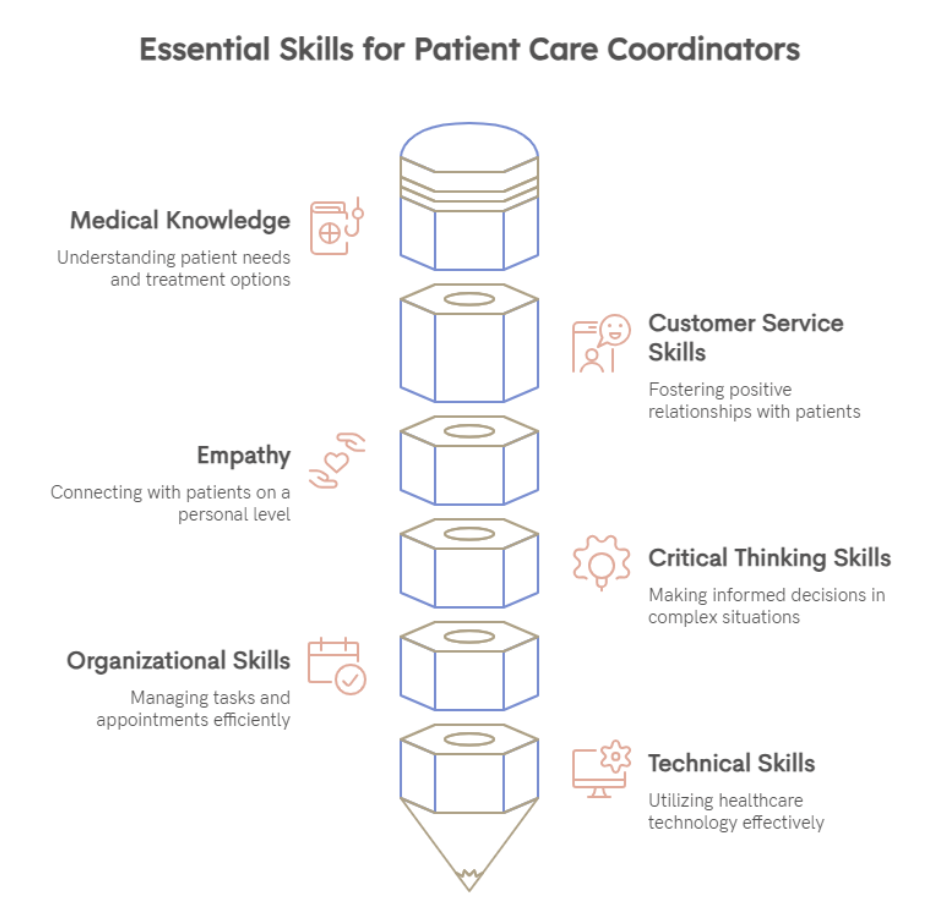
Since a crucial part of being a patient care coordinator is educating patients about their medical care process, PCCs need to have foundational medical knowledge. While medical expertise isn’t required, PCCs should be familiar with medical terminology, treatment options, processes, and conditions. Only then can they interpret what the physician says and break it down into simple terms for the patients and their families.
Additionally, medical knowledge also helps PCCs understand patient concerns, assess the urgency of their symptoms, and relay them effectively to the medical staff.
Patient care coordinators interact with patients day in and day out (either in person or through phones and emails). So, PCCs need stellar customer service skills to provide the necessary support and enhance patient satisfaction. These include:
Patients and their families are often stressed in medical settings, which can lead to poor communication from patients about symptoms and slow down recovery times. Research shows that empathy and emotional support from healthcare professionals make patients feel safe enough to be candid about their symptoms and concerns. Patients are also more likely to adhere to treatment plans and medications when they feel understood.
So, to make sure that patients receive accurate care, making them feel supported and heard is crucial, which is why patient care coordinators need empathy and emotional support skills. In addition to making patients feel comfortable, a PCC’s compassion improves their overall healthcare experience, which leads to higher patient retention.
It’s common for hospitals to run into scheduling conflicts or for patients to have financial obstacles. It’s the job of a patient care coordinator to navigate these types of situations and plan a patient’s care around any disruptions that may arise. This needs critical thinking, problem-solving skills, and the ability to make quick decisions whenever needed.
Patient care coordinators typically work with multiple patients at the same time, so they need to remain organized and have great attention to detail to prevent mixing up patient details.
A PCC also needs to work collaboratively with other healthcare staff to coordinate each person’s care, which requires a high level of management skills.
To handle the day-to-day administrative tasks, such as scheduling appointments or updating patient data, patient care coordinators must be proficient in scheduling tools and EHR software.
Patient care coordinators are healthcare professionals, so they work in a wide variety of healthcare settings. This includes:
Yes, patient care coordinators can (and do) work remotely as most of their duties can be carried out through a virtual setting. A computer and a strong internet connection are all you would need to check in with patients and coordinate their care.
Even administrative tasks, such as monitoring patient data remotely or updating EHRs, can be carried out remotely with the help of collaborative tools.
A bachelor’s degree is the minimum educational requirement that employers look for when hiring a patient care coordinator. However, there are no courses available specifically for care coordination, so your best bet is getting a degree in a relevant area of study.
Here are some degrees you can pursue to become a PCC:
Essentially, you must look for degrees that help you build a foundation in patient care and hospital administrative workflows.
Having hands-on patient care experience is non-negotiable if you want to become a patient care coordinator, as this will help you learn how healthcare systems actually operate and prepare you for the challenges associated with direct patient care.
Most healthcare degrees offer patient interaction as part of the curriculum, which is a great starting point. Other ways to gain real-world experience include volunteering in medical settings, doing an internship, or working in entry-level roles such as hospital administrator, medical assistant, or healthcare technician.
While certificates aren’t mandatory, having them will greatly increase your chances of getting hired as a PCC, especially if you’re looking to work remotely.
Here are some of the most common certifications that remote patient care coordinators get:
How much you can make as a patient care coordinator largely depends on your experience level, location, and skills.
According to ZipRecruiter, the average patient care coordinator salary in the U.S. is $42,641 a year. This comes out to $3553/month. Typically, a large portion of patient care coordinator salaries falls between $35,000 and $46,000 annually.
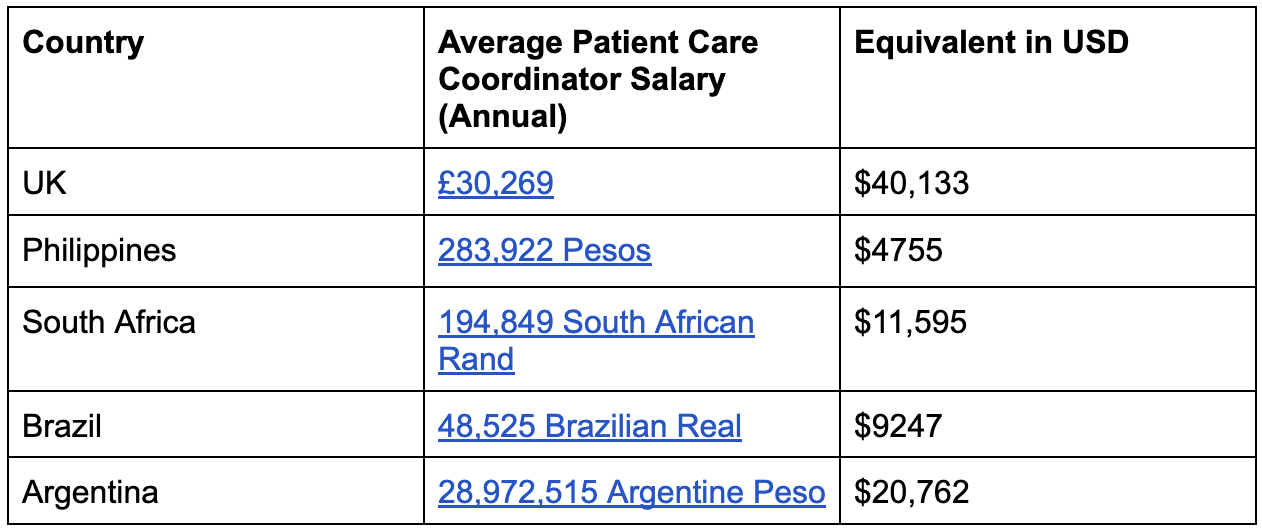
Here’s a look at patient care coordinator salaries in other countries:
The career outlook for patient care coordinators is good, particularly for those who can work remotely. The telehealth market is projected to grow at a rate of 32% from 2025 to 2032, which obviously calls for a greater number of remote healthcare professionals.
Additionally, the increasing need for tailored, patient-centered care for each patient is fueling the demand for patient care coordinators. According to the U.S. Bureau of Labor Statistics, the employment of medical and health services managers is projected to grow by 23% between 2024 and 2034.
At Pearl Talent, we connect the top 1% of remote patient care coordinators with US/EU companies. Once you get selected to be part of our talent pool, you’ll receive AI training, career development coaching, and ongoing support.
Here’s what you get by joining Pearl Talent as a candidate:
Skip the overcrowded job boards. Join Pearl Talent and get matched to a role where you’re valued. Take the first step towards your dream career by applying now.

.svg)