Catena is now Pearl Talent! Same mission, new name.
An executive assistant is someone who can support you by managing your time, priorities, and day-to-day coordination so that work runs smoothly. Their role is to give you time and mind space to focus on things that need strategic decision-making, and not get buried in mundane tasks.
They are not responsible for innovation, revenue, or strategy in a direct way, but their work determines how effectively all of those things happen. When an executive assistant role is missing, progress is hard. When it is done well, work moves with less friction and fewer missed opportunities.
An executive assistant can take on a surprising range of work, and where they spend most of their time depends on what's actually slowing you down.
The most immediate relief usually comes from the logistics layer: managing your calendar, coordinating meetings and interviews, making sure people have the right links, documents, and context before they walk into a conversation. It sounds routine, but that kind of constant back-and-forth can quietly eat two to three hours of a founder's day.
There's also a category of work that isn't urgent but keeps getting pushed. An EA can own all of this without it touching your plate:
As the working relationship matures, the role tends to expand naturally. A good EA starts tracking follow-ups from meetings, keeping a running list of open items, and making sure decisions don't just get made but actually get acted on. Some executives use their EA to organize information, prepare meeting notes, or draft initial versions of messages so they're not starting from scratch every time.
The scope isn't fixed. Some people keep the role focused on logistics and coordination. Others end up with something closer to an operational partner who reduces mental load across the board. Either way, the work that gets offloaded tends to compound over time.
An executive assistant makes sense when the cost of not having one starts to show up every day.
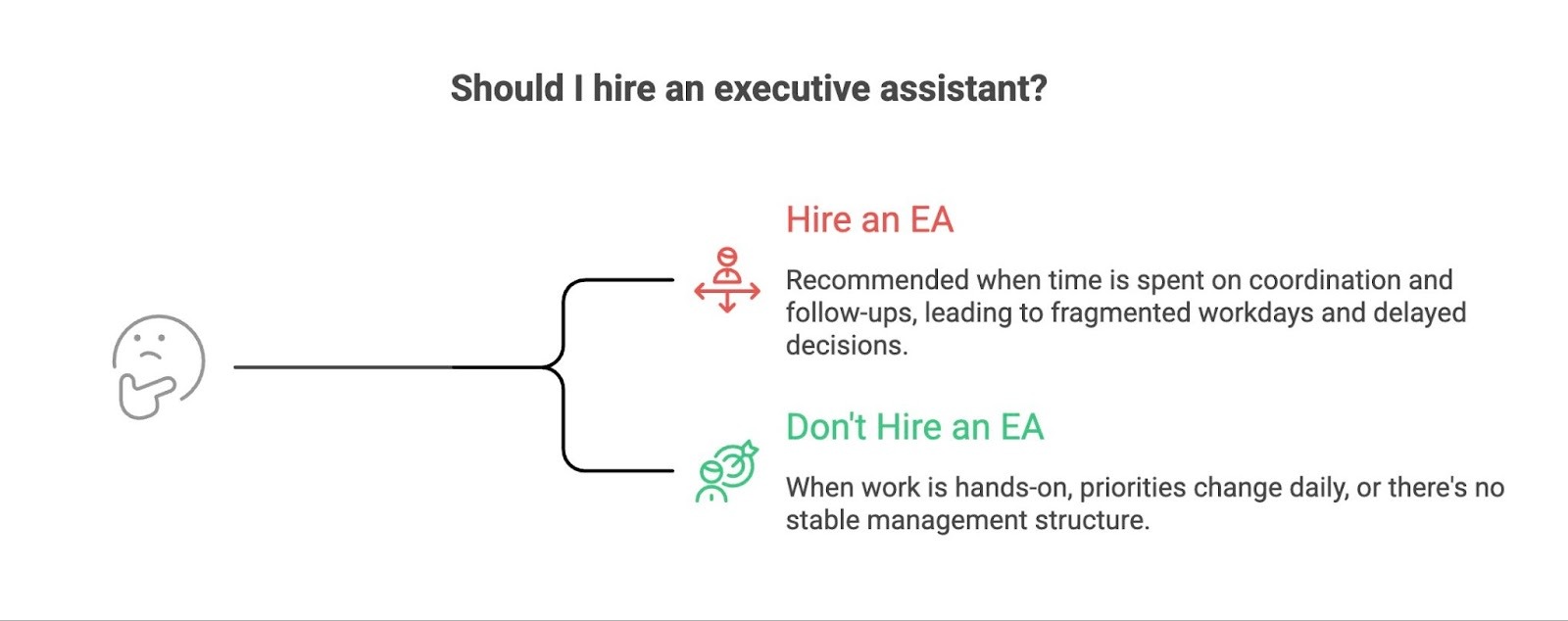
You need an executive assistant if:
If any of those sound familiar, it's usually not about being disorganized. It's that the coordination layer of your work has grown past what one person can hold without it costing them focus.
You don’t need to be overwhelmed to justify one. The best time is often before things feel unmanageable, when someone can set systems while there’s still breathing room.
You don't need an executive assistant yet if:
An executive assistant is most useful when there's something stable to manage. That doesn't mean your days look identical, but it does mean there are recurring priorities, patterns, and decisions that can be tracked and supported over time. Without that, an EA ends up waiting for direction instead of reducing your load, which helps neither of you.
If you're still in the phase where the work is mostly figuring things out, the better move is usually to wait until the role has enough shape that someone else can actually own parts of it. The right time to hire an EA is when you can see the recurring work clearly enough to hand it off, not when you hope having one will create that clarity.
Qualities to look for when hiring an executive assistant
An executive assistant works closely with how you think and how you operate. Skills matter, but judgment and fit matter more. These are the qualities of an executive assistant that usually make the difference between short-term help and long-term leverage.
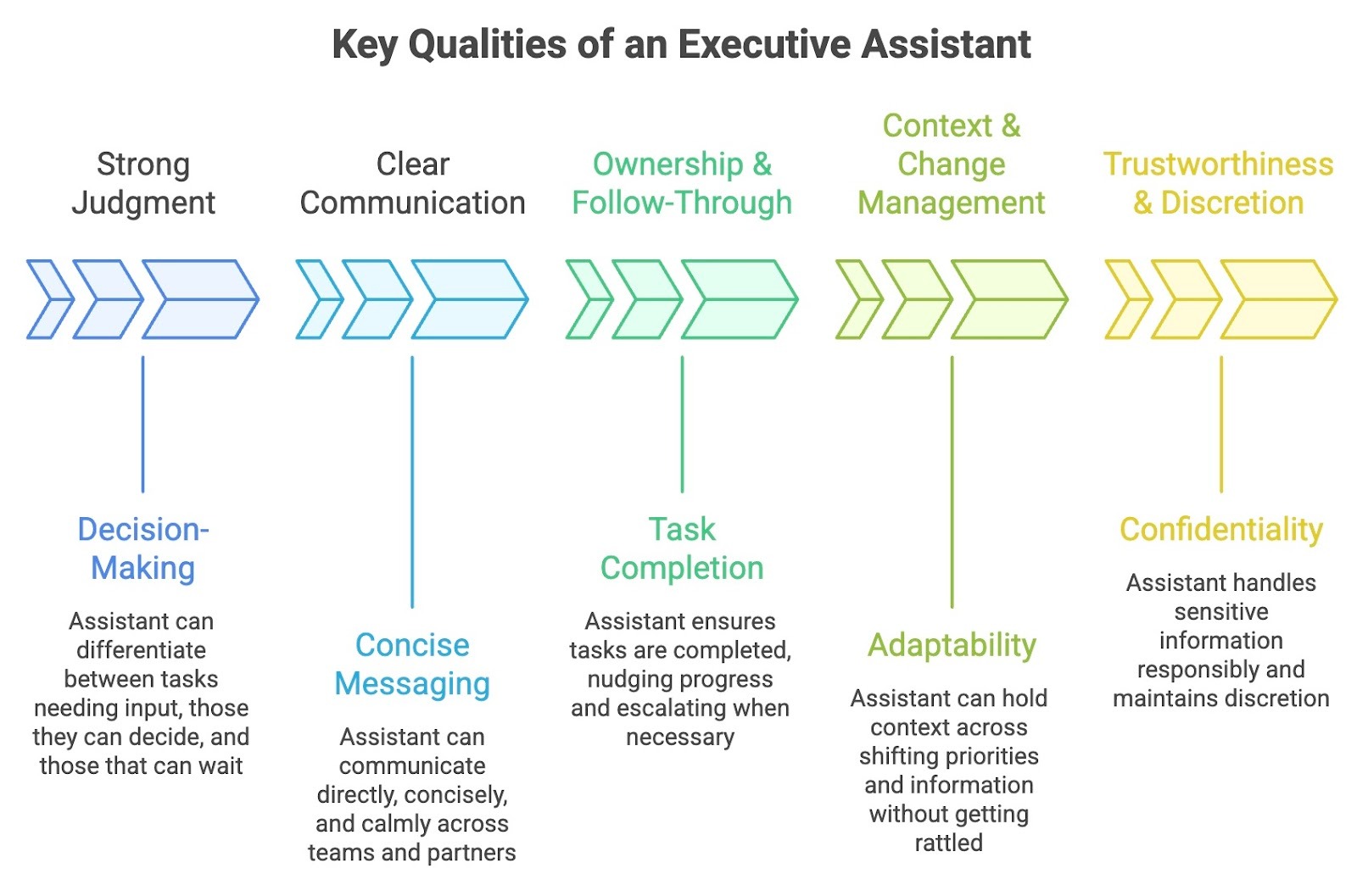
A good executive assistant can tell the difference between:
They do not ask questions just to be safe. They also do not act recklessly. When judgment is strong, delegating tasks feels lighter because you are not mentally double-checking every task.
Most of the role is communication. Following up with people. Clarifying context. Writing short messages that move things forward. You want someone who can be direct, concise, and calm, especially when coordinating across teams or external partners. Poor communication turns simple tasks into friction.
An executive assistant should not just keep track of tasks. They should care whether those tasks actually get done.
That means noticing when something is stalled, nudging the right person, and bringing it back to you only if your involvement is needed. Over time, you should feel fewer loose ends hanging around in your head because someone else is holding them.
This is where the role starts to feel genuinely supportive rather than just helpful.
Priorities shift. Meetings move. Information evolves. A strong executive assistant can hold context across these changes without getting rattled. They understand the bigger picture of what you are working toward, so adjustments do not require a full reset every time something changes.
An executive assistant often ends up knowing more than most people in the company. They see calendars before things are announced, emails that are half-formed, decisions that are still in progress, and conversations that are not meant to travel. Discretion is not about secrecy in a dramatic sense. It is about knowing what information is theirs to act on, what needs to stay contained, and what should never become casual conversation.
Trust shows up in small ways. For example, they do not forward things unnecessarily or use them to their advantage. They do not speculate. Over time, you stop filtering what you share because you know it will be handled responsibly, and that is what allows the role to work at full capacity rather than staying limited to surface-level tasks.
The relationship usually feels a little awkward at the start. You are used to holding everything in your head, and now you have to explain it out loud. That takes effort, and for a short while, it can feel easier to just do things yourself. That phase is normal and temporary.
A good way to begin is by handing over work that repeats every week and pulls your attention in small but constant ways. Things like scheduling, calendar clean-up, and basic follow-ups create immediate relief and give your executive assistant a clear view into how your days actually run.
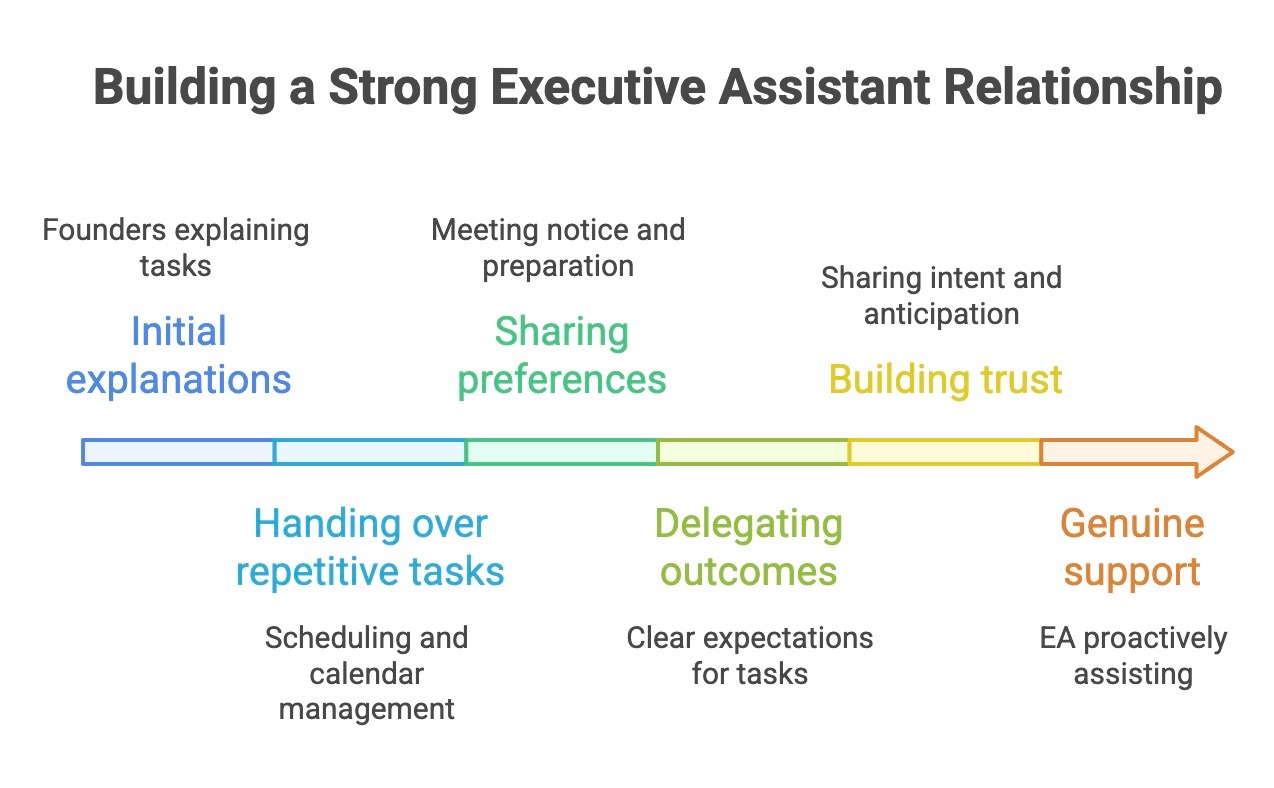
Once that’s in motion, the next step is sharing preferences, not instructions. For example:
These details matter more than detailed task lists.
It also helps to delegate outcomes, not just actions. Instead of asking someone to “track this,” be clear about what done looks like. Does it need a decision, a follow-up, or just visibility next week?
As trust builds, you can shift how you work together. You stop explaining every step and start sharing intent. Your executive assistant begins to anticipate what needs to happen next, and you spend less time checking and reminding.
That is when the role starts to feel genuinely supportive rather than something you have to manage.
A lot of what an executive assistant does (calendar updates, follow-ups, or coordinating tasks) looks simple on the surface. But doing those things well takes strong communication, attention to detail, and good judgment. In the US, that level of talent often comes with a very high weekly cost. For most leaders, the work itself does not require someone local. It requires someone dependable who understands context and follows through.
Pearl Talent helps founders and operators hire full-time executive assistants from the top 1% of global talent in the Philippines, Latin America, and South Africa. These are not pooled or bench candidates. Each role is headhunted and matched to your needs.
What Pearl Talent handles for you:
Pearl stays involved after the hire, so your executive assistant grows into the role instead of plateauing after the first few weeks. The result is not just fewer tasks on your plate, but less mental load and better follow-through.

.svg)