Catena is now Pearl Talent! Same mission, new name.
A sales representative is the person responsible for generating revenue by finding, engaging, and closing customers. They're the direct line between your product or service and the people who might pay for it.
That said, "sales representative" is a broad title, and the role looks different depending on who you ask. A software startup hiring its first outbound rep has a very different picture in mind than a medical device company building out a regional team.
The day-to-day changes are based on where someone sits in the sales cycle, what they're selling, and the maturity of the company's sales motion. Without a clear understanding of what the role actually involves, it's easy to hire for the wrong version of it.
This guide breaks down what sales representatives actually do across different setups, what it costs to hire one, and what to look for when you're ready to bring someone on.
The core job is revenue generation, but how that breaks down day-to-day depends on the company. Here are the most common functions a sales rep might handle:
In a startup with five people, one sales rep might do all of this. They're prospecting in the morning, running demos after lunch, and updating the CRM before the end of the day. At a larger company, these responsibilities are usually split among specialized roles such as SDRs, account executives, and account managers, each owning a specific stage of the funnel.
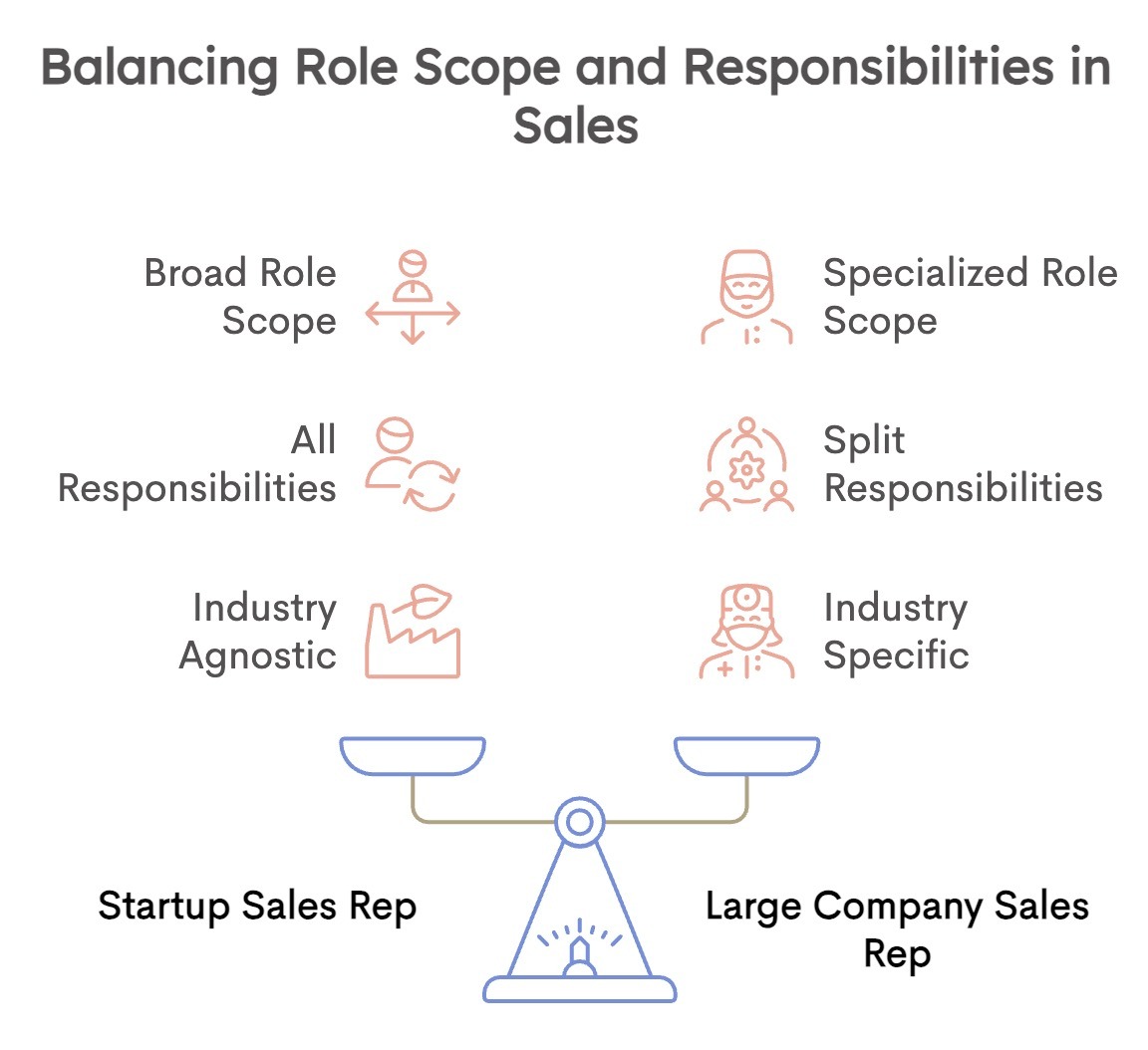
The industry also significantly shapes the role. A sales rep at a B2B software company spends most of their time on video calls and email sequences. A rep selling medical equipment might visit hospitals and attend trade shows. The core skill set, building relationships and moving people toward a buying decision, stays the same, but the context around it shifts.
Bringing on a dedicated sales rep isn't just about adding headcount. For growing companies, it changes how revenue is built.
Most founders and operators start as the primary salesperson. That works early on, but it creates a ceiling. Every hour you spend prospecting or following up is an hour you're not spending on product, operations, or strategy.
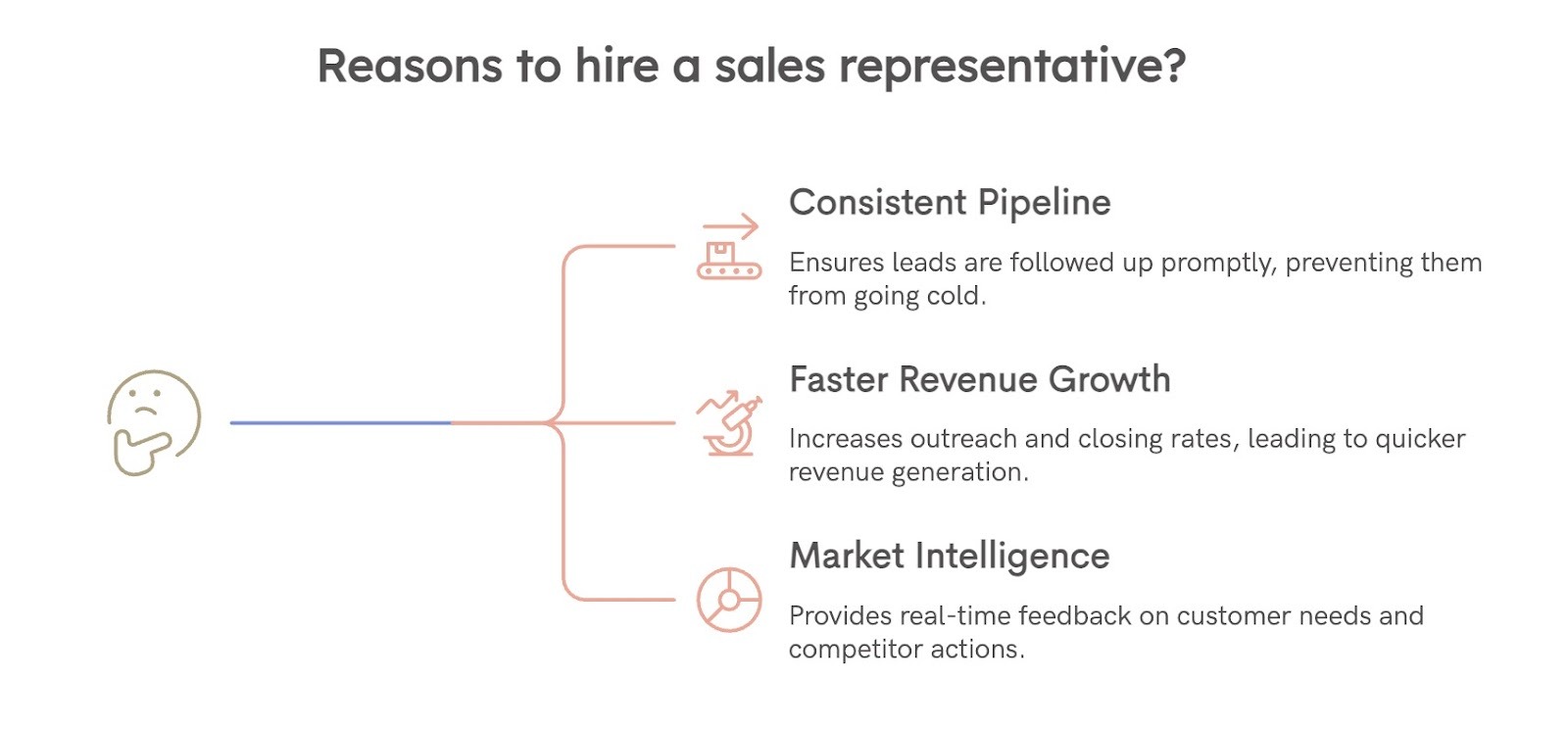
A dedicated sales rep builds a pipeline that moves independently. Leads get followed up on the same day. Prospects don't go cold because you got pulled into a board meeting. Revenue generation becomes a system instead of something that happens when the founder has time.
Sales reps, especially those working outbound, can generate returns that far exceed their compensation. A single rep handling 50 to 80 outreach touches per day compounds quickly.
This is especially true for companies selling products with strong unit economics, where each closed deal delivers recurring revenue well beyond the cost of the rep who brought it in.
Sales reps talk to prospects every day. That means they hear objections, questions, and comparisons that never show up in your analytics. They will:
This kind of real-time feedback loop between the market and your team is hard to replicate any other way, and it directly informs product, marketing, and positioning decisions.
According to ZipRecruiter, the national average salary for a sales representative in the United States is $78,640 per year. But that number varies widely depending on experience, location, and industry.
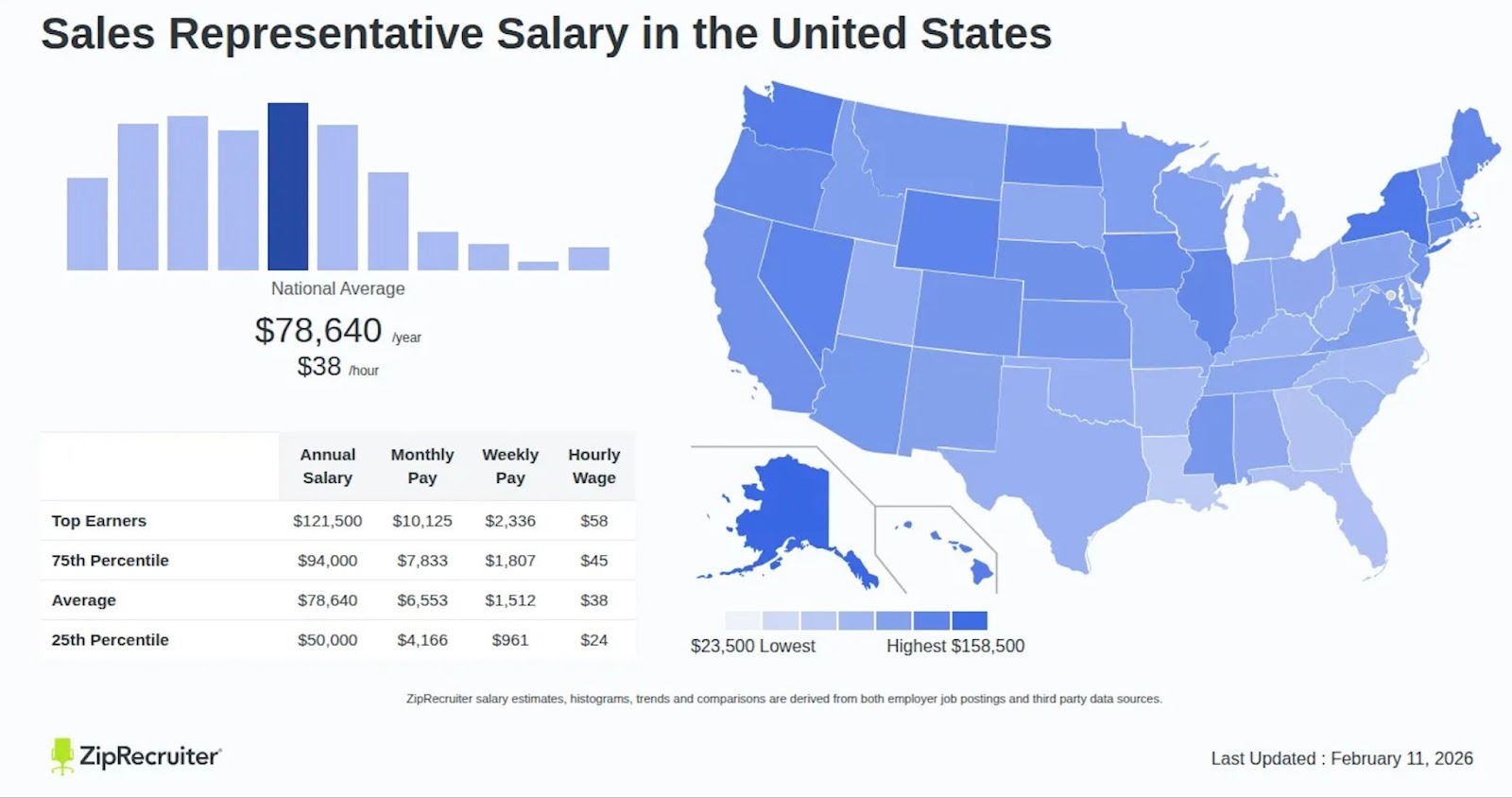
At the 25th percentile, sales reps earn around $50,000 annually. At the 75th percentile, that jumps to $94,000. Top earners pull in as much as $121,500 per year. And across the country, salaries range from $23,500 to $158,500, depending on the state and market.
These are base salary figures only. The total cost of a US-based sales hire also includes benefits, payroll taxes, commissions, and tools like CRM software and sales engagement platforms.
For most companies, the fully loaded cost of a domestic sales rep runs 1.3 to 1.5 times the base salary, once you factor in everything. That means an average hire at $78,640 base could cost your company closer to $100,000 to $118,000 annually when all expenses are accounted for.
For growing companies watching their burn rate, this is where hiring internationally becomes worth considering. A sales representative placed through a global talent partner like Pearl Talent can perform at the same level as a US-based hire at a significantly lower total cost, without sacrificing quality in communication, process discipline, or pipeline output.
Hiring the wrong sales rep is expensive, not just in salary but in lost deals, damaged prospect relationships, and wasted ramp time. Here's what actually separates strong candidates from ones who just interview well.
The strongest hires tend to show a pattern of impact in previous roles. They can point to specific numbers, describe what they did differently, and explain why it worked. If a candidate can't articulate that clearly, it's worth pausing before extending an offer.
Finding a sales rep who can actually drive revenue, and not just fill a seat, takes time most growing companies don't have. Between sourcing candidates, screening for communication skills, running assessments, and checking references, the process can stretch for weeks while your pipeline sits untouched.
Pearl Talent places sales representatives from the Philippines, Latin America, and South Africa with US and EU companies. Every candidate goes through a multi-stage vetting process that includes top-grade interviews, skills assessments, and communication evaluations. They're also trained on AI productivity tools before they start, and many have already been pre-vetted and are ready to hire.
The goal is to match you with someone who performs at the level of a US hire at a fraction of the cost. Here's what you get when you work with Pearl:
Our candidates are already vetted and available; you can have someone in the role within 4 days of your first discovery call with us.

.svg)