Catena is now Pearl Talent! Same mission, new name.
Most sales representative job descriptions read like they were copied from the same template, which is part of why they attract generic candidates. If you want someone who can actually attract and convert the right clients for your business, you need to be specific about what the role involves.
This guide covers what belongs in a strong sales rep JD and how to write each part so it works for you and for the candidates reading it.
A job description does two jobs at once: it tells candidates what the role actually involves, and it filters out people who aren't the right fit. Getting both right means being specific about your company's version of the role, not just listing generic sales responsibilities that could apply anywhere.
This is the section at the top that gives candidates a quick read on what the job actually is. Keep it to three or four sentences that cover the basics: what the rep will be selling, who they'll be selling to, where the role sits in your sales org, and whether it's inbound, outbound, or full-cycle. A founder hiring their first sales rep has a very different role in mind than a VP of Sales adding to a 20-person team, and the overview should make that clear immediately.
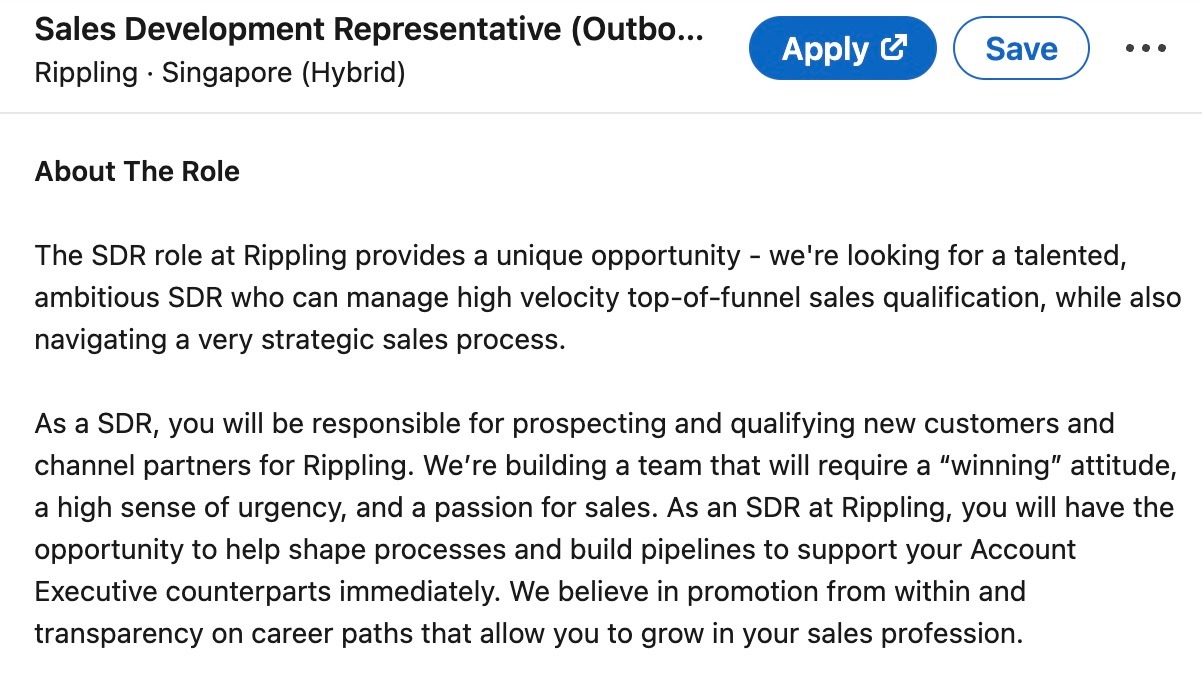
Here's an example of Rippling's job description for a sales representative:
This is where most JDs fall apart because they default to vague language. "Drive revenue growth" and "build client relationships" could describe any sales job at any company. Instead, describe the actual workflow your rep will follow on a daily and weekly basis.
The goal is for a candidate to read this section and know exactly what their first week looks like, not just the general shape of the job.
List only what someone genuinely needs to succeed in the role on day one. For most sales rep positions, that comes down to a few core areas: strong verbal and written communication, the ability to handle rejection and stay motivated, comfort managing multiple conversations at different pipeline stages, and enough technical fluency to learn your tools quickly.
If industry experience matters for your product or buyer, say so. If a specific certification or degree is actually required, include it. But if three years of SaaS sales experience would be just as valuable as five, don't write "5+ years required" and lose candidates who could do the job well.
This is where you put the things that would give a candidate an edge without being dealbreakers. Maybe you'd love someone who already knows Salesforce or has experience selling to enterprise buyers, but you'd train the right person on either. Separating these from hard requirements signals that you're open to strong candidates who don't tick every single box, which meaningfully widens your applicant pool.
Naming specific sales tools helps candidates assess their own fit and shows that your sales infrastructure is mature. List your CRM, outreach, and sequencing tools, communication platforms, and any analytics or reporting software. If your team uses AI tools for lead scoring, email drafting, or call analysis, include those too.
Candidates consistently rank compensation transparency as one of the top factors in whether they apply. Even a broad range gives people enough information to decide if it's worth their time. Include base salary range, commission or OTE structure if applicable, and any standout benefits. Beyond legal requirements in many states, sharing this information upfront reduces mismatched expectations and saves time on both sides.
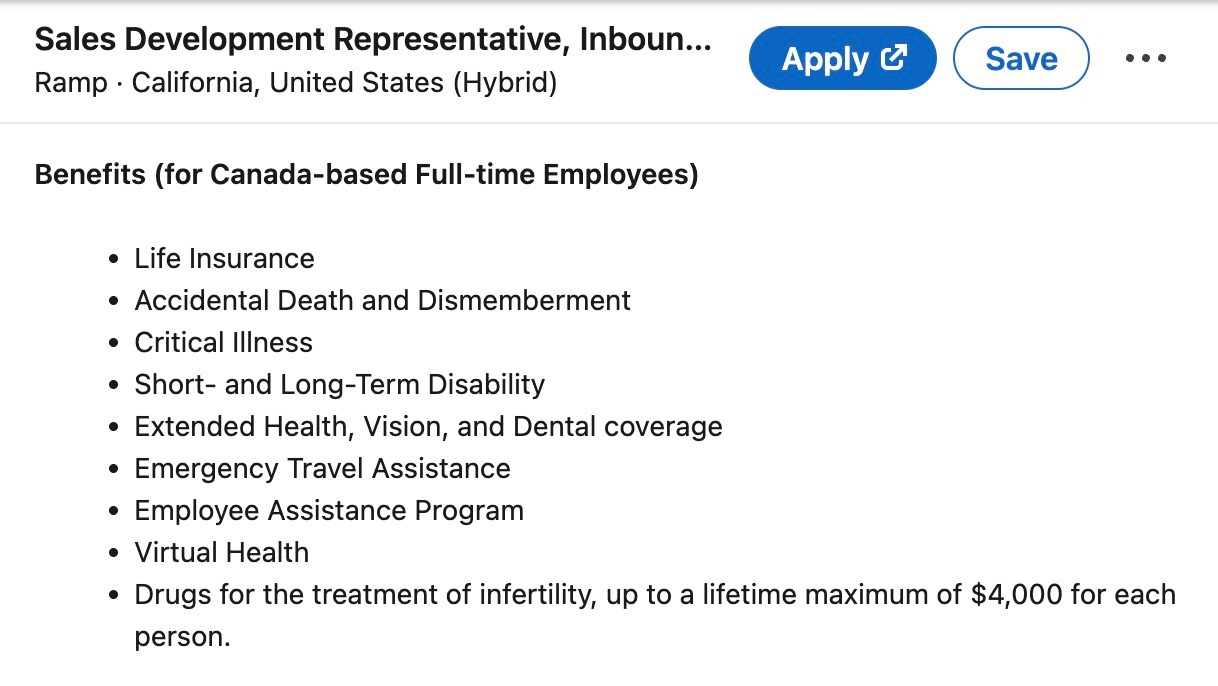
Here's an example of a benefits section from a job description posted by Ramp:
For remote roles, specify which time zones the rep needs to overlap with and how much flexibility there is around scheduling.
If the role requires availability during specific hours for team standups, client calls, or pipeline reviews, say so. Candidates who work across time zones need to know what they're committing to before they apply.
Writing the right sections is one thing. Writing them in a way that actually attracts strong candidates takes a bit more thought.
A JD that tries to appeal to everyone ends up resonating with no one. Think about the specific person who would be great in this role and write directly to them. If you need a scrappy, outbound-heavy rep who can build a pipeline from scratch at an early-stage company, the language and framing should reflect that energy. If you need a polished enterprise rep who can navigate complex buying committees, the tone shifts entirely.
Go beyond listing KPIs. Describe what a strong first six months looks like in concrete terms. Did the rep fully ramp their pipeline? Close their first deal independently? Develop a repeatable outreach process that the rest of the team can adopt? This gives candidates something to measure themselves against and shows you've thought through the role beyond just filling a seat.
Some teams run a tightly structured playbook where reps follow a defined process. Others give reps a lot of room to experiment with their own approach. Both can work well, but the right candidate for one environment might struggle in the other. Describing how your team actually operates helps people self-select, which leads to better interviews and stronger long-term fits.
Here's an example of AWS's sales rep job description showing their culture:
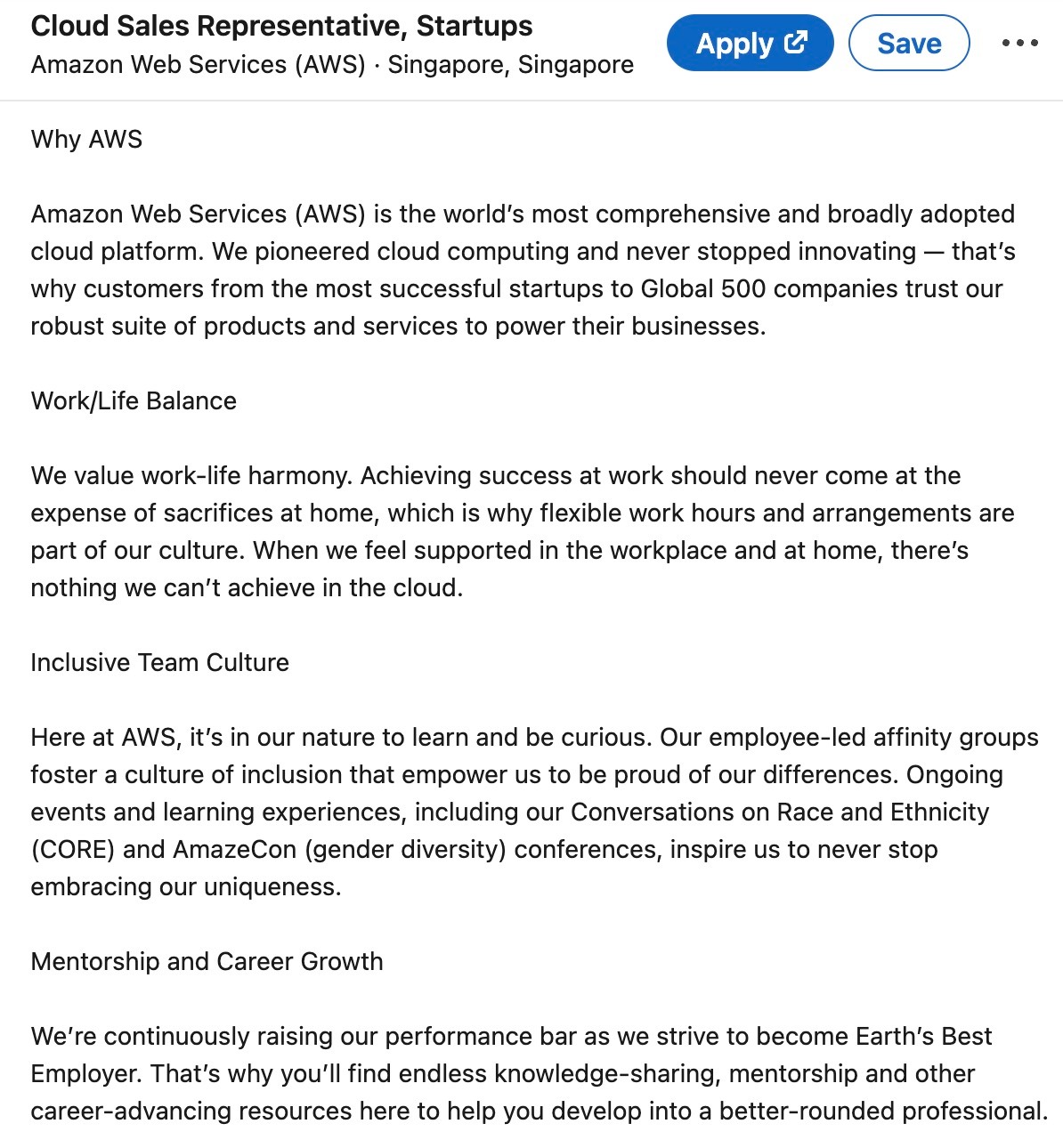
Phrases like "synergistic growth mindset" and "results-driven self-starter" have appeared in so many job descriptions that they've lost all meaning. Use plain language that describes real expectations. Instead of "entrepreneurial mindset," try "comfortable working without a lot of structure or hand-holding." Instead of "proven track record of exceeding quota," specify what quota attainment actually looked like in previous roles you'd consider strong.
Finding an ideal fit for your sales rep role starts with creating a job description, but that's only the first of many steps to come. You'll have to post it on job boards and sort through hundreds of applications. You'll spend weeks conducting interviews and onboarding them to your company. And after all this, you might realize three months later that the hire isn't working out.
The process eats up time you probably don't have, especially if you're a founder or ops leader already stretched thin across a dozen other priorities.
A talent partner like Pearl Talent can cut that process short. Pearl Talent connects scaling companies with pre-vetted sales professionals from Latin America, the Philippines, and South Africa who perform at the same level as US hires.
Pearl Talent handles sourcing, vetting, payroll, compliance, and onboarding so you can skip the operational overhead of building a hiring process from scratch.
All of this costs you 60% less than what you'd pay for a US hire, without compromising on collaboration or calibre.
Our candidates are already pre-vetted, so you can have someone in the role in as little as 4 days. Browse available sales representatives and start building your team.

.svg)